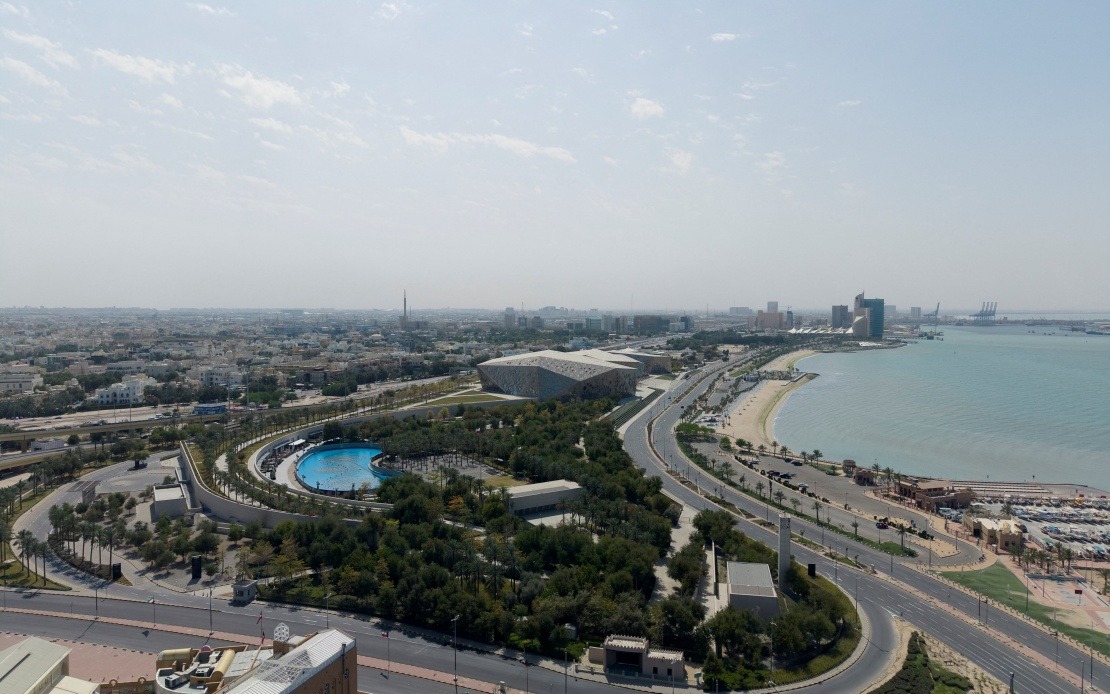
Kuwait's defence establishment mobilized its air defence network in the early hours of Wednesday following what the nation's military characterized as hostile drone incursions. The country's armed forces indicated that explosions audible across portions of Kuwait would stem from defensive interceptor fire aimed at neutralizing the incoming unmanned aircraft. Authorities issued instructions urging residents to observe safety protocols while the interception operations proceeded, reflecting concerns about potential civilian impact from both incoming threats and defensive countermeasures.
The incident represents a significant moment for Kuwait, a nation that has long positioned itself as a diplomatic intermediary in Middle Eastern disputes and a crucial hub for international commerce and energy exports. The country's proximity to Iran, combined with its status as a key US ally hosting American military installations, places it at the intersection of broader regional power dynamics. Kuwait's response to the drone threat underscores the real vulnerabilities faced by smaller Gulf states caught between competing great powers.
Authorities in Kuwait provided limited details about the attacked site, withholding both its specific location and operational nature. However, emergency responders had contained a fire at the targeted location, and officials reported no casualties from the incident. This restraint in disclosure may reflect both security considerations and an effort to avoid escalating rhetoric around the event, typical of Kuwait's traditionally cautious diplomatic approach.
The attack occurred within a broader pattern of escalating military activity across the Persian Gulf region. Bahrain, another small Gulf monarchy with significant US military presence, activated air raid warning systems on the same day and instructed its population to remain calm and seek shelter in designated safe areas. These coordinated defensive actions across multiple Gulf states indicate a region-wide state of heightened alert.
Bahrain's Defence Force had already reported earlier that week that its air defence systems had successfully intercepted and neutralized what it described as Iranian aerial attacks. The sequential nature of these incidents—unfolding over just hours and days—suggests either a coordinated campaign or a pattern of escalating provocations that has prompted multiple countries to activate defensive postures simultaneously.
Underlying these specific incidents is the broader conflict between the United States and Iran, particularly regarding control and security of the Strait of Hormuz, one of the world's most critical maritime chokepoints through which roughly one-fifth of global oil passes. The strait's strategic importance to regional and international energy security means that any disruption there carries immediate implications for global markets. Recent military operations have seen American forces conducting strikes against Iranian targets, with Tehran responding through attacks on US military installations distributed across the region.
Despite these escalations, diplomatic efforts continue in parallel. Pakistan has mediated negotiations aimed at achieving a sustainable ceasefire and broader peace agreement between Washington and Tehran. The existence of such peace initiatives, even as military operations accelerate, reflects the contradictory pressures facing regional actors who recognize the catastrophic consequences of all-out conflict while simultaneously engaging in tit-for-tat military responses.
For Southeast Asian nations including Malaysia, these developments carry significant implications beyond the immediate Middle East theatre. Many ASEAN countries depend heavily on stable energy supplies transiting the Strait of Hormuz and maintain important economic relationships with both the United States and Iran. Escalation in the Gulf creates ripple effects through global supply chains, potentially affecting fuel prices, insurance costs for shipping, and broader economic stability that impacts regional development.
Kuwait's activation of air defences also illustrates the vulnerability of smaller regional powers when caught in great power competition. Kuwait, despite its wealth and strategic location, lacks the military sophistication and scale to independently guarantee its security. This reality shapes its diplomatic strategy, which traditionally emphasizes mediation, neutrality, and careful calibration of relationships with both the United States and Iran.
The incident also highlights the increasing sophistication and proliferation of drone technology across the Middle East. Multiple nations now possess unmanned systems capable of conducting strikes across significant distances, expanding the potential threat matrix beyond traditional aircraft and missiles. This technological shift has transformed defensive calculations and air space management for regional militaries.
The broader pattern of recent weeks suggests that the US-Iran confrontation, despite diplomatic engagement, remains in a dangerous phase characterized by military probing actions and defensive responses. Each incident raises the risk of miscalculation or escalation spiralling beyond the intentions of those involved. For regions like Southeast Asia with interests in Gulf stability, these developments underscore the importance of international diplomatic mechanisms and the need for great powers to recognize the global stakes in regional stability.

