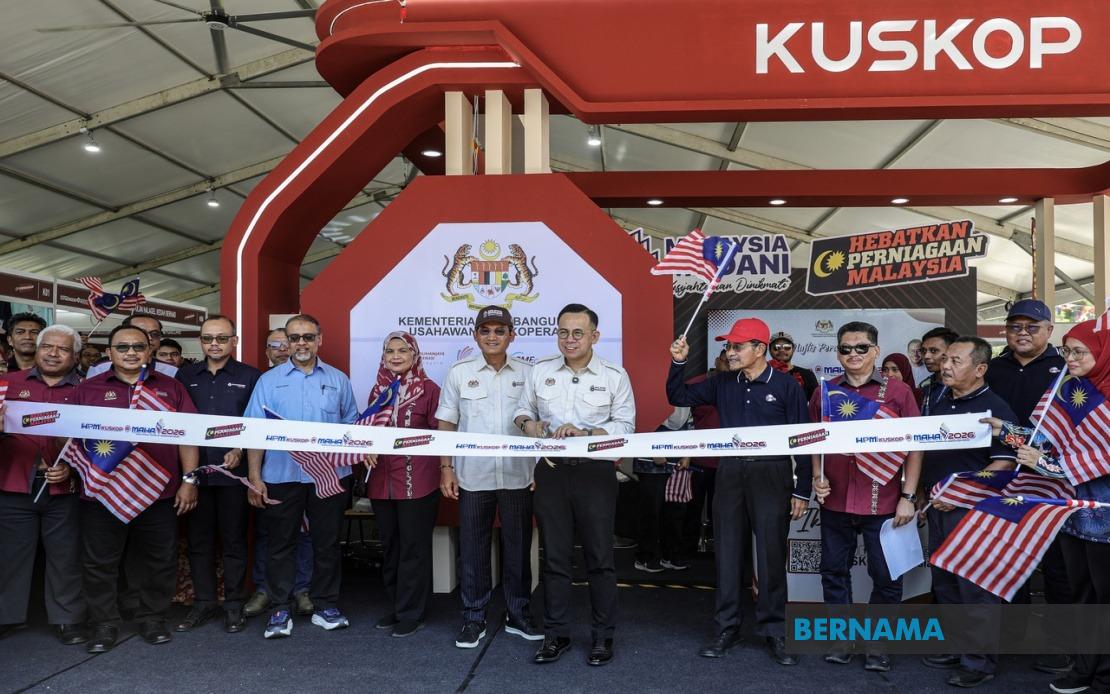
The Ministry of Entrepreneur and Cooperatives Development (KUSKOP) is setting an ambitious sales target of RM500,000 for its inaugural presence at MAHA 2026, the prestigious biennial agricultural exhibition held in Serdang. Making its debut at the sprawling showcase, KUSKOP has already demonstrated strong commercial traction, having accumulated more than RM110,000 in sales within the first few days of the event, signalling healthy appetite from visitors for the entrepreneurial offerings on display.
Minister Steven Sim disclosed these figures while addressing reporters at the official opening of the HPMKUSKOP@MAHA 2026 pavilion on August 31. The ministry has transformed this opportunity into a significant platform for Malaysia's small and medium-sized enterprise ecosystem, mobilising approximately 66 companies, cooperatives, and micro, small and medium enterprises (MSMEs) to exhibit their products and services under one roof. This concentrated gathering represents a deliberate strategy to amplify visibility for Malaysia's grassroots entrepreneurial sector, traditionally operating in dispersed networks across the country.
The early momentum at the pavilion reflects the substantial footfall the exhibition has attracted. KUSKOP reported that the site has welcomed over 100,000 visitors in just the opening days of the event, demonstrating the reach and drawing power of MAHA 2026 as a destination for both agricultural stakeholders and general consumers seeking products and services. This visitor volume provides a compelling environment for the ministry's exhibitors to forge connections, negotiate contracts, and convert interest into sales across the remaining duration of the fair.
KUSKOP's maiden participation at MAHA 2026 carries particular significance within Malaysia's entrepreneurial development landscape. The ministry has long pursued an agenda of formalising and professionalising the MSME sector, and exhibitions such as MAHA offer crucial exposure and networking opportunities for these businesses. By securing prominent space alongside agricultural exhibitors, KUSKOP has positioned its portfolio of enterprises at an intersection where rural and urban consumers, wholesale buyers, and industry networks converge, potentially opening doors for supply chain integration and market expansion.
Also present at the pavilion opening was KUSKOP secretary-general Datuk Seri Khairul Dzaimee Daud, underscoring the ministry's institutional commitment to this initiative. The presence of senior leadership signals that the pavilion is not merely a transactional space but rather a strategic investment in demonstrating KUSKOP's capacity to organise and represent Malaysia's entrepreneurial community on a national stage.
Minister Sim extended formal recognition to the Ministry of Agriculture and Food Security, led by Datuk Seri Mohamad Sabu, for orchestrating MAHA 2026 successfully. This cross-ministerial collaboration highlights a broader policy alignment within government to promote economic participation across sectors. The agricultural ministry's willingness to accommodate KUSKOP's pavilion reflects acknowledgement that entrepreneurship and cooperative development are complementary to agricultural advancement, particularly as rural communities seek livelihood diversification and value-added production opportunities.
For Malaysian MSMEs, MAHA 2026 represents a rare convergence of opportunity and visibility. Many small operators, particularly those in rural areas, struggle with market access and brand awareness, constraints that mass-market exhibitions can meaningfully address. The RM500,000 sales target, if achieved, would demonstrate to government policymakers and private investors alike that structured spaces for MSME aggregation can generate measurable economic activity and justify continued investment in such initiatives.
The RM110,000 sales already recorded places the pavilion on track to meet its target, though the outcome will depend on sustained visitor interest and effective sales execution across the remaining exhibition period. The trajectory suggests that KUSKOP's exhibitors have resonated with visitors, whether through competitive pricing, product novelty, or genuine consumer need for the offerings presented.
Beyond the immediate commercial implications, KUSKOP's successful debut at MAHA 2026 may establish a template for future institutional participation in regional trade fairs and consumer exhibitions. As Southeast Asia's economies increasingly focus on supporting local enterprises and promoting inclusive growth, models that aggregate and present MSMEs collectively may gain traction across the region, creating networks and learning opportunities for emerging entrepreneurs across Malaysia and neighbouring countries.
The pavilion also reflects evolving definitions of what agricultural exhibitions encompass in contemporary Malaysia. MAHA has traditionally centred on farming, livestock, and food production, but the inclusion of KUSKOP signifies broadening recognition that rural economic development and urban entrepreneurial ecosystems are interconnected. Enterprise development, cooperative models, and MSME support are no longer peripheral concerns but integral to comprehensive agricultural and rural development strategies.
As the exhibition continues, KUSKOP's performance will be closely monitored by stakeholders assessing the viability of institutional approaches to MSME promotion. Success would vindicate the ministry's strategic approach and potentially inform budget allocations and policy priorities in coming years, while also providing valuable data on consumer preferences and market readiness for products and services from Malaysia's cooperative and small enterprise sectors.

