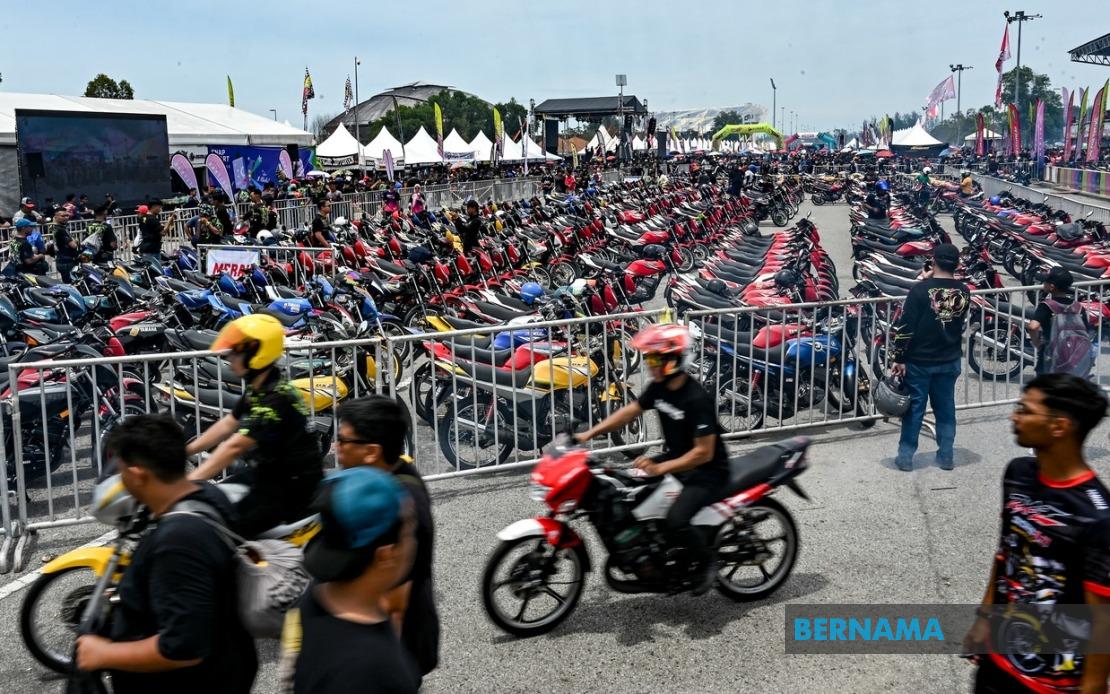
The Kuala Terengganu City Council (MBKT) has revealed it incurred RM40,000 in unplanned expenditure to manage debris and environmental cleanup following the RXZ Members 8.0 event held at Gong Badak Motor Racing Circuit near Kuala Nerus last weekend. The substantial costs underline the growing challenge municipal authorities across Malaysia face when hosting large-scale public gatherings, where environmental management often falls to local councils despite organisers retaining primary responsibility.
Mayor Lizan Che Mamat disclosed that the cleanup expenses encompassed overtime compensation for sanitation staff, multiple additional refuse collection trips beyond the standard schedule, and extended operations at Sungai Ikan landfill to process the generated materials. The financial burden reflects the reality that municipal budgets frequently absorb costs that event organisers should theoretically cover, creating tension between welcoming economic activity and protecting public finances.
The scale of debris gathered from the two-day programme proved substantially larger than anticipated. Sanitation crews collected approximately 130 tonnes of solid waste, predominantly comprising discarded food and beverage containers, a composition typical of entertainment and sporting events where concession sales generate significant packaging waste. This tonnage required substantially more collection capacity than routine operations, forcing the council to deploy additional refuse vehicles and extend collection schedules beyond normal hours.
Particularly frustrating for municipal authorities was evidence that despite numerous rubbish bins strategically positioned throughout the venue, attendees continued depositing waste indiscriminately across the grounds rather than utilising designated receptacles. This behavioural pattern reflects a persistent challenge in Malaysian public spaces where civic awareness regarding waste segregation and proper disposal remains inconsistent, even when infrastructure exists to facilitate compliance.
Lizan acknowledged that the attendance figure exceeding 100,000 people may have created challenges that surpassed initial waste management projections. However, he emphasised that organisers should have anticipated higher volumes and ensured adequate disposal infrastructure or required attendees to deposit refuse at designated collection stations. The mayor's remarks highlight the tension between enabling large gatherings that generate economic and tourism benefits whilst maintaining acceptable environmental standards and council fiscal responsibility.
The council has signalled intentions to implement structural reforms governing future large-scale event approvals. MBKT plans to mandate that event organisers submit comprehensive solid waste management plans as a formal prerequisite for obtaining venue permits and event licences. Such requirements would transfer planning responsibility upstream to organisers, compelling them to consider environmental implications during the event design phase rather than allowing councils to manage consequences retrospectively.
Additionally, the council indicated it will undertake a detailed review of existing cleaning deposit schemes imposed on event organisers. These bonds, held as security for environmental compliance, have traditionally been modest relative to actual cleanup costs, creating situations where councils subsidise environmental management. A recalibrated deposit structure could recover cleanup expenses more proportionally whilst incentivising organisers to implement stricter waste management controls.
Lizan's statements reveal the delicate balance required in tourism-dependent regions like Terengganu. The council explicitly welcomes large-scale entertainment and sporting programmes because they stimulate visitor expenditure, accommodation demand, food and beverage sales, and ancillary economic activity that supports local businesses and employment. Rejecting or restricting such events would sacrifice tangible economic benefits that increasingly define regional development strategies.
However, this economic opportunity must be reconciled with environmental stewardship and sustainable resource management. The RM40,000 expenditure represents funds diverted from other municipal priorities such as routine infrastructure maintenance, community services, or debt reduction. The implicit cost subsidy distorts the true economic impact of events and creates perverse incentives where organisers bear insufficient financial responsibility for environmental consequences.
The incident reflects broader patterns across Southeast Asian cities where rapid urbanisation, growing event culture, and inconsistent public environmental consciousness strain municipal resources. Similar situations have emerged in Bangkok, Manila, and Jakarta, where high-attendance entertainment events generate substantial cleanup costs that local authorities struggle to manage efficiently or recover financially.
From a behavioural perspective, the persistence of littering despite available bins suggests that infrastructure alone cannot drive waste compliance. Successful waste management in public spaces requires integrated approaches combining adequate bin placement with clear signage, staff presence, social norms education, and enforcement mechanisms. Malaysian councils increasingly recognise that treating waste management as purely infrastructural—placing bins and hoping for compliance—produces insufficient outcomes.
The RXZ Members 8.0 situation presents an opportunity for MBKT and other Malaysian municipalities to establish clearer accountability frameworks. Requiring detailed waste management plans, increasing cleanup deposits proportionally to actual costs, and imposing penalties for non-compliance would shift environmental responsibility appropriately to event organisers while demonstrating serious commitment to sustainable event management that protects municipal budgets and environmental quality.
As Terengganu and Malaysia continue positioning themselves as attractive destinations for sports, entertainment, and tourism events, establishing robust environmental governance frameworks becomes essential. The council's indicated willingness to implement stricter requirements suggests growing recognition that economic benefits from events must be pursued within disciplined environmental and financial parameters that protect public interests.

