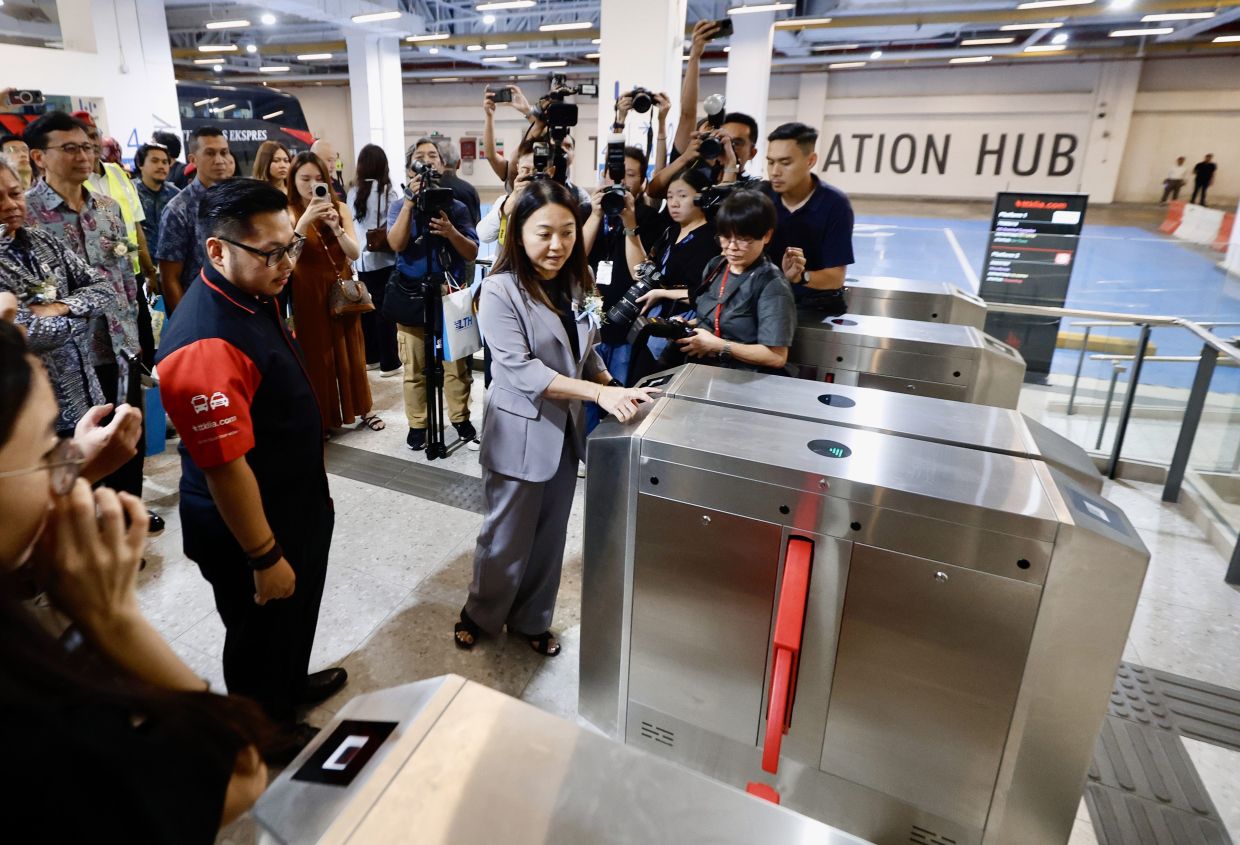
A landmark transportation facility has begun operations within one of Kuala Lumpur's premier retail destinations, signalling a shift towards integrated multimodal transit in the capital. The LaLaport Transportation Hub, situated at the Bukit Bintang City Centre mall, represents an attempt to coordinate and centralise bus services that have long operated from dispersed locations across the city. With approximately 30 bus operators expected to base their operations from this single facility, the hub addresses a longstanding fragmentation problem in Kuala Lumpur's public transport landscape, where passengers previously had to navigate multiple bus stations and informal boarding points.
The facility opened its doors to the public in February and was formally launched by Minister in the Prime Minister's Department (Federal Territories) Hannah Yeoh on Thursday (July 16), after an extended operational phase. According to the minister, the hub is designed to serve roughly 3,000 passengers daily during its initial stages, though engineering specifications indicate the infrastructure can be expanded to accommodate as many as 10,000 commuters per day. This scalability reflects planners' recognition that Kuala Lumpur's transport demand continues to climb as the metropolitan area expands and urbanisation intensifies.
Data provided by Kuala Lumpur City Hall illuminates the urgency behind such infrastructure investments. The city records approximately 1.2 million vehicles crossing its boundaries each day, whilst cumulative journey numbers—encompassing both inbound and outbound trips—reach 5.5 million daily. These statistics underscore the magnitude of congestion and mobility challenges facing the capital, prompting government officials to prioritise the development of alternatives to private car usage. Yeoh stressed during the launch that urban mobility must remain a focal point for policymakers, acknowledging that the current transport ecosystem cannot rely exclusively on road-based vehicle movements.
The hub's physical design and operational structure reveal considerable thought regarding passenger convenience and service integration. Situated on Level LG1 within the East Atrium of LaLaport BBCC, the facility incorporates eleven dedicated bus bays, allowing multiple vehicles to load and unload simultaneously. The terminal features an air-conditioned waiting lounge—a crucial amenity in Malaysia's tropical climate—alongside conventional ticketing counters and modern self-service vending machines. Real-time passenger information screens display forthcoming bus schedules, enabling travellers to make informed decisions about boarding times and destinations without relying on smartphone apps or external information sources.
The strategic positioning of the transport hub next to the Hang Tuah interchange creates an unprecedented opportunity for seamless multimodal connectivity. Passengers arriving by bus can now transfer directly to the Light Rail Transit or Monorail networks through a covered pedestrian walkway, eliminating exposure to weather and reducing walking times between transit modes. For residents of central Kuala Lumpur and visitors to the city, this interconnectedness transforms the potential to move across the metropolitan area without requiring personal vehicles, addressing a critical gap that has long plagued the capital's public transport system.
Beyond conventional bus services, the hub functions as a comprehensive transportation node offering diverse mobility solutions. Airport connectivity represents a particularly significant feature, as the facility provides shuttle van services to both terminals of Kuala Lumpur International Airport, catering to both departing passengers and those arriving in the city. The inclusion of demand-responsive transport services—sometimes referred to as flexible routing systems—acknowledges the reality that fixed-route bus networks cannot serve every neighbourhood efficiently. Additionally, designated pick-up and drop-off zones for taxis and e-hailing vehicles such as Grab ensure that passengers can seamlessly transition between shared rides and formal public transport if circumstances require.
The Land Public Transport Agency (Apad), which holds regulatory oversight of the facility's licensing and operations, has presumably conducted rigorous assessments to ensure service standards and safety compliance. Apad's involvement signals that the hub operates within Malaysia's formal public transport framework, distinguishing it from informal or unlicensed bus operations that have historically characterised portions of Kuala Lumpur's transport sector. This regulatory structure theoretically provides passengers with recourse mechanisms and consistent service quality benchmarks.
For Malaysian commuters and policymakers, the LaLaport Transportation Hub represents a tentative but meaningful step towards modernising how residents navigate the capital. The facility's early operational success will likely influence decisions regarding similar integrated transport terminals in other major Malaysian cities such as Petaling Jaya, Subang Jaya, and Selangor's emerging urban centres. The hub's capacity to eventually serve 10,000 passengers daily, combined with its multimodal connections, positions it as a potential catalyst for reducing vehicular congestion if usage patterns meet expectations. However, success ultimately depends on whether the coordination among 30 separate bus operators results in reliable, punctual service that genuinely incentivises commuters to abandon private vehicles.
The broader implications of this development extend beyond simple convenience metrics. By concentrating bus services within a commercial mall environment, the facility intertwines public transport with retail and leisure activities, potentially increasing dwell times and spending within LaLaport. This model may prove economically attractive to other shopping centres and mall operators across Southeast Asia, catalysing a regional trend towards transport hubs embedded within commercial properties. For Kuala Lumpur specifically, the hub's success or difficulties will inform future urban mobility strategies, particularly as the city continues grappling with sustained traffic congestion and the need for sustainable transit alternatives during a period of economic growth and population expansion.

