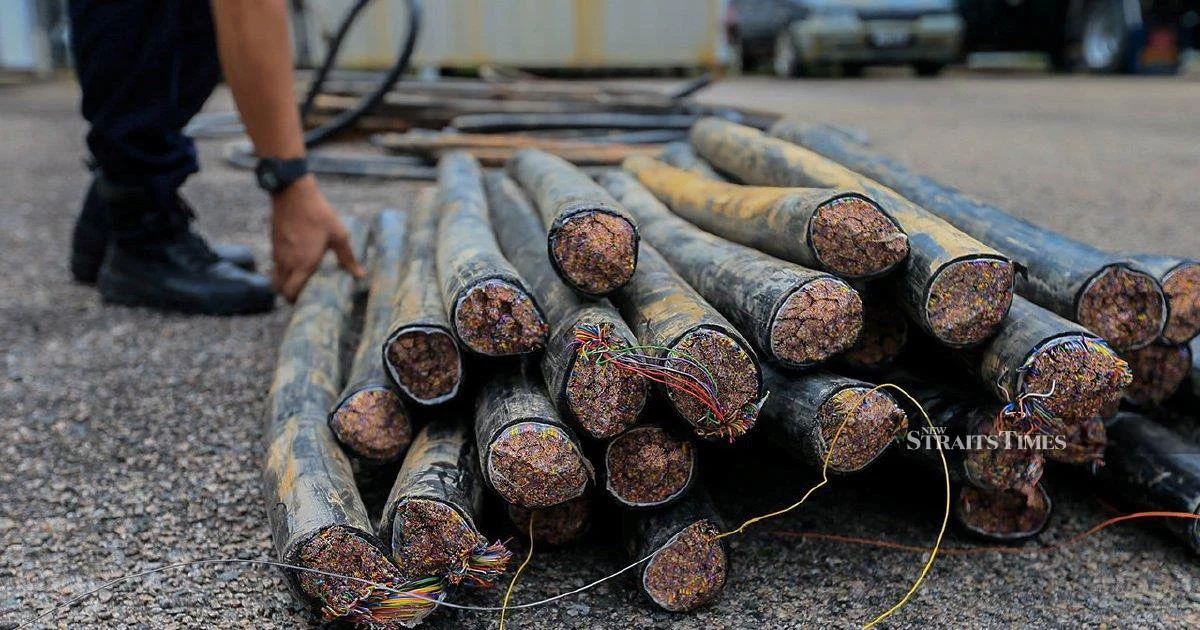
Kuala Lumpur police have achieved a notable breakthrough in combating cable theft, one of the city's persistent property crimes that disrupts essential services and strains public infrastructure. Official figures released this week reveal that reported cable theft cases have plummeted to 71 incidents during the five-month period from January through May, a dramatic reduction compared to the 205 cases documented throughout the entirety of 2024. This represents a significant decline of approximately 65 percent, suggesting that sustained law enforcement operations and community cooperation are beginning to yield tangible results in curbing this costly criminal activity.
Cable theft has long presented challenges for authorities across Malaysia, as copper wiring and telecommunications cables possess considerable scrap value that motivates organised theft rings. The stolen materials are typically sold to recycling merchants or metallic waste dealers, creating a supply chain that perpetuates demand among criminal groups. Kuala Lumpur, as the nation's capital and largest metropolitan area, has historically experienced elevated incident rates due to the density of infrastructure, higher concentrations of valuable cabling in telecommunications networks, and the proximity to established scrap metal markets. The reduction in reported cases therefore reflects a genuine shift in enforcement capacity and deterrent effectiveness rather than mere displacement of criminal activity to neighbouring jurisdictions, a distinction that law enforcement agencies have emphasised when presenting these figures.
Police have intensified their approach to addressing this crime category through enhanced patrols in high-risk areas, particularly around telecommunication facilities, electrical substations, and transit infrastructure where thieves have traditionally targeted cabling. The deployment of additional personnel and specialised task forces focused specifically on organised property crime has enabled authorities to disrupt theft operations before they occur and apprehend suspects during the commission of offences. Intelligence-gathering efforts have improved substantially, allowing police to identify patterns of criminal behaviour and predict where thefts are likely to occur, thereby enabling proactive positioning of resources.
Arrest statistics underscore the enforcement emphasis, with authorities apprehending 85 suspects connected to cable theft offences during the January to May period alone. These arrests span various levels of involvement in the supply chain, from individuals physically cutting and removing cables from infrastructure to middlemen who arrange transportation and facilitate the sale of stolen materials. The diversification of arrests across different roles within criminal networks suggests that law enforcement has moved beyond simply catching opportunistic offenders and is now targeting the structured criminal organisations that orchestrate these thefts for profit. Prosecution rates and charges laid against arrested individuals remain central to determining whether this enforcement surge produces lasting deterrent effects.
The reduction in cable theft has broader implications for Kuala Lumpur's residents and businesses that depend upon uninterrupted telecommunications and electrical services. When thieves target cabling in public infrastructure, the consequences extend far beyond the immediate loss of materials. Telecommunications providers experience service disruptions affecting thousands of customers, hospitals and emergency services face potential operational challenges, and businesses suffer productivity losses. The knock-on economic impact of even a single major cable theft can run into millions of ringgit when accounting for repair costs, service restoration, and compensation to affected parties. By reducing theft incidents significantly, police operations directly protect the reliability of essential services across the city.
Industry cooperation has reportedly played an instrumental role in achieving these reductions. Telecommunications companies and electrical utilities have enhanced their own security measures, including increased surveillance, physical barriers around vulnerable infrastructure, and coordination with law enforcement agencies to report suspicious activity immediately. This public-private partnership model, where government agencies and private sector entities share information and resources, has emerged as an effective mechanism for combating organised crime. Malaysian authorities have increasingly recognised that property crimes of this scale require coordinated responses that transcend the capacity of police forces working alone.
Regional context adds weight to these achievements. Cable theft remains a persistent problem across Southeast Asia, with Thailand, the Philippines, and Indonesia reporting sustained challenges in protecting infrastructure from organised theft rings. Malaysia's ability to record measurable progress stands in contrast to the experience of neighbouring nations, where theft rates have remained stubbornly high despite enforcement efforts. This success may reflect Malaysian police's willingness to deploy contemporary investigative techniques alongside traditional approaches, creating a more comprehensive enforcement environment.
However, sustaining these gains will require continued commitment of resources and public vigilance. Historical patterns suggest that criminal organisations often adapt their tactics when one particular revenue stream becomes too risky, potentially shifting focus to alternative theft targets or modifying their operational methods to avoid detection. Police have indicated that vigilance remains essential, with community reporting of suspicious activity around infrastructure sites proving critical to early intervention and prevention. Public awareness campaigns highlighting the broader consequences of cable theft may reinforce community willingness to report suspicious individuals or activities.
Looking forward, authorities have emphasised that maintaining the current enforcement momentum demands consistent resource allocation and evolving tactical approaches that stay ahead of criminal adaptation. The five-month performance figures, while encouraging, represent only the initial phase of what officials envision as a longer-term strategy to substantially eliminate this category of organised crime from Kuala Lumpur. Success will ultimately be measured not merely by arrest numbers or monthly reports, but by the degree to which cable theft ceases to represent an economically viable criminal enterprise in the city.