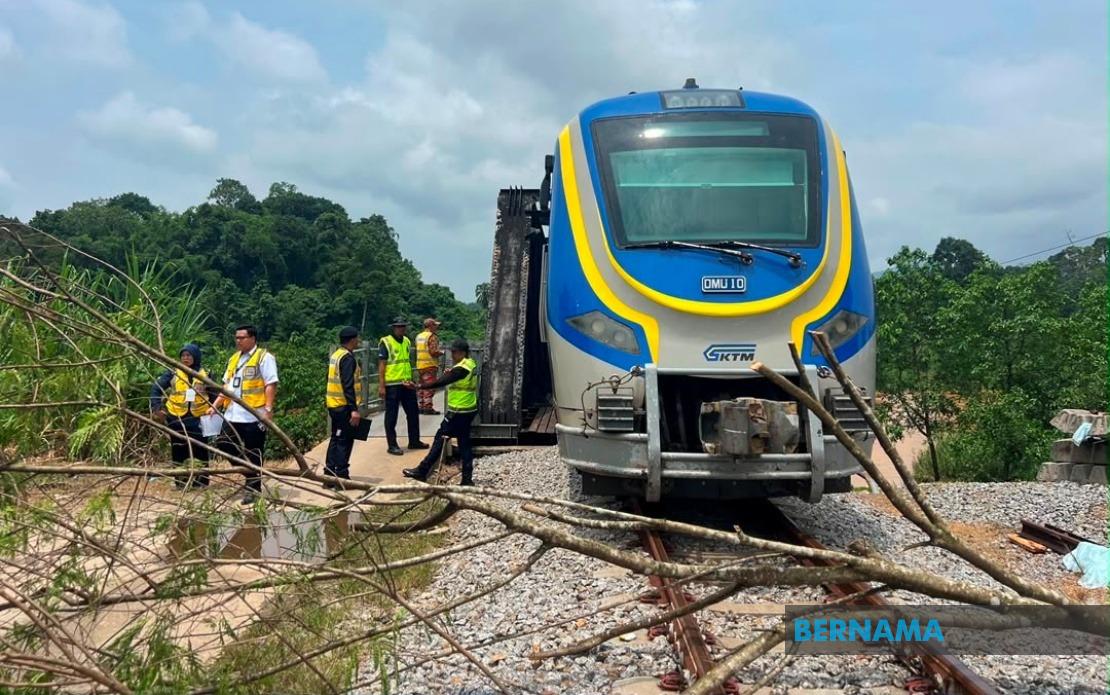
Keretapi Tanah Melayu Berhad (KTMB) has undertaken a comprehensive emergency response training initiative along the EX-Kemubu railway route, reflecting the company's commitment to strengthening disaster preparedness in one of the network's most geographically challenging corridors. The exercise, held in Kuala Krai, represents a systematic approach to identifying operational gaps and improving coordination mechanisms between KTMB and multiple emergency services in areas where terrain and distance create genuine obstacles to rapid response.
According to Khairul Naim Johdi, KTMB's Occupational Safety, Health and Environment general manager, the initiative centres on three critical evaluation areas: the accessibility of the incident location for rescue personnel, the elapsed time between incident notification and emergency team arrival, and the clarity and timeliness of information distribution to relevant authorities. The focus on these specific metrics underscores a pragmatic assessment that rural railway incidents present distinctive challenges absent in urban settings, where established infrastructure and shorter distances facilitate faster intervention.
The selection of the EX-Kemubu corridor as the training venue reflects deliberate strategic thinking. This section of the network exhibits multiple risk characteristics typical of Malaysia's remote rail infrastructure, including stretches that run adjacent to river systems and extensive isolation from main highways. These geographical realities mean that any genuine emergency occurring on this route would demand superior planning and inter-agency coordination to overcome the natural handicaps imposed by the landscape. The choice to conduct training in an environment that replicates actual operational conditions creates realistic scenarios that generic facility-based drills cannot replicate.
The scale of participation demonstrates the breadth of stakeholder involvement necessary for effective emergency management in the transport sector. Approximately 350 personnel representing 11 separate organizations participated, encompassing the Royal Malaysia Police, the Malaysian Fire and Rescue Department, the Ministry of Health, the Malaysian Civil Defense Force, and the Department of Social Welfare. This multi-agency approach reflects modern understanding that transport emergencies require coordinated responses from entities with overlapping but distinct mandates and capabilities. Police manage traffic and scene security, fire services handle rescue and extrication, health authorities coordinate medical response, civil defence provides additional manpower, and social welfare addresses victim support—each function essential to a comprehensive emergency operation.
The post-exercise evaluation methodology that KTMB intends to employ demonstrates institutional commitment to continuous improvement rather than mere compliance with regulatory requirements. By conducting structured debriefing sessions that incorporate feedback from all participating agencies, the railway operator creates opportunities to document actual performance gaps, timeline inefficiencies, and coordination breakdowns that occurred during the drill. This feedback loop transforms training from an isolated event into a component of an iterative refinement process, allowing identification of systemic issues that might otherwise remain hidden until a genuine crisis exposes them under far more consequential circumstances.
Khairul Naim emphasized that rural accessibility represents an ongoing challenge requiring sustained attention and resource allocation. The extended time required for rescue teams to reach incident sites in areas distant from major transportation corridors creates critical windows where passenger outcomes depend on initial on-scene response capabilities and the quality of information provided to incoming teams. This acknowledgment reflects realistic assessment that while KTMB can improve coordination and notification procedures through training, the fundamental constraint of geography cannot be eliminated—only managed more effectively through better planning and preparation.
The training programme operates within a broader KTMB framework of regular emergency preparedness activities. Large-scale exercises occur annually and rotate through the company's four operational regions, ensuring that personnel across different sectors of the network receive periodic intensive training relevant to their local circumstances. Complementing these annual major drills, smaller-scale exercises conducted throughout the year maintain staff proficiency in specific procedures and maintain institutional knowledge of emergency protocols. This tiered approach balances the resource intensity of comprehensive exercises with the need for continuous skill maintenance.
Internal communications procedures form a critical component of KTMB's emergency response architecture. The company has established a central operations control centre to which train staff must immediately report incidents, with control centre personnel then responsible for rapid notification to relevant external agencies. The effectiveness of this notification chain directly influences rescue response times; delays or miscommunications at any point cascade into extended emergency response intervals. Training therefore emphasizes not only what information must be communicated but how quickly and through what channels, recognizing that even minor procedural inefficiencies compound into significant operational consequences.
Passenger evacuation capabilities represent another substantive focus of KTMB's emergency preparedness investments. Train crew must possess both the knowledge and practical skills to safely remove passengers from rail vehicles under emergency conditions, which may involve darkness, difficult terrain, potentially hazardous weather, or the psychological stress that accompanies a genuine crisis. Training ensures that KTMB staff understand not merely the theoretical procedures but can execute them under conditions approximating real-world emergency stress, creating muscle memory that functions when cognitive resources are consumed by crisis management.
For Malaysian readers and the broader Southeast Asian context, KTMB's systematic approach to emergency preparedness illustrates how transport operators managing aging or geographically dispersed infrastructure must approach safety as a continuously managed function rather than a static compliance matter. The railway operator's willingness to test response capabilities in genuinely challenging terrain—rather than conducting exercises in controlled environments—suggests recognition that effective emergency management demands confronting actual operational difficulties. As Malaysia's railway network serves an increasingly diverse geography and passenger profile, the lessons learned from rural route emergency training become applicable to urban corridors and high-speed operations, where different challenges demand similarly rigorous preparation and inter-agency coordination.

