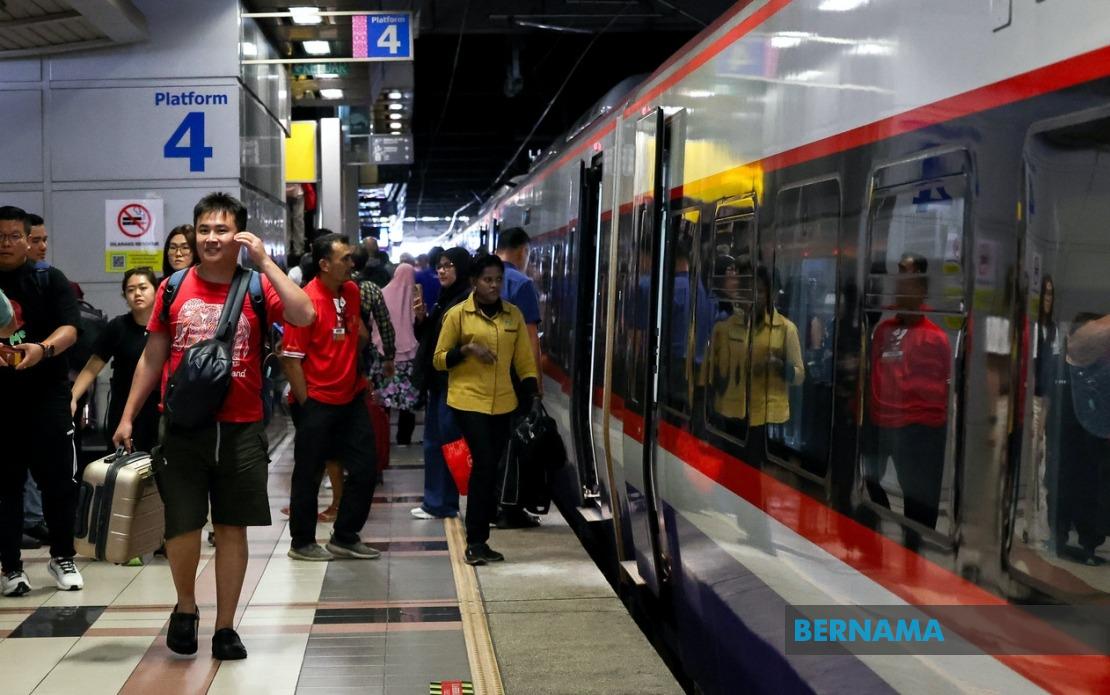
Malaysia's national railway operator Keretapi Tanah Melayu Berhad (KTMB) has announced a substantial expansion of Electric Train Service (ETS) capacity ahead of the Johor state election scheduled for this weekend, deploying an additional 7,464 seats across premium services linking the capital to the southern state. The measure underscores the logistical challenges facing the nation's transport infrastructure during major electoral events, when millions of citizens travel to their voting constituencies, often overwhelming regular service levels.
The expanded service will operate across two critical routes connecting the Klang Valley to Johor: the KL Sentral to JB Sentral corridor and the JB Sentral to Gemas line. KTMB has scheduled four supplementary train departures on each route, maintaining a daily capacity of 2,488 seats throughout the three-day operational window from July 10 to 12. This timing strategically brackets the election period, enabling voters to reach their hometowns in advance and return to their current residences afterward.
The decision to augment service capacity follows overwhelming public response to an earlier ticket allocation released on June 19, which sold out completely within days. This rapid depletion of inventory signaled genuine voter demand for convenient rail transport rather than alternative methods such as private vehicles or coach services. For many Malaysians, particularly those working in urban centres far from their hometowns, train travel represents the most practical option during election periods when roads become congested and journey times extend unpredictably.
To incentivize uptake of rail transport and further ease the financial burden on voters, KTMB is offering a uniform 20 percent discount on all additional ETS fares during the three-day promotion. This pricing strategy serves multiple objectives: it makes long-distance travel more affordable for lower and middle-income Malaysians who might otherwise abstain from voting due to transport costs, reduces pressure on road networks by shifting demand toward rail, and demonstrates corporate responsibility by state-owned KTMB during a critical national democratic exercise.
Ticket sales logistics have been staggered to manage demand systematically. The JB Sentral to Gemas route tickets opened at 3:00 pm on the announcement day, while the KL Sentral to JB Sentral allocation became available the following morning at 9:00 am. This deliberate spacing prevents a single surge overwhelming the online booking system and allows KTMB's digital infrastructure to process transactions in manageable waves. The railway operator has encouraged advance cashless purchases through multiple platforms: the KITS Style mobile application, its official website, and automated kiosk machines deployed throughout major stations.
The emphasis on cashless, advance bookings reflects contemporary transport management philosophy in Malaysia and aligns with the nation's broader digital economy initiatives. By directing passengers toward pre-purchase methods, KTMB reduces congestion at station counters on election weekend itself, minimizes cash-handling requirements, and generates accurate ridership data for operational planning. The KITS Style platform, in particular, represents KTMB's modernization efforts to compete with ride-sharing and coaching services that have captured market share through superior app-based user experiences.
Operational considerations have received explicit attention in KTMB's guidance to passengers. The directive to arrive thirty minutes before departure, coupled with the platform entrance closure five minutes pre-departure, establishes clear boundary conditions that prevent last-minute boarding surges from delaying services. For a railway system managing near-capacity utilization during election periods, such discipline ensures scheduled trains depart on time, preventing cascading delays that could leave stranded voters unable to reach polling stations.
The Johor election represents a significant political moment in Malaysian federalism, as the southern state holds substantial economic and demographic weight. Unlike federal elections where voters spread across thirteen states and three federal territories, state elections concentrate demand on specific routes, creating bottlenecks that require targeted intervention. KTMB's proactive capacity planning demonstrates institutional learning from previous electoral cycles and reflects coordination between the transport ministry and electoral authorities in anticipating citizen movement patterns.
For Southeast Asian context, Malaysia's approach to election-period transport logistics offers lessons regarding infrastructure resilience in democracies managing high-frequency electoral contests. The nation conducts regular federal elections, state elections in staggered cycles, and local municipal contests, creating perpetual demand for enhanced mobility services. Unlike countries where elections occur once every five years or longer, Malaysia's electoral calendar demands that transport operators maintain flexible excess capacity or rapid deployment capabilities to accommodate periodic surge demand.
Beyond the immediate election context, this initiative illustrates broader challenges facing Malaysian rail transport regarding utilization rates and profitability. ETS services operate as premium offerings within KTMB's portfolio, commanding higher fares than conventional rail services. Achieving consistent profitability on routes like KL-Johor requires either sustained high daily demand or strategic promotional pricing during peak periods. Election-related surges, though temporary, provide revenue opportunities and justify infrastructure investments by demonstrating demand elasticity and operational flexibility.
The 20 percent discount represents a calculated trade-off between revenue optimization and social responsibility. At full capacity, the 7,464 additional seats generate significant revenue even at discounted rates, while the promotion builds brand loyalty among price-sensitive passengers and establishes KTMB as the preferred choice for future long-distance travel. Some passengers incentivized by election-period discounts may retain rail-travel habits for subsequent journeys, expanding the operator's long-term customer base.
For stakeholders monitoring Malaysia's transport sector development, KTMB's election response highlights both capabilities and limitations. The operator successfully mobilizes additional rolling stock, coordinates scheduling across interconnected routes, and implements multi-channel ticketing within a compressed timeframe. However, the need for temporary capacity augmentation during predictable peak periods suggests underlying structural constraints—insufficient baseline fleet size to handle genuine demand or revenue models that prevent year-round operation at optimal capacity levels.
Passengers should contact KTMB's call centre at 03-9779 1200 for specific enquiries or visit the operator's official social media channels for real-time updates. As Malaysia approaches the election weekend, this expanded rail service stands as a practical example of how public institutions mobilize resources to facilitate democratic participation while simultaneously addressing transportation system efficiency and sustainability goals.

