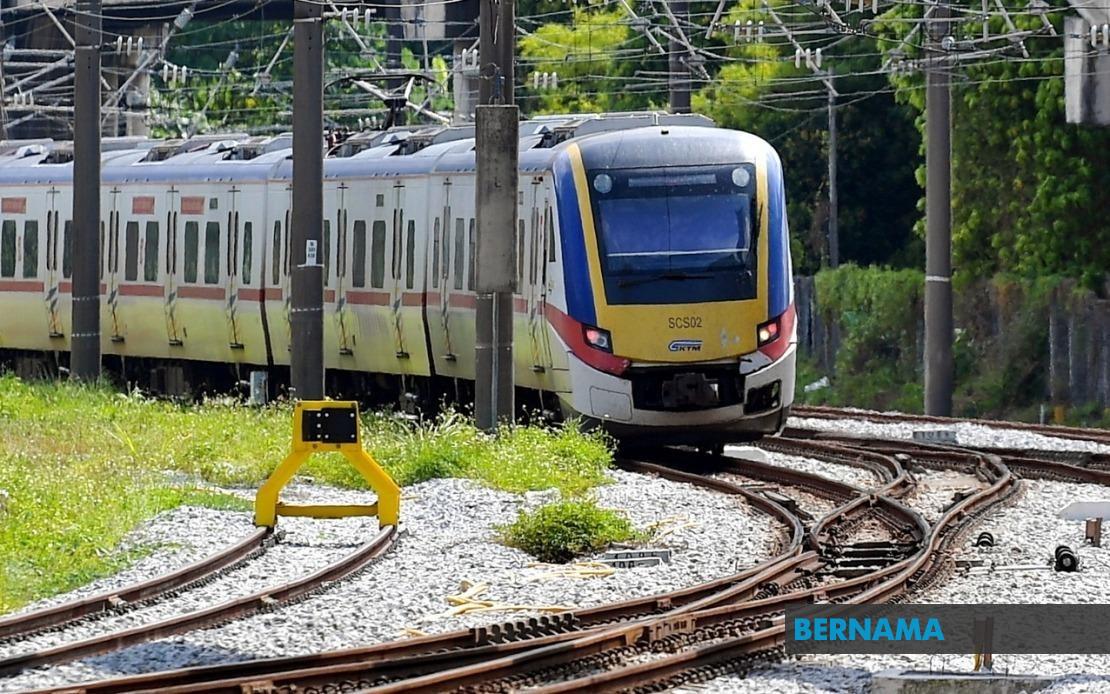
Keretapi Tanah Melayu Berhad (KTMB) is ramping up its rail capacity substantially to manage the holiday rush expected during the upcoming National Day celebrations and school break. The national rail operator announced plans to introduce 124 additional services across its Electric Train Service (ETS) and Electric Multiple Unit (EMU) Plus networks, collectively providing 38,944 seats to commuters travelling between major destinations.
The surge in capacity reflects KTMB's strategic response to holiday-season demand patterns, when Malaysians traditionally undertake extended intercity journeys to visit family, explore tourist destinations, or participate in festive activities. The company's decision to significantly expand services demonstrates recognition of shifting travel behaviour among the middle-income population driving passenger rail growth in the country. According to KTMB's own data, the railway sector has experienced robust patronage growth, particularly as road congestion and fuel costs make rail travel increasingly competitive for families planning multi-day trips.
The ETS component of this expansion encompasses 100 additional services offering 31,600 seats, spread across three distinct periods running from August 21 to 23, August 28 to 31, and September 4 to 6. This scheduling strategy allows KTMB to target multiple holiday waves, accommodating both early travellers heading out during the initial holiday window and those returning during the extended school break that follows. The staggered deployment reflects operational realities and the pattern of Malaysian school holiday distributions, ensuring the operator concentrates resources during confirmed peak-demand windows rather than maintaining continuous elevated capacity.
Complementing the ETS expansion, KTMB will deploy 24 additional EMU Plus services providing 7,344 seats on selected dates throughout the August 21 to September 6 window. A particularly significant element involves extending EMU Plus coverage to Bandar Tasik Selatan, a southern Klang Valley suburban hub increasingly important as an interchange point for commuters accessing the broader rail network. This route extension suggests KTMB's recognition that holiday demand patterns differ from weekday commuter flows, with leisure travellers originating from diverse suburban locations rather than concentrating on traditional employment centres.
The KTM Komuter service operating in peninsular Malaysia's northern region will similarly experience capacity enhancements. Eight additional daily services on the Padang Besar-Butterworth-Padang Besar route, operational from August 27 to 31, will increase total daily service frequency to 46 trains. This northern corridor sees particular pressure during holiday periods when Malaysian travellers heading to Kedah and Perlis, or conducting cross-border travel to Thailand, create seasonal demand spikes that routine scheduling struggles to accommodate. The incremental approach to northern route expansion reflects the region's distinct travel patterns compared to the high-volume central and southern corridors.
Ticketing arrangements indicate KTMB's confidence in strong demand uptake, with advance sales commencing through official channels immediately following the announcement. This early opening of reservations for future services represents standard industry practice enabling the operator to gauge demand intensity and potentially adjust service frequencies, whilst simultaneously capturing advance revenue essential for covering operational costs associated with deploying additional trainsets and staff. The pricing mechanism for supplementary services and any potential dynamic pricing strategies remain undisclosed, though competitive positioning against express bus operators typically constrains ETS pricing flexibility.
Beyond operational announcements, KTMB utilised the holiday period strategically for customer engagement initiatives, conducting appreciation activities throughout August 10 to 14 to commemorate the ETS service's 16th anniversary. Promotional offerings including vouchers, complementary meal packages from food partners, complimentary journey tickets, and direct fare discounts of RM16 simultaneously celebrate service longevity whilst incentivising trial among price-sensitive segments of the travelling public. Anniversary commemorations serve dual marketing functions, reinforcing brand loyalty amongst existing users whilst creating promotional hooks to attract latent demand from potential passengers.
Operational performance data reinforces the expansion decision's logic. ETS ridership statistics from January through July 2024 documented 3.67 million passengers, representing a substantial 56 percent year-on-year increase from 2.36 million passengers in the identical 2023 period. This growth trajectory substantially exceeds Malaysia's general economic and population growth rates, indicating genuine modal shift dynamics favouring rail over alternative transport modes. Cumulatively, the ETS network has transported 44.3 million passengers since its August 2010 inaugural service to Ipoh, establishing it as a significant component of Malaysia's transport infrastructure.
The strategic service expansion timeline reveals KTMB's multi-phase network development philosophy. Initial ETS operations commenced on the Kuala Lumpur-Ipoh corridor in 2010, subsequently expanding northbound to Butterworth and Padang Besar in 2015. A planned further southbound expansion scheduled for late 2025 will extend ETS coverage into additional regional markets, suggesting ongoing capital investment in rolling stock and supporting infrastructure. This phased geographic expansion approach distributes investment risk whilst allowing the operator to build demand gradually in emerging markets before deploying additional capacity.
From a regional Southeast Asian perspective, Malaysia's railway capacity expansion demonstrates the broader pattern of regional governments investing in rail infrastructure to support economic development and address urban congestion. KTMB's decision to increase holiday-season capacity reflects similar strategic choices made by transport authorities across Thailand, Vietnam, and Indonesia, where periodic capacity surges during holiday windows have become standardised operational practice. The Malaysian approach differs in its integration of traditional and modern service tiers, with both EMU Plus premium positioning and KTM Komuter regional service expansion suggesting sophisticated market segmentation strategies.
The implications for Malaysian commuters extend beyond immediate holiday convenience. Sustained capacity expansion signals operator confidence in long-term demand sustainability, justifying ongoing capital investment in rolling stock procurement and infrastructure enhancement. Consumer behaviour shifts evident in the 56 percent ridership growth suggest railway operators are successfully competing against traditionally dominant bus and private vehicle alternatives, particularly for intercity journeys where travel time reliability and comfort advantages become decisive. The expansion programme thus represents measurable progress toward the national transport policy objective of modal shift towards more sustainable, publicly-managed transport systems.
Looking forward, KTMB's expansion capacity during peak seasons provides operational learning opportunities regarding demand elasticity, pricing sensitivity, and infrastructure constraints. Performance metrics derived from August-September service delivery will inform future capital allocation decisions, potentially justifying permanent capacity additions on heavily-utilised corridors. The holiday-season expansion thus functions simultaneously as customer service initiative, revenue-generation opportunity, and operational data-gathering exercise informing longer-term strategic planning for Malaysia's essential rail transport infrastructure.

