The Ministry of Housing and Local Government is recalibrating its maintenance strategy to address the growing backlog of ageing People's Housing Programme developments across the nation. With PPR stock now spanning multiple decades, the ministry has adopted a prioritisation framework that concentrates resources on housing complexes older than ten years, where structural and mechanical systems have begun showing their age. This targeted approach reflects a pragmatic acknowledgment that limited government funds cannot stretch to address every maintenance need simultaneously across thousands of PPR blocks nationwide.
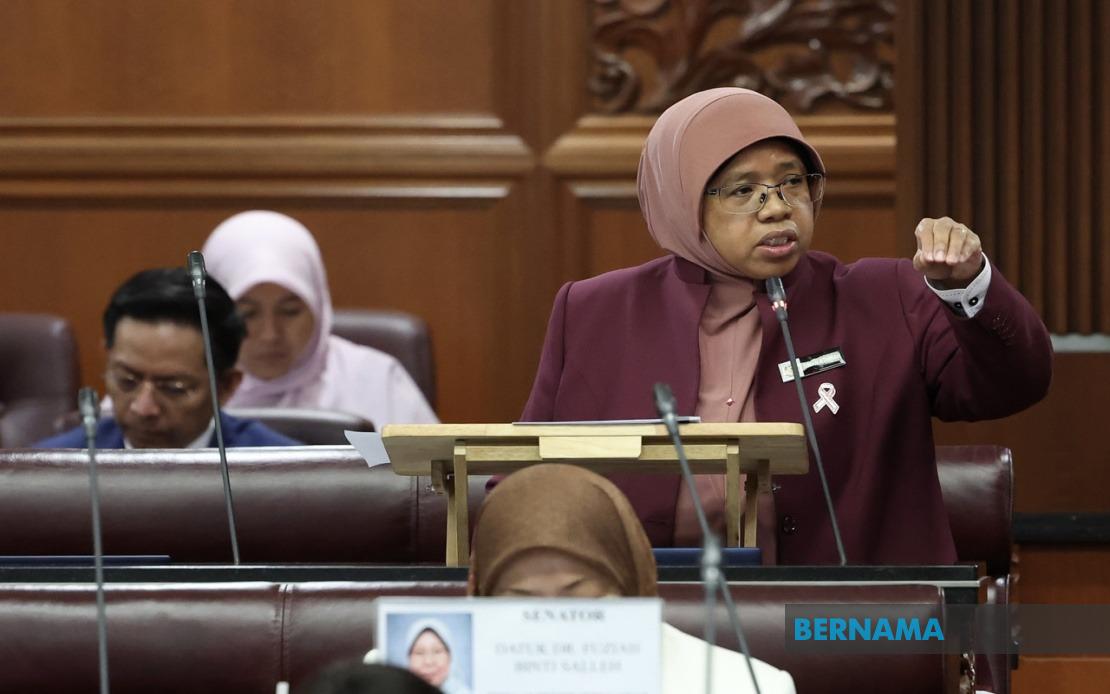
Deputy Housing and Local Government Minister Datuk Aiman Athirah Sabu outlined the maintenance hierarchy during a parliamentary session, revealing that the ministry's strategy focuses on defects posing the most immediate threat to resident safety and livability. The priority list encompasses lift systems, roof structures, water storage tanks, piping networks for water distribution, sewage systems, electrical infrastructure, and structural repairs to common areas such as corridors, lobbies and recreational spaces. These categories represent the backbone systems that, when compromised, can render large residential buildings uncomfortable or even hazardous for their occupants within weeks or months.
The budgetary reality facing Malaysia's housing maintenance challenge became starkly apparent when examining the resource gap between demand and allocation. Under the 12th Malaysia Plan framework, the ministry deployed RM159.1 million across five rolling maintenance programmes specifically targeting high-rise PPR developments. However, this cumulative expenditure masks a deeper problem: in 2026 alone, maintenance applications totalling RM79.9 million were submitted by housing management bodies, yet the ministry could only approve RM44.6 million—representing just 56 percent of requested amounts. This shortfall means that for every ringgit homeowners and management bodies identify as necessary for upkeep, government funding covers barely half a ringgit.
The administrative pathway for securing maintenance funding reveals the layered bureaucracy that delays repairs in PPR communities. Applications must navigate approval workflows spanning multiple months and institutional layers. Joint Management Bodies and Management Corporations first submit proposals to either the Commissioner of Buildings or relevant local authorities, who then forward approved applications to the ministry. The process follows a rigid calendar: applications are accepted only during August through October, with subsequent evaluation phases occurring in November and December, followed by Controlling Officer approval in January and local authority notification thereafter. Letters of Acceptance, which enable projects to actually commence, are not issued until April—a nine-month lag between initial submission and project start.
This extended timeline carries real consequences for residents living in aging PPR blocks where systems are deteriorating. A leaking roof identified in September will not receive approval for repair until January at the earliest, meaning six months of continued water damage to units below. Faulty lift systems flagged in October could endanger residents for months while administrative processes unfold. The sequential nature of these approval phases—requiring working committees in November, steering committees in December, and officer consideration in January—suggests a system designed more for orderly governmental process than for urgent resident needs.
The maintenance challenge confronting Malaysia's PPR sector reflects a broader Southeast Asian phenomenon of aging social housing stock reaching critical maintenance phases simultaneously. Countries across the region invested heavily in affordable housing during the 1980s and 1990s, but as these developments enter their third and fourth decades, maintenance demands accelerate while construction budgets have been reallocated to new development. Malaysia's PPR system now houses hundreds of thousands of low-to-middle-income residents concentrated in aging mid-rise and high-rise blocks, particularly in urban centres like Kuala Lumpur, George Town, and Johor Bahru. When lift systems fail or water distribution networks corrode in these densely-occupied buildings, the impact affects not dozens of families but thousands.
The ministry's emphasis on critical defects reflects a realistic prioritisation hierarchy but also masks the accumulating list of deferred maintenance. Beyond the priority categories addressing immediate safety and essential services, countless PPR blocks suffer from deteriorating common areas, crumbling external facades, corroded water pipes causing recurring contamination, electrical systems reaching capacity limits, and structural cracks that worsen annually. These problems do not immediately threaten lives but they steadily erode the habitability and economic value of residents' homes. For middle-aged and elderly residents in PPR housing—often fixed-income pensioners—the psychological and financial toll of living in visibly declining surroundings compounds economic hardship.
The funding constraints revealed in these parliamentary answers hint at systemic challenges in how Malaysia finances social housing upkeep. The RM159.1 million disbursed through rolling plans under the 12th Malaysia Plan—while substantial in absolute terms—must be spread across hundreds of PPR projects nationwide containing tens of thousands of units. This works out to relatively modest per-project allocations that, when combined with construction cost inflation affecting Malaysia like the rest of the region, cover only the most critical repairs. Preventive maintenance—the regular upkeep that forestalls expensive emergency repairs—becomes impossible when available funds barely cover crisis interventions.
The gap between maintenance need and government allocation signals that solutions must extend beyond ministry budgets alone. Management bodies representing residents could theoretically fund maintenance through resident contributions, but PPR residents by definition have limited disposable income. Some states have experimented with housing levies or development impact fees that could support maintenance funds, but these approaches remain inconsistent across Malaysia. Public-private partnerships in housing maintenance have gained traction elsewhere in Southeast Asia, where third-party operators assume maintenance responsibilities in exchange for predictable revenue streams, though implementation requires careful structuring to prevent cost-shifting to vulnerable residents.
For Malaysian readers and policymakers, the maintenance challenge facing aging PPR stock deserves higher political priority than current resource allocations suggest. These are not luxury developments where deferred maintenance represents a convenience issue; they are the homes of lower-income Malaysians whose housing security and quality of life depend on functional lift systems, clean water, reliable electricity, and structurally sound buildings. The nine-month approval cycle, while administratively logical, appears incompatible with a maintenance crisis where deterioration accelerates daily. The gap between requested maintenance funding and approvals—with less than 60 percent of needs being met—indicates a system operating in permanent deficit mode rather than keeping pace with aging infrastructure demand.

