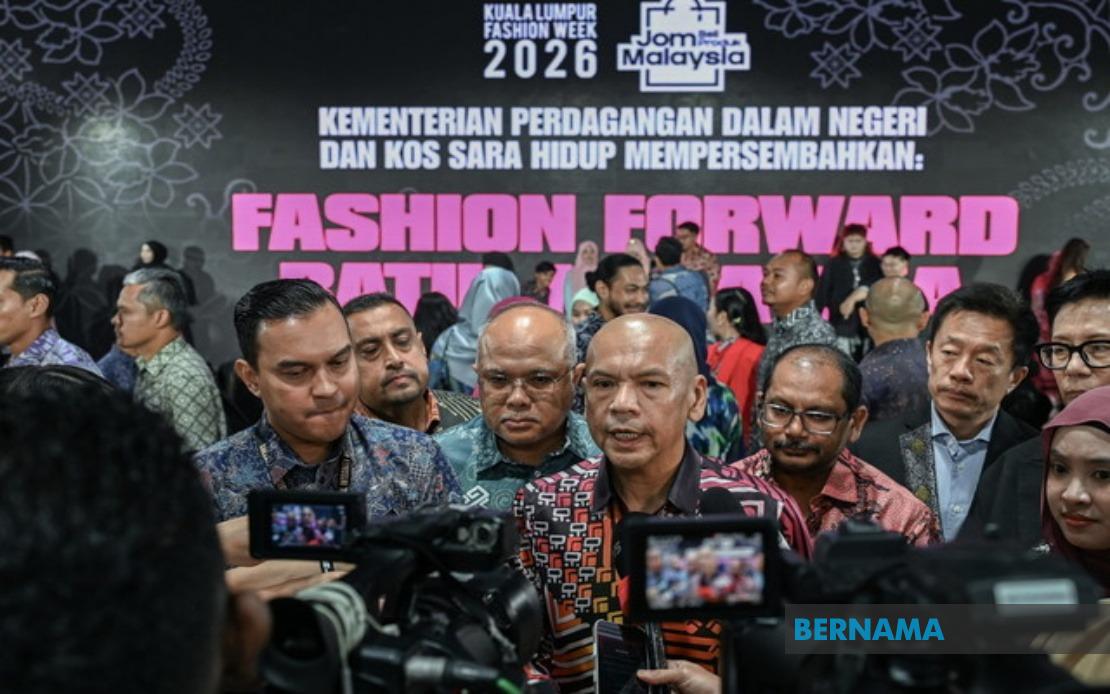
The Malaysian government is taking a more inclusive approach to boosting domestic product consumption, with the Ministry of Domestic Trade and Cost of Living (KPDN) actively soliciting input from all stakeholders to refine its push for greater reliance on locally made goods. Minister Datuk Armizan Mohd Ali unveiled this consultation strategy while attending the Fashion Forward Batik segment at Kuala Lumpur Fashion Week 2026, signalling the government's intent to align its local product empowerment policies with the actual needs and perspectives of the private sector and industry players.
The initiative centres around a newly established Cabinet Committee tasked with empowering the use and purchase of local products, chaired by Deputy Prime Minister Datuk Seri Fadillah Yusof and supported by KPDN as secretariat. This committee represents a deliberate shift away from siloed departmental operations towards a more coordinated, whole-of-government approach. The government recognises that without breaking down institutional barriers between ministries, its efforts to promote local products risk duplication, inconsistency, and failure to address industry pain points comprehensively. By bringing together the Ministry of Economy, the Ministry of Investment, Trade and Industry (MITI), the Ministry of Tourism, Arts and Culture (MOTAC), the Ministry of Entrepreneur Development and Cooperatives (KUSKOP), the Finance Ministry, and other relevant agencies, the committee aims to present a unified front.
The timing and scope of this consultation effort reflect genuine anxieties within Malaysia's business community. Local entrepreneurs have increasingly voiced concerns about the flooding of foreign products into the domestic market, particularly through online sales channels where foreign competitors operate with price advantages and global brand recognition. The committee's formation signals that policymakers understand these grievances and recognise that sustainable support for local businesses requires understanding what barriers they face and what assistance would genuinely move the needle. By inviting proposals and feedback, the government is acknowledging that bureaucratic planning divorced from ground-level reality produces poor outcomes.
Armizan emphasised that the committee's first meeting is imminent, and the feedback received from stakeholders will directly inform the proposals presented to the Cabinet. This suggests the government is serious about incorporating external voices into high-level decision-making, rather than treating consultation as a perfunctory exercise. The structure indicates that suggestions and views can flow through KPDN or other relevant agencies, creating multiple entry points for stakeholder input. This design reduces the chance that feedback from smaller or less-connected players gets lost in a narrow funnel.
The strategic connection between KPDN's initiative and the Kuala Lumpur Fashion Week underscores how the government intends to leverage existing platforms and events to advance its local product agenda. KLFW achieved a media value record of USD32 million during the previous edition, demonstrating significant international reach and influence within the global fashion industry. By collaborating with KLFW through the Jom Beli Produk Malaysia (JOM MALAYSIA) movement, the government is positioning Malaysia's batik and other culturally rooted products as premium exports rather than domestic-only commodities. This strategy recognises that local products gain credibility and appeal when they succeed internationally, which in turn strengthens their position in home markets.
The fashion and textile sector provides a compelling case study for why this coordinated approach matters. Batik, with deep cultural roots in Malaysia and Indonesia, represents intellectual property and heritage value that foreign competitors cannot replicate. Yet without proper marketing infrastructure, policy support, and cross-ministry coordination—spanning trade promotion, cultural preservation, tourism development, and entrepreneurial financing—batik producers struggle to scale beyond niche markets. KLFW serves as a vehicle to showcase these products to international buyers and media, but the real work happens when KPDN, MOTAC, KUSKOP, and other agencies align their support systems to help producers capitalise on such exposure.
Broader economic considerations add weight to this initiative. The cultural and creative industries contributed RM130.7 billion, or 6.8 per cent of gross domestic product, according to the 2024 Cultural and Creative Satellite Account Report. This figure underscores that local product empowerment is not merely a nationalist sentiment but a genuine economic driver. As Malaysia seeks to diversify away from commodity-dependent sectors and build higher-value manufacturing and creative output, the success of culturally rooted local products becomes strategically important. The government's push to strengthen this sector aligns with broader economic transition goals.
For regional context, Malaysia's challenge mirrors patterns across Southeast Asia. Countries like Indonesia, Thailand, and Vietnam face similar pressures from cheap imports and the rise of e-commerce retailers unbounded by geography. Nations that have successfully elevated domestic product consumption have typically done so through coordinated strategies encompassing brand development, quality standards, supply chain support, and targeted procurement policies. Malaysia's Cabinet Committee approach acknowledges this regional lesson, suggesting policymakers have studied what works elsewhere and are adapting those models.
The emphasis on stakeholder feedback also reflects a maturation in how Malaysian policymakers approach industrial policy. Earlier interventions sometimes suffered from top-down design disconnected from market realities. By explicitly inviting proposals from industry players, entrepreneurs, retailers, and other stakeholders, the government is signalling that effective policy emerges from dialogue rather than decree. This approach increases the likelihood that strategies will address genuine bottlenecks—whether high financing costs, difficulty accessing distribution networks, inadequate technical skills, or unfair competition from grey imports.
For small and medium enterprises (SMEs) in Malaysia, this opening represents both opportunity and responsibility. SMEs account for the majority of local product manufacturers but often lack the resources to engage with government directly or navigate bureaucratic processes. The invitation for stakeholder feedback should be interpreted by industry associations, chambers of commerce, and sector bodies as an opportunity to consolidate SME concerns and present coherent proposals. The more concrete and evidence-based the feedback, the more likely it will influence the Cabinet Committee's recommendations.
The success of this consultation process will be measured by whether the resulting policies address the specific obstacles that prevent local products from gaining greater market share. Generic proclamations about buying local have limited impact if they are unaccompanied by mechanisms such as preferential procurement policies, targeted subsidies for quality improvement, protection against unfair import practices, or simplified financing for export promotion. The Cabinet Committee's composition suggests the government has the tools at its disposal; the question is whether stakeholder input will translate into genuine resource allocation and policy change.
Looking forward, the timing of KLFW 2026 as a venue for announcing this initiative is symbolic. Fashion weeks are inherently forward-looking, showcasing visions of what the industry can become. By launching the stakeholder consultation at such an event, KPDN frames local product empowerment not as defensive protectionism but as an offensive strategy to build Malaysian brands on global stages. This framing matters for both domestic and international perception, positioning Malaysia's local product push as consistent with open markets and competition, provided that competition is fair and that local players have genuine support to compete effectively.

