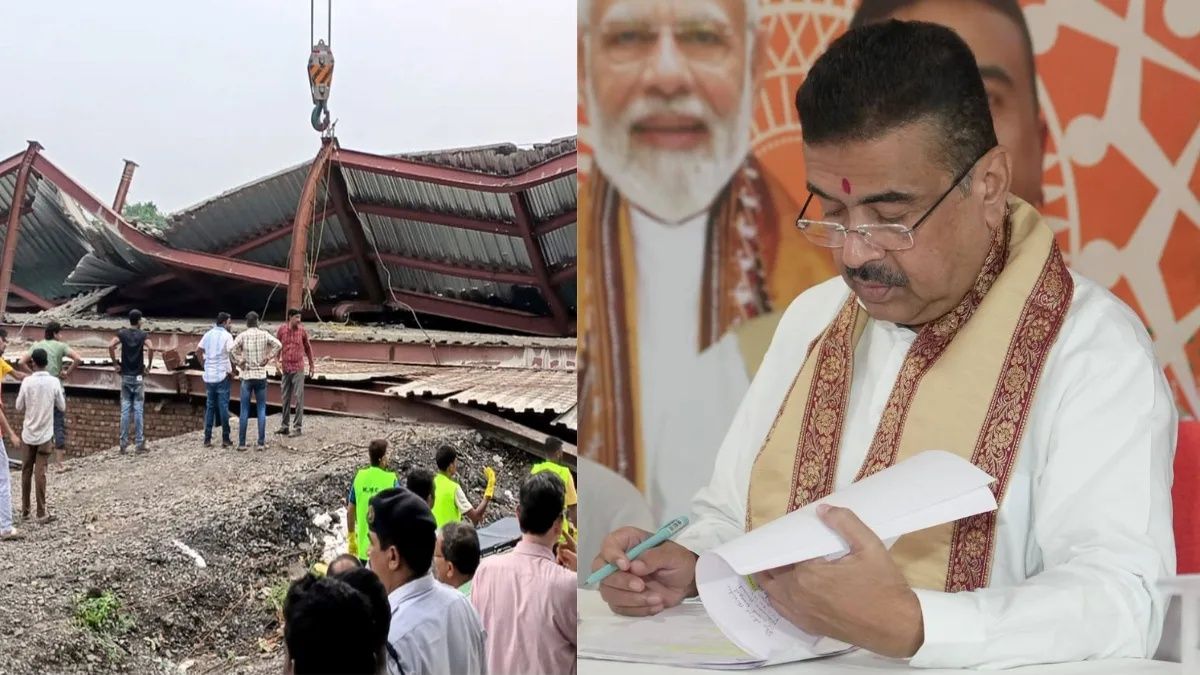
The rescue operation following the catastrophic collapse of a warehouse in Kolkata's Taratala neighbourhood entered its second day on Thursday with grim developments. The confirmed death toll has risen to 11, with the latest victim brought to the Trauma Care Centre at SSKM Hospital around 1.15pm on June 25. Authorities have not yet confirmed the identity of the deceased, whilst apprehension persists that additional workers remain trapped beneath the collapsed structure. The incident has triggered an intense response involving personnel from the Indian Army, the National Disaster Response Force (NDRF), and multiple state agencies working in coordinated fashion to extract victims from the rubble.
West Bengal Chief Minister Suvendu Adhikari used the occasion to launch a scathing political critique during assembly proceedings, directing blame squarely at the former Kolkata Municipal Corporation (KMC) board led by the Trinamool Congress (TMC). Adhikari alleged that the building approval process had been riddled with serious irregularities and that structural design flaws had been knowingly overlooked during sanctioning. He presented documentary evidence in the assembly, including signatures from former Mayor Firhad Hakim, to substantiate claims that the construction plan had been approved despite its compromised integrity. The assertions form part of a broader indictment of the previous municipal administration's oversight mechanisms.
The chief minister expanded his criticism to encompass systemic corruption within the approval framework, asserting that "cut money" payments and corrupt practices had transformed Kolkata into what he termed a "city of death." His remarks suggest that the warehouse collapse may represent a symptom of deeper institutional failures rather than an isolated accident. Adhikari questioned the conduct of engineers and officials who had sanctioned the flawed plan, signalling intent to pursue accountability across the approval chain rather than confining responsibility to a single entity.
Investigative efforts have already yielded five arrests spanning multiple facets of the construction ecosystem. Those detained include the construction company's supervisor, the individual responsible for fabricating the iron structural elements, the lessee of the land, a labour supplier operating under the Trimex contractor arrangement, and a broker implicated in facilitating the KMC approval process. However, the primary accused, identified as Azgar, remains at large, and authorities have intensified efforts to apprehend him. The breadth of arrests underscores the investigation's systematic approach to identifying all parties involved in what may constitute criminal negligence.
In response to the disaster, Adhikari announced an extraordinary suspension of construction activity across Kolkata and surrounding municipalities. All non-essential building work will cease for four weeks in areas encompassing the Kolkata Municipal Corporation zone, Rajarhat-New Town, Maheshtala, Budge Budge, Pujali, Bishnupur, Sonarpur, Baruipur, and adjoining regions. This sweeping moratorium reflects the severity of the crisis and the government's determination to prevent similar incidents. Throughout this suspension period, every approved building plan in these areas will undergo rigorous audit, creating a citywide reset in construction governance.
To oversee this unprecedented audit exercise, West Bengal has established a high-level committee chaired by Additional Chief Secretary Rajesh Pandey. The committee's composition reveals the government's intent to marshal expertise from multiple domains. Beyond state government officials, the body includes technical representatives from IIT Kharagpur, Rail India Technical and Economic Service (RITES), Indian Railway Construction Limited (IRCON), the Fire Services Department, the Public Works Department, and the KMC itself. This diverse expert panel signals an attempt to introduce independent technical scrutiny and specialist knowledge into what had previously been a municipal-dominated approval system.
The involvement of premier institutions like IIT Kharagpur and specialised technical services suggests recognition that conventional building oversight had proven inadequate. By incorporating railway engineering expertise and fire safety representatives, the committee demonstrates awareness that warehouse and industrial structures require multidisciplinary assessment beyond standard architectural and civil engineering review. The audit framework appears designed to identify systemic weaknesses in building codes, enforcement mechanisms, and inspection protocols that may have contributed to the Taratala collapse.
For Malaysian readers and Southeast Asian observers, this incident carries particular relevance given the region's rapid industrial and commercial growth. Many countries in Southeast Asia, including Malaysia, operate with similar warehouse and construction sectors where oversight capacity may lag behind development pace. The Kolkata case illustrates how approval processes can be compromised by corruption and insufficient technical scrutiny, risks that remain present across the region. Malaysia's own building safety frameworks, whilst relatively robust, continue to face challenges in enforcement and preventing unauthorised modifications to approved structures.
Adhikari's assertion that his government would make no compromise regarding public safety extended to financial consequences for the guilty. He declared that those convicted would face imprisonment and potentially confiscation of property to compensate victims, signalling a hardline approach to accountability. This stance reflects growing pressure on Indian state governments to demonstrate tangible consequences for infrastructure failures that cost lives. The threat of asset confiscation represents an escalation beyond standard criminal penalties and suggests the political stakes surrounding this disaster remain extraordinarily high.
The Taratala warehouse collapse thus represents more than a localised tragedy. It has crystallised concerns about building governance in India's major metropolitan areas and prompted state-level intervention on a scale rarely seen. For regional policymakers, the incident underscores the imperative of maintaining robust, transparent, and technically competent building approval systems even during periods of rapid development and construction booms. The four-week suspension and comprehensive audit represent an acknowledgement that emergency measures sometimes become necessary when institutional safeguards have deteriorated to dangerous levels.

