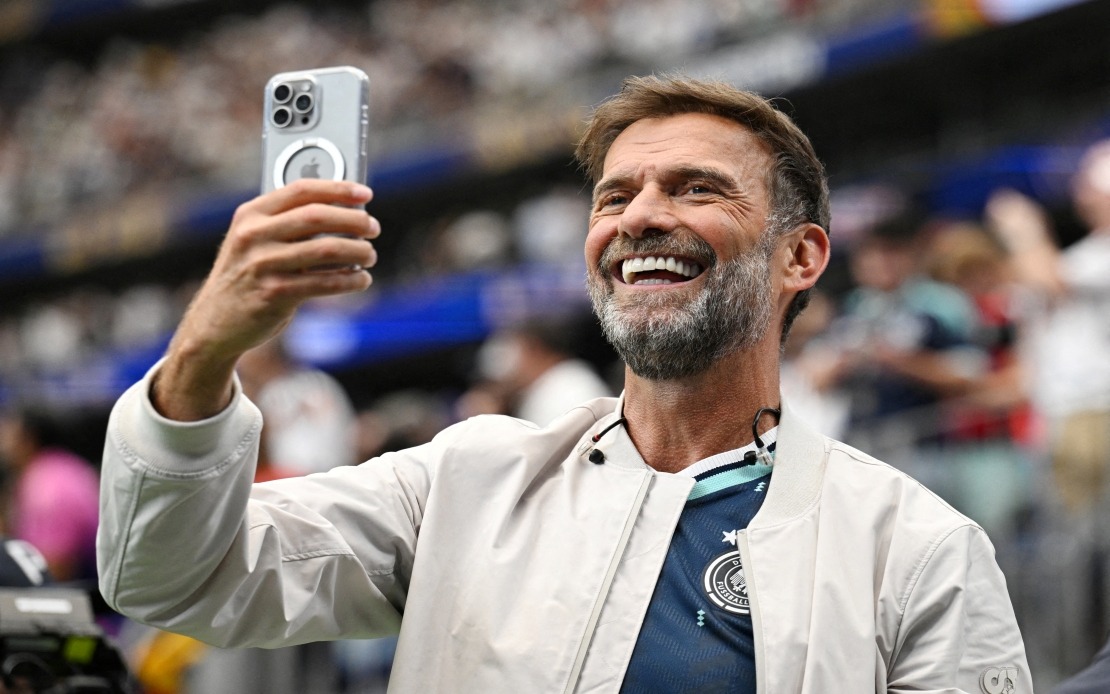
Jürgen Klopp has officially acknowledged that he is engaged in substantive talks with the German Football Federation (DFB) regarding the vacant position of national team coach, following Julian Nagelsmann's announcement that he will step down from the role. Speaking on MagentaTV, the former Liverpool manager indicated his willingness to pursue the opportunity while tempering expectations about the timeline for reaching a final agreement.
Nagelsmann's departure came after Germany's disappointing exit from the World Cup at the last-32 stage, where the team lost on penalties to Paraguay. The result marked a significant setback for the DFB and prompted the federation to explore alternatives at the helm. Klopp's emergence as a leading candidate carries considerable weight given his track record of sustained success across multiple top-tier European clubs, though his transition to the national team environment would represent a distinct challenge in his managerial career.
Despite the apparent alignment between Klopp's availability and the DFB's immediate need, the legendary tactician stressed that simply replacing one coach with another would not address the underlying structural and competitive issues facing German football. He explicitly noted that the federation's current difficulties extend beyond any individual manager's influence, suggesting that comprehensive deliberations about the direction of the national programme must precede any appointment decision. This perspective indicates Klopp's methodical approach to potentially the most demanding position in European football.
Klopp's current status as Head of Global Soccer at Red Bull provides him with flexibility absent during his intensive club commitments. He departed Liverpool in summer 2024 and has had several months to recharge, a period he characterised as restorative. His statement that he is "more than recharged and ready" signals genuine interest in returning to hands-on coaching, though the extensive contractual obligations binding him to the energy drink company present a significant complication that cannot be easily resolved.
The question of his Red Bull contract, which extends until 2029, looms large over these negotiations. Klopp acknowledged that he has already engaged Oliver Mintzlaff, his superior at Red Bull, to discuss the logistics of a potential departure. The manager's insistence that any resolution must allow Red Bull to emerge with its reputation unscathed reflects both diplomatic sensitivity and the commercial realities governing modern football. The company's global investment in football and its brand positioning mean that any exit arrangement must be carefully constructed to preserve stakeholder relationships.
Notably, Klopp offered genuine praise for Nagelsmann, describing him as an "extraordinary coach" and acknowledging that the narrative surrounding the national team would differ substantially had Germany succeeded against Paraguay. This measured characterisation stands in contrast to how transitions sometimes unfold in football, where departing coaches occasionally become targets for criticism. Klopp's respectful framing suggests he recognises the pressures inherent in managing the German national team and understands that individual performance cannot be divorced from broader systemic challenges.
The appointment of a Germany manager carries implications extending well beyond the domestic Bundesliga ecosystem. As a nation with historically deep traditions of football excellence and infrastructure, Germany's performances carry symbolic weight across European football hierarchies. A manager of Klopp's stature would be expected to revitalise not merely tactical approaches but the entire psychological and cultural framework through which German football operates at the international level. This represents a project of enormous scope, requiring not merely tactical innovation but strategic reconstruction.
For Southeast Asian observers, Klopp's potential appointment would intersect with broader questions about how elite football talent migrates through global networks. German football's relationship with Asian markets, player development pathways, and the internationalisation of coaching represents a story with regional dimensions. The DFB's deliberations about its next manager occur within broader contexts of how European football federations engage with global commercial realities and competitive pressures.
The timeline for resolution remains deliberately open-ended. Rather than rushing toward announcement, all parties appear committed to thorough investigation of whether the managerial appointment framework and Klopp's appointment specifically can address the multifaceted challenges confronting German football. This approach contrasts with the immediate reaction model sometimes prevalent in football decision-making, suggesting the DFB recognises that hasty solutions often generate further complications. The coming weeks will reveal whether the various stakeholders—Klopp, Red Bull, and the DFB—can construct an arrangement satisfying their respective interests while maintaining football's fundamental priority of competitive success.

