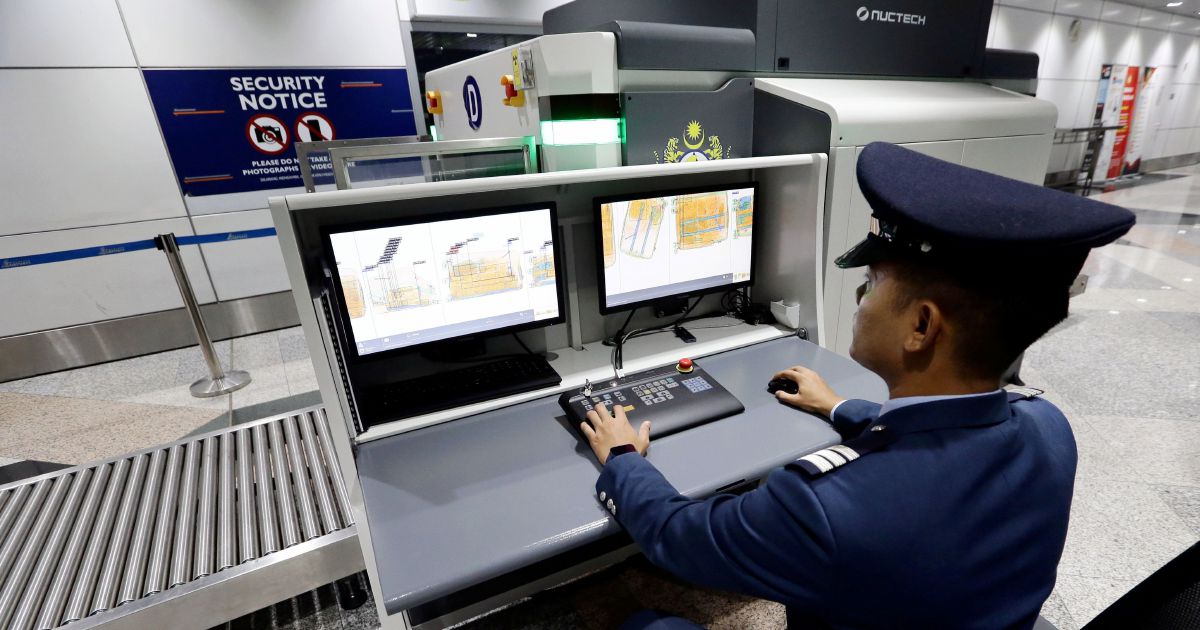
Malaysia's premier aviation gateway faces a critical reassessment of its security operations following Home Minister Datuk Seri Saifuddin Nasution Ismail's disclosure that the scanning infrastructure at Kuala Lumpur International Airport performs as designed, yet systematic vulnerabilities persist due to operational procedures rather than technological deficiency. The revelation reframes the ongoing controversy surrounding narcotics trafficking through the facility, shifting focus from infrastructure investment to procedural overhaul as the pathway to enhanced border security.
Saifuddin's statement clarifies that the advanced detection apparatus installed at KLIA possesses sufficient technical capacity to identify various categories of prohibited items, including controlled substances. The scanners themselves meet international standards for contraband identification and are regularly maintained to ensure operational efficacy. This technical capability, however, exists within a protective framework of operating protocols that have been engineered with particular emphasis on threat categories deemed most immediately dangerous to aviation safety and national security.
The distinction between equipment capability and operational deployment becomes crucial when examining why drug seizures at Malaysian airports have fluctuated inconsistently despite possession of state-of-the-art screening technology. The current standard operating procedures governing passenger and baggage screening have been structured around the primary objective of identifying and preventing weapons, explosives, and other items classified as immediate physical threats to aircraft operations. This categorical prioritisation, while justified by legitimate aviation safety concerns, has inadvertently created operational gaps where certain contraband categories receive less intensive scrutiny than others.
For Malaysian travellers and the broader public, this disclosure carries significant implications regarding airport security effectiveness and the distinction between having advanced tools and deploying them optimally. Public confidence in border management depends not merely on equipment specifications but on how those systems are integrated into coherent security protocols that address the full spectrum of transnational threats. The Home Ministry's acknowledgement suggests recognition that technological solutions alone cannot substitute for comprehensive procedural frameworks.
The Southeast Asian context amplifies the urgency of procedural refinement at KLIA. The region remains a critical transit point for international drug trafficking networks, with Malaysia occupying a geographic position that makes its major airports attractive routing nodes for narcotics destined for various markets. Improving detection protocols without requiring massive capital expenditure on new scanning equipment offers pragmatic leverage for enhancing interdiction capacity. This approach acknowledges Malaysia's budgetary constraints whilst mobilising existing resources more strategically.
Saifuddin's characterisation of the issue as procedural rather than infrastructural invites examination of how security priorities become embedded within operational culture and training. Standard operating procedures at border facilities reflect institutional assumptions about threat hierarchies developed over years of practice and policy evolution. Realigning these priorities toward more balanced detection of multiple contraband categories would require retraining screening personnel, revising inspection protocols, and potentially reshaping the sequencing of detection processes. Such institutional adjustments often prove more challenging than acquiring new equipment, as they require shifting ingrained operational habits.
The revelation also suggests that previous public discourse surrounding KLIA security may have misdirected attention toward expensive infrastructure solutions when more targeted procedural modifications could yield comparable security improvements. This distinction carries budgetary implications for government spending on border management modernisation. Resources deployed toward equipment upgrades might be redirected toward personnel training, procedure refinement, and enhanced supervision protocols that leverage existing technological capacity more effectively.
International aviation security standards, established by the International Civil Aviation Organization and adopted by Malaysia, provide frameworks for balanced threat assessment across multiple contraband categories. The admission that current KLIA procedures have tilted toward weapons detection over narcotics interdiction suggests potential misalignment between international best-practice protocols and Malaysia's specific operational implementation. Harmonising these approaches would strengthen the airport's overall security posture whilst maintaining compliance with international aviation safety requirements.
The Home Minister's statement implicitly acknowledges that institutional change requires sustained commitment and oversight. Modifying deeply entrenched operational procedures demands clear directives from senior leadership, adequate resources for retraining and monitoring compliance, and accountability mechanisms to ensure that revised protocols become embedded within daily security operations. The success of such reforms ultimately depends on whether screening personnel at all levels perceive procedural changes as legitimate improvements rather than additional burdens.
Moving forward, the focus on procedural remediation rather than equipment replacement opens possibilities for relatively swift implementation of enhanced screening protocols. The technical foundation already exists; what requires attention is how that foundation gets deployed. For Malaysian citizens and international transit passengers, this represents an opportunity for demonstrable security improvements without extended construction timelines or disruptions to airport operations. The challenge lies in translating ministerial acknowledgement into sustained operational transformation that consistently applies refined procedures across thousands of daily passenger movements at KLIA.

