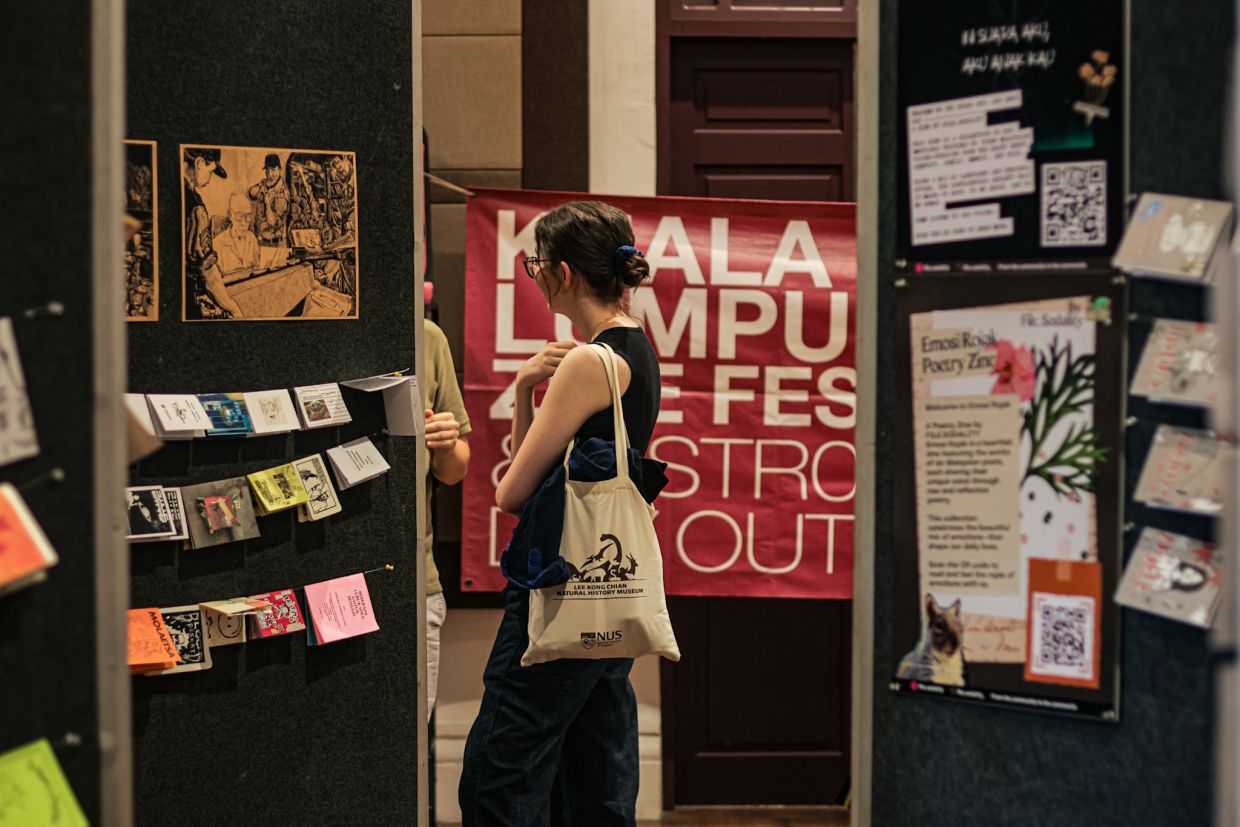
The KL Zine Etc festival is back for its second year, cementing itself as a major event on Kuala Lumpur's independent creative calendar. Occupying the first floor of a heritage trade hall, the festival has nearly doubled its exhibitor count from last year's inaugural edition, now hosting more than 50 vendors alongside the original vision of celebrating zine culture, self-published works and DIY creative practice. The expansion reflects growing enthusiasm within Malaysia's underground publishing community and underscores the resilience of alternative media spaces in an era of digital saturation.
At its core, KLZE embraces the spirit of merdeka—independence—that has long animated zine-making cultures worldwide. The festival brings together zinesters, visual artists, writers, independent publishers and printmakers showcasing the full spectrum of non-commercial creativity: handmade zines bound with care and intention, artist books pushing conceptual boundaries, experimental publications challenging conventional formats, and limited-edition works produced in small batches. This curatorial approach privileges craft, authenticity and direct creator-to-reader connection over commercial viability, positioning the festival as a counterpoint to mainstream publishing infrastructure.
The 2024 edition carries particular thematic weight through its anti-war programming and exhibition focus. According to the organising committee, this conceptual framing responds not only to geopolitical conflicts unfolding globally but also to internal struggles shaped by individual mental states, questions of identity and competing ideologies. The festival's central metaphor of building "ceasefire zones"—spaces designated for peaceful reading, conversation and shared creative experience—transforms a cultural event into a deliberate act of reconciliation. By offering sanctuaries for dialogue across difference, KLZE gestures toward the reparative potential of creative communities.
The programming spans three days and includes workshops, film screenings and live music sessions alongside the anti-war exhibition. The vendor line-up covers thematic terrain from contemporary fanzine culture and punk aesthetics to folk narratives, indigenous activism, comics, environmental advocacy, feminist discourse and role-playing game design. This thematic breadth reflects how zine culture has evolved beyond its origins in music subcultures to become a vehicle for diverse political and social commentary, attracting creators concerned with representation, sustainability and community building.
Malaysian representation at KLZE demonstrates the depth of independent publishing activity across the country's regions. Alongside Kuala Lumpur-based collectives like Otter Is Reading, Tokosue and Paulitical Art sit publishers from Kelantan, Melaka, Johor, Sarawak and Sabah—including Kedai Hitam Putih, Pipit Press, Shuren Press, Olivia JD and Borneo Komrad. This geographic distribution suggests that alternative publishing networks extend far beyond the capital, with local creative ecosystems in smaller cities and East Malaysian states supporting their own independent voices and aesthetic traditions.
The festival's emergence as a regional hub marks a significant development for Southeast Asian creative exchange. This year's edition welcomes zinemakers and independent publishers from Singapore, Indonesia, the Philippines, Hong Kong, China, Myanmar and Taiwan, transforming what began as a Kuala Lumpur event into a cross-border convergence space. Such regional gathering points have become increasingly valuable as creators seek international peer networks and audiences beyond their immediate localities. The festival serves as infrastructure for relationship-building among artists who might otherwise remain isolated within their own national contexts.
Language diversity embedded within KLZE's programming reflects this regional composition. Works presented span Bahasa Malaysia, English, Mandarin, Cantonese and other languages, mirroring the linguistic realities of Southeast Asian creative production. This multilingual approach acknowledges that independent publishing in the region operates across multiple linguistic communities simultaneously, and that translation and code-switching are intrinsic to how regional networks function. The festival does not attempt to impose a single language hierarchy but instead celebrates the polyphonic nature of alternative expression across borders.
Organisers have articulated a vision for KLZE as a facilitator of meaningful exchange rather than a commercial marketplace. Beyond enabling vendors to sell their work, the festival aims to catalyse friendships between creators, foster intellectual dialogue and nurture future collaborations that might extend beyond the three-day event. This relationship-building orientation distinguishes KLZE from typical consumer-facing festivals and aligns it more closely with how independent creative communities typically function—through direct personal connections and networks of mutual support rather than hierarchical institutional structures.
Practical accessibility remains central to KLZE's ethos. Entry costs just RM10, with attendees receiving a RM5 voucher redeemable toward zine purchases—a pricing model that acknowledges the modest budgets typical among independent publishers and zine readers while still supporting vendor income. This approach makes participation feasible for students, precarious workers and others outside conventional employment, maintaining the democratic accessibility that has traditionally defined zine culture.
The festival's growth trajectory reflects broader shifts in how creative communities organise and sustain themselves in contemporary Malaysia. As mainstream publishing consolidates around commercial viability and state-approved content, independent spaces like KLZE gain significance as forums for experimental aesthetic practice, political expression and cultural preservation. The second edition's expansion suggests both consolidating institutional support for the festival and deepening audience engagement with independent publishing as a meaningful alternative to dominant media structures.
Looking forward, KLZE's trajectory matters beyond its immediate cultural context. As regional creators face varying degrees of censorship, economic precarity and limited distribution channels, festivals that facilitate transnational connection and collective visibility become vital infrastructure. KLZE positions itself as such infrastructure—not merely a marketplace but a deliberate act of care within creative communities, a space where "ceasefire" becomes not just thematic metaphor but lived practice within the three-day festival experience.

