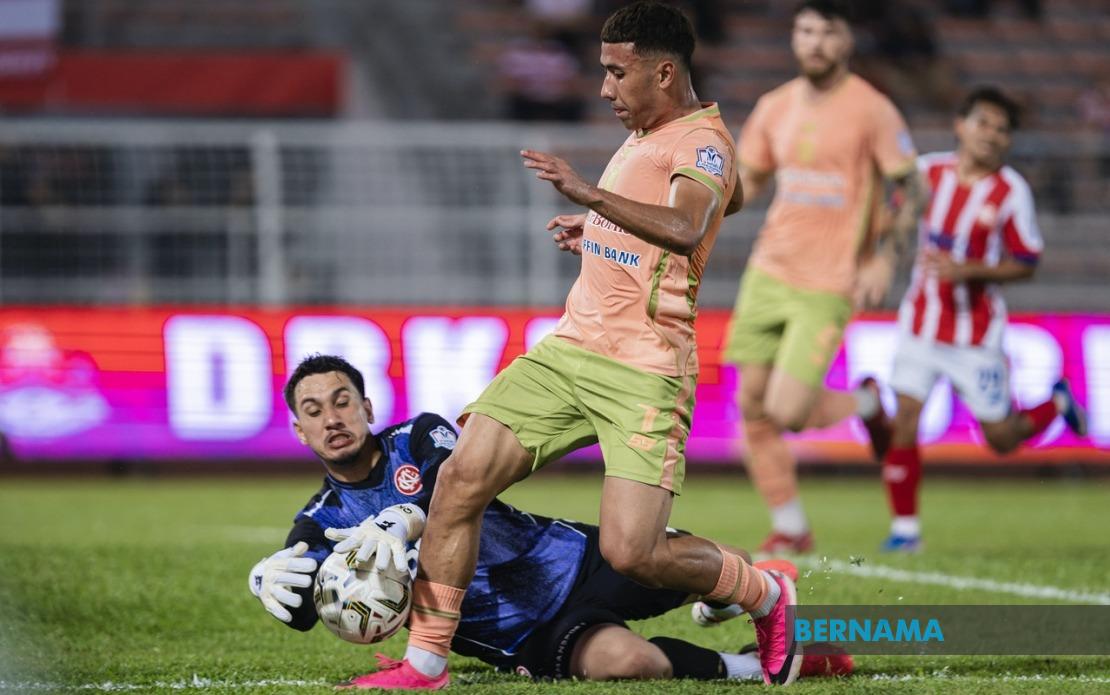
The Malaysian football establishment was confronted with an extraordinary administrative and logistical failure when Kuala Lumpur City FC kicked off their 2026-2027 Super League campaign at the Kuala Lumpur Football Stadium in Cheras, able to field only 10 players and a single substitute. The visiting Kuching City FC capitalised ruthlessly on this skeletal squad composition, delivering a resounding 6-0 victory that underscored the club's predicament in stark fashion. Head coach Datuk Dollah Salleh, whose career spans more than two decades of competitive football management, described the experience as entirely without precedent in his professional life.
The confluence of factors that precipitated this crisis reveals systemic vulnerabilities within Malaysian football administration. A simultaneous health emergency and player registration dysfunction created a perfect storm for the club. Thirteen players and two team officials fell ill with influenza in the lead-up to the campaign's opening fixture, rendering them unavailable for selection. Compounding this biological misfortune was an ongoing transfer registration deadlock, which further depleted the squad's depth. The convergence of these circumstances left Dollah and his technical staff scrambling to assemble any competitive match-day contingent.
Dollah's candid reflection on his unprecedented predicament speaks to the gravity of the situation. The veteran coach acknowledged that his psychological state had visibly deteriorated over several days as he grappled with the institutional collapse unfolding around him. This was not a mere tactical challenge or a matter of individual player underperformance—this was a systemic failure that transcended normal coaching dilemmas. For someone with Dollah's extensive background, including his tenure as national team coach, the experience represented entirely uncharted territory within his professional experience.
The match itself saw Dollah's outnumbered players initially demonstrate admirable commitment during the opening period, despite playing a numerical disadvantage. A turning point arrived in the 44th minute when Kuching City captain James Okwuosa received a red card, temporarily equilibrating the match at ten-versus-ten. However, this momentary parity proved illusory. The accumulated physical and psychological toll of sustaining the opening forty-five minutes, combined with the absence of substitutes capable of providing respite, meant the KL City contingent faced a sharply deteriorating situation as the second half progressed. The exhaustion that inevitably set in underscored the impossibility of mounting any meaningful resistance with such depleted numbers.
Dollah's tactical adjustments reflected the constraints imposed by his circumstance. With minimal options available from the bench and no possibility of tactical flexibility, he instructed his players to adopt a defensive posture, acknowledging that damage limitation rather than competitive engagement represented the realistic objective. This pragmatic approach, while professionally appropriate, cannot obscure the humiliation inherent in such a situation. The coach refused to criticise his players excessively, recognising that they had operated under conditions no professional athlete should face, yet simultaneously frustration with the institutional failures must have been evident.
The administrative missteps preceding this match illuminate ongoing governance issues within Malaysian club football. KL City's opening fixture against Negeri Sembilan FC at Stadium Tuanku Abdul Rahman in Paroi, scheduled for the previous Saturday, never materialised because Negeri Sembilan could not field a team due to player registration complications. The Malaysian Football League responded by awarding Negeri Sembilan a 3-0 victory while imposing a RM50,000 fine on KL City, a penalty that compounds the club's mounting difficulties. This sequence of events suggests systemic dysfunction in registration procedures and player eligibility verification processes that extend beyond a single club's operational failures.
The decision to proceed with the match against Kuching City, despite the acknowledged impossibility of fielding a competitive team, carried significant strategic implications for the club's long-term standing. Dollah recognised that forfeiture could have triggered consequences far more severe than a heavy defeat. The threat to the club's Super League status represented an existential risk that necessitated fielding whatever players remained available, regardless of the probable outcome. This bind illustrates how regulatory frameworks, intended to maintain competition integrity, can paradoxically force clubs into situations that compromise fundamental fairness.
A significant development emerged following this debacle when Dollah announced that FIFA had lifted the transfer ban previously imposed on KL City. This international sanction, which had severely restricted the club's ability to register new players, had contributed substantially to the current shortage. The removal of this restriction theoretically restores the club's capacity to strengthen its squad before the upcoming fixture against DPMM FC, scheduled for the following Saturday. Dollah expressed cautious optimism that this regulatory clearance would enable meaningful squad reinforcement, transforming what appeared to be an insurmountable crisis into a recoverable situation.
The immediate pathway to rehabilitation depends upon the club's capacity to expeditiously register eligible players and restore squad depth within an extremely compressed timeframe. The DPMM FC match represents an opportunity to demonstrate that the Kuching City fixture represented an aberration rather than an indication of systemic incapacity. For a club of KL City's status and ambitions within Malaysian football, the reputational damage from such a defeat runs deep, and only competitive performance in subsequent matches can begin to rehabilitate the club's standing.
Broader implications extend to Malaysian football governance and institutional resilience. The series of crises affecting KL City—the FIFA sanctions, player registration dysfunction, health emergencies, and regulatory penalties—collectively suggest that Malaysian clubs operate within vulnerable administrative frameworks susceptible to cascading failures. For Southeast Asian readers following Malaysian football development, these events underscore ongoing challenges in professionalising club management and establishing reliable governance structures. The contrast between Dollah's extensive international experience and his complete inability to prepare for such circumstances highlights how even seasoned professionals can be overwhelmed by institutional dysfunction.
The 0-6 defeat will undoubtedly feature prominently in Malaysian football discourse, yet contextualising this result within the extraordinary circumstances that produced it provides essential perspective. Dollah's acknowledgment that the outcome was entirely foreseeable, given the squad's composition, reflects professional realism. The coach's primary focus must now shift toward capitalising on the FIFA sanction's removal and rebuilding competitive capacity within the Super League. For Malaysian football enthusiasts and observers, this episode crystallises ongoing structural vulnerabilities that require sustained attention and reform within the domestic game's administration and operational frameworks.

