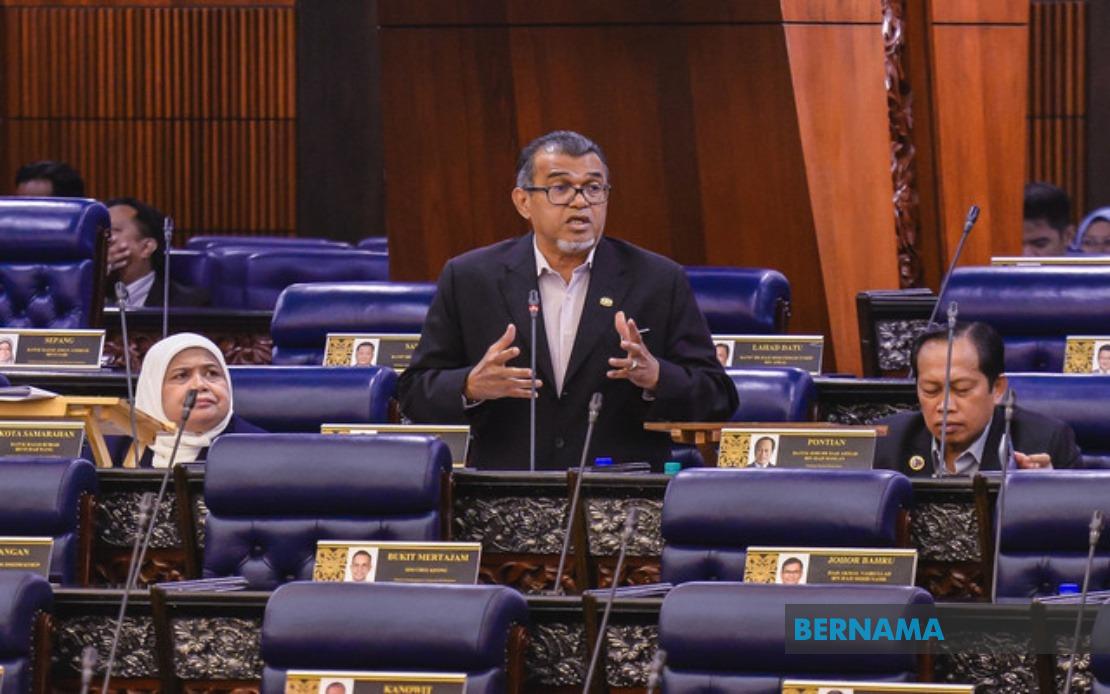
The nearly RM500 million expansion project for Kota Kinabalu International Airport (KKIA) remains in a holding pattern while authorities negotiate land requirements and site specifications with the Sabah state government, Deputy Transport Minister Datuk Hasbi Habibollah revealed during parliamentary proceedings this week. Although funding for the infrastructure initiative has already received formal approval, unresolved matters concerning land acquisition, the precise expansion footprint, and airside areas proximate to the existing runway continue to forestall commencement of construction activities.
Hasbi's announcement comes as part of a broader federal investment in regional aviation infrastructure. Prime Minister Datuk Seri Anwar Ibrahim allocated RM2.3 billion during the Budget 2026 presentation last October to enhance airport facilities across four locations: Penang, Kota Kinabalu, Tawau, and Miri. The government expects these modernisation efforts to conclude by 2028, positioning Southeast Asia's easternmost Malaysian state to handle projected growth in both domestic and international passenger movements. Unlike KKIA, the complementary Tawau Airport expansion has already commenced construction work, indicating that clearance processes in that locality have progressed more smoothly.
The distinction between the two Sabah projects highlights the complexities of land administration in Malaysia's federated system. Airport expansion requires coordination between federal transport authorities, state governments that hold tenure rights, and federal entities managing airport operations. The federal government must secure state approval for land use, particularly when expansions encroach upon areas surrounding runway infrastructure or require additional territory beyond existing airport boundaries. Hasbi indicated that the Ministry of Transport awaits definitive guidance from Sabah's state leadership regarding final specifications for the KKIA project scope, suggesting ongoing discussions remain at an advanced stage despite the stalling.
For Malaysian travellers and the broader business community, delays in KKIA's modernisation carry tangible consequences. Kota Kinabalu serves as a primary gateway to Sabah's tourism offerings, including the Kinabalu National Park UNESCO World Heritage site, as well as regional business hubs. Enhanced airport capacity would facilitate smoother passenger throughput during peak travel seasons and potentially attract additional airline services. The expansion's completion by 2028 would align with broader regional infrastructure development initiatives, though current trajectory suggests this timeline may face pressure if land negotiations extend further.
During the same parliamentary session, Hasbi fielded questions about Pangkor Airport on the west coast, where commercial aviation services have lapsed since May 2022 following the discontinuation of charter flights previously operated by Berjaya Air using Dash 7 aircraft and SKS Airways. The deputy minister emphasised that the government maintains openness toward airline operators willing to establish commercial services at the island location, provided their business models demonstrate commercial viability and realistic market demand projections. Both the Ministry of Transport and Malaysia Airports Holdings Bhd (MAHB) stated receptiveness to proposals, though decisions ultimately rest with prospective carriers' economic assessments.
Hasbi clarified an important distinction regarding Malaysia's smaller island airports, including Pangkor, Redang, and Tioman facilities. Rather than remaining dormant or deteriorating as underutilised infrastructure, these airports continue serving multiple functions within the nation's aviation ecosystem. Private aircraft operations, military aviation activities, helicopter services, emergency landing provisions, and flying doctor missions all utilise these facilities, which maintain MAHB personnel on-site to preserve airport assets and infrastructure integrity. This characterisation counters perceptions that these locations have become abandoned white elephants, though the absence of scheduled commercial services clearly limits their economic contribution to surrounding communities.
The government's perspective on Pangkor Airport reflects broader policy tensions between commercial viability and regional connectivity aspirations. Tourism authorities recognise that reliable air access drives visitor arrivals and economic activity in island destinations, yet airline operators require sufficient passenger volumes and yield economics to justify route operations. The decline in Pangkor's services followed market realities rather than policy decisions, as demand proved insufficient to sustain profitable operations for the carriers previously attempting to serve the route. Sea transport remains the government's identified preference for Pangkor Island connectivity, particularly given the island's modest distance from the mainland.
Hasbi's remarks underscore the federal government's commitment to aviation infrastructure investment across multiple tiers of Malaysia's airport hierarchy. The RM2.3 billion Budget 2026 allocation acknowledges that regional airports beyond Kuala Lumpur International Airport require modernisation to manage growth effectively and maintain competitive positioning within Southeast Asia's expanding aviation market. However, project execution ultimately depends on resolving administrative and land-related prerequisites, as evidenced by the differential progress between KKIA and Tawau expansion initiatives. For Sabah-based stakeholders monitoring KKIA's development prospects, the pathway forward requires productive engagement between state and federal authorities to expedite outstanding land matters.
The expansion initiatives reflect recognition that Malaysia's secondary airports increasingly face capacity constraints as regional tourism grows and business travel expands. Kota Kinabalu, serving a state with substantial natural tourism appeal and growing business activities, particularly warrants capacity enhancement. The proposed modernisation would position the facility to accommodate larger aircraft types and higher passenger volumes while improving operational efficiency. Completing the project within the 2028 timeframe remains achievable provided land negotiations conclude promptly, though any further delays risk pushing completion beyond this target and potentially diminishing the infrastructure's competitive advantage within regional aviation markets evolving rapidly toward larger aircraft and increased connectivity demands.

