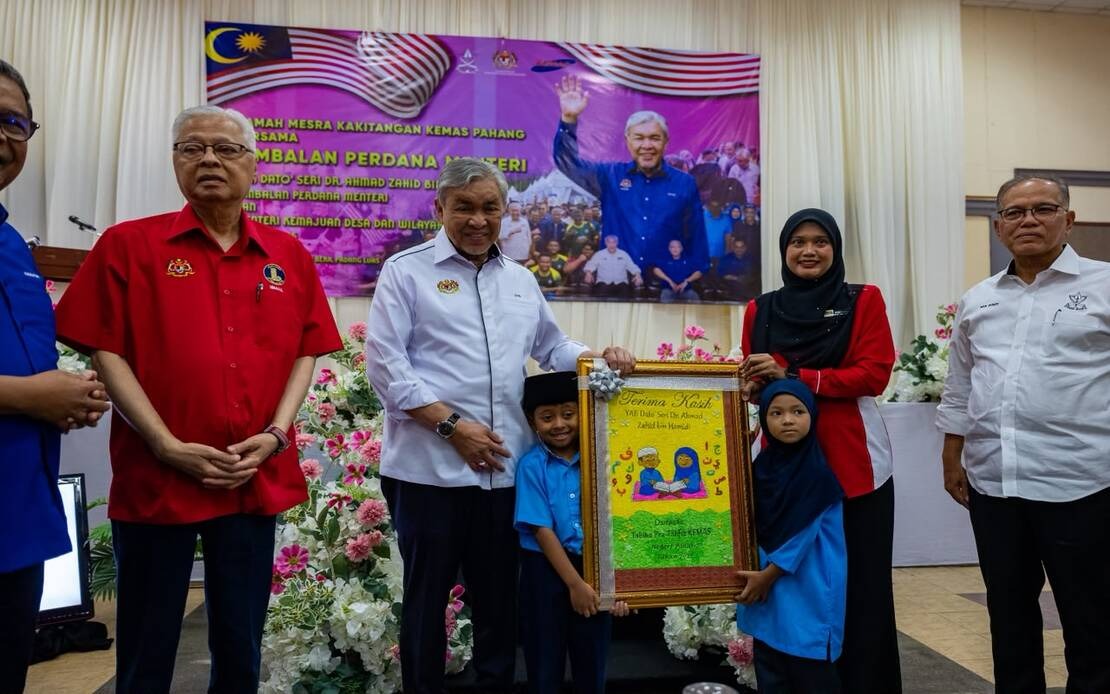
The Rural and Regional Development Ministry (KKDW) is charting a course to transform early childhood education across Malaysia by weaving together technological innovation and religious values, marking a significant shift in how the Community Development Department (KEMAS) prepares young learners for an increasingly complex world.
Deputy Prime Minister Datuk Seri Dr Ahmad Zahid Hamidi outlined the strategic direction during the Pahang KEMAS Community Engagement Programme in Bera, emphasising that the ministry recognises the critical juncture facing early education in the country. With the government having lowered the school starting age from seven to six, KEMAS kindergartens (Tabika) and childcare centres (Taska) have become even more essential components of the national education pipeline, placing greater responsibility on the department to deliver quality programming that addresses both foundational academic needs and character development.
The technological dimension of this transformation centres on modernising classroom infrastructure across KEMAS facilities. Ahmad Zahid called for accelerated rollout of Smart Class initiatives and smartboards in kindergartens nationwide, positioning technology not as a replacement for traditional teaching methods but as a complementary tool that can enhance engagement and learning outcomes. This mirrors global trends in early childhood education, where digital literacy has become as fundamental as reading and numeracy. The ministry's push reflects an acknowledgment that children entering the education system today will inherit a digital-first economy, necessitating early exposure to technological tools.
Equally significant is the ministry's commitment to strengthening religious and moral education within KEMAS institutions. Ahmad Zahid proposed an expanded memorisation programme beginning next year, moving beyond the existing focus on Juzuk 30 of the Quran to include Surah Yasin, Al-Waqiah, Al-Mulk and As-Sajdah. This represents a deliberate choice to embed Islamic values within early childhood development, reflecting Malaysia's constitutional framework and the government's view that such grounding is essential for building a generation anchored in ethical principles and national identity.
Critically, the ministry recognises that successful implementation of this dual-track approach requires teacher competency. Ahmad Zahid stressed that KEMAS educators must themselves master Quranic memorisation techniques before they can effectively guide children through these programmes. This underscores a wider challenge facing early education systems across Southeast Asia: the gap between policy ambition and instructor capability. Professional development initiatives will be essential to ensure that the memorisation component is delivered systematically rather than becoming a mechanical exercise.
The announcement carries particular resonance given KEMAS's six-decade track record serving Malaysian communities. Since establishment, KEMAS institutions have educated approximately 8.4 million children, making them a foundational pillar of grassroots education infrastructure. However, Ahmad Zahid's remarks suggest the ministry views this legacy not as a justification for complacency but as a platform for evolution. The phrase "enter a new phase and continue to evolve with the times" signals an institutional self-awareness that organisations serving young populations must constantly refresh their approaches or risk becoming obsolete.
Intergovernmental coordination emerged as a recurring theme in Ahmad Zahid's remarks, with explicit calls for federal, state, and parliamentary representatives to work in concert on providing technological facilities. This reflects practical realities of Malaysian federalism, where education infrastructure requires coordinated investment across multiple levels of government. The presence of Pahang Menteri Besar Datuk Seri Wan Rosdy Wan Ismail and former Prime Minister Datuk Seri Ismail Sabri Yaakob underscored this collaborative imperative. Ahmad Zahid specifically praised Pahang for securing land titles and grants for KEMAS premises, as well as funding renovation initiatives—concrete examples of state-level support translating policy into infrastructure.
The timing of these initiatives coincides with broader conversations about Malaysia's educational positioning in the region. As neighbouring countries invest heavily in early childhood development and technological integration, Malaysian policymakers appear conscious of maintaining competitive advantage. The KEMAS expansion can be understood as part of a wider strategy to ensure that Malaysian children, regardless of socioeconomic background, access foundational education that combines modern pedagogical approaches with cultural and religious grounding.
Financial implications of this modernisation agenda warrant consideration. Rolling out Smart Class technology and smartboards nationwide, coupled with enhanced teacher training for religious education, will require substantial budgetary commitment. The willingness of state governments like Pahang to contribute through land security and renovation funding suggests confidence in the approach, but sustainability will depend on consistent federal resourcing and continued political consensus across election cycles.
The proposal also reflects demographic and sociological factors shaping policy. Malaysia's Muslim-majority population and constitutional recognition of Islam as the federation's religion create a distinct context for early education policy compared to regional peers. The emphasis on Quranic memorisation resonates with traditional educational values while simultaneously positioning KEMAS as an institution that bridges heritage and modernity—serving families who want children exposed to technological literacy without abandoning religious and moral instruction.
Looking forward, success of this dual-track approach will hinge on implementation rigour. Policy announcements are commonplace; translating them into consistent quality across hundreds of KEMAS facilities nationwide presents logistical and human resource challenges. The ministry will need robust monitoring mechanisms and incentive structures to ensure that Smart Class equipment actually enhances learning rather than gathering dust, and that religious instruction reaches programmatic quality standards rather than varying by instructor enthusiasm.

