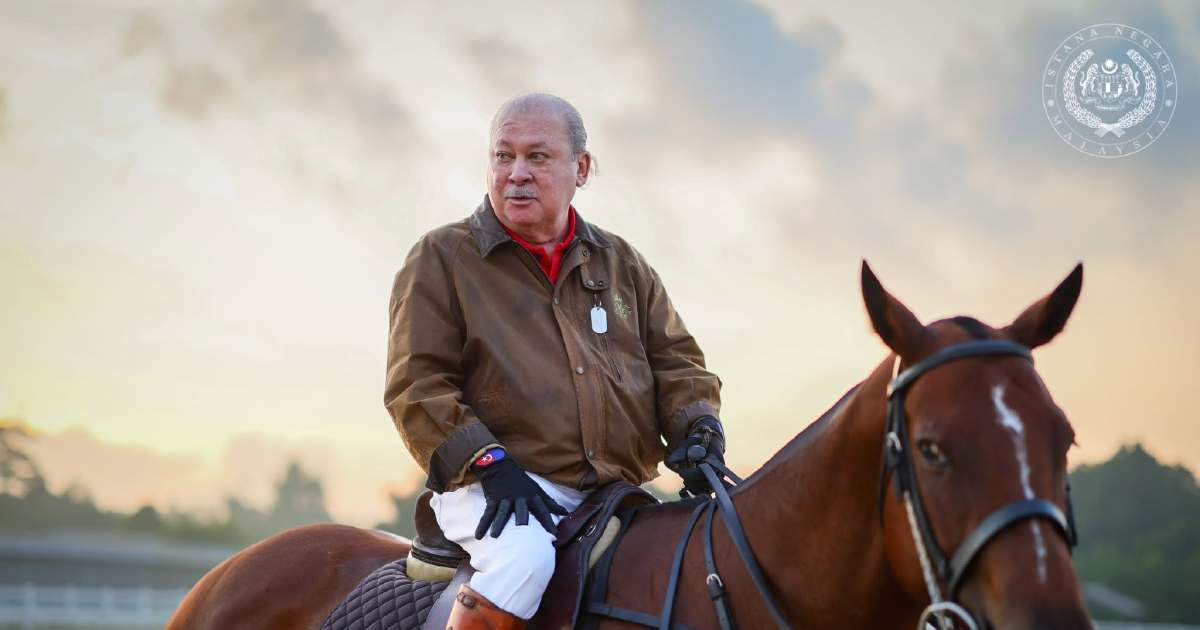
His Majesty Sultan Ibrahim, King of Malaysia, continued his established morning exercise programme at the Royal Johor Polo Club adjacent to Istana Pasir Pelangi in Johor Baru today, maintaining the measured pace and composure that have characterised his recent equestrian outings.
The sovereign's commitment to regular physical activity through horse riding underscores a broader pattern of engagement with traditional sporting pursuits that hold deep cultural and historical significance within Malaysian royal circles. The Royal Johor Polo Club, nestled within the expansive palace grounds, provides an appropriately secluded and controlled environment for such personal wellness activities, away from the demands of state affairs.
This continuation of the King's daily routine offers reassurance regarding his overall wellbeing and capacity to fulfil his constitutional responsibilities. Maintaining personal fitness at his age demonstrates a disciplined approach to health management, a consideration that takes on particular importance for any serving head of state whose stamina and mental acuity are essential to the nation's governance and stability.
Horse riding represents far more than mere recreation for Malaysia's royalty. The practice carries centuries of cultural heritage, linking contemporary monarchs to their predecessors who relied on horsemanship as both a practical skill and a cornerstone of noble bearing. For Sultan Ibrahim, who ascended to the throne in 2023, perpetuating these traditions whilst adapting them to modern life signals continuity in an institution fundamentally rooted in heritage and custom.
The relaxed demeanour observed during today's session suggests the King approaches this activity with the deliberate pacing appropriate to sustainable long-term exercise rather than strenuous exertion. This measured approach reflects wisdom about age-appropriate physical activity and injury prevention, matters of indirect relevance to Malaysia's broader public interest in the health and longevity of its constitutional monarch.
The visibility of the King's routine, whilst maintaining appropriate privacy through the palace grounds setting, demonstrates the careful balance between personal privacy and public awareness that characterises the modern monarchy. Such glimpses into the daily lives of the royal family serve to humanise the institution and reinforce its engagement with everyday rhythms of physical discipline and personal responsibility.
For Malaysians, particularly those in Johor whose state is intimately connected to the Sultan's personal residence and role as their Ruler, these occasional confirmations of the King's active lifestyle carry psychological and cultural weight. The monarchy remains central to Malaysia's constitutional framework and national identity, making the personal wellbeing of the sovereign a matter of legitimate public interest.
The choice of location—the Royal Johor Polo Club—reflects the integration of royal duties and residency in Johor with the broader responsibilities of the national monarchy. Although Sultan Ibrahim has occupied Istana Negara in Kuala Lumpur as the official royal residence since his installation, his continued use of Johor's facilities acknowledges both his historical ties to the state and the federation's distributed nature, where regional power bases remain culturally and politically significant.
In the context of Southeast Asia's monarchical systems, where the health, stability and visible engagement of ruling monarchs constitute important pillars of national confidence, the maintenance of such routines provides subtle but meaningful communication. The consistency of the King's personal discipline sends signals about stability and continuity at a moment when Malaysia, like many nations in the region, navigates complex economic, social and geopolitical pressures.
The Royal Johor Polo Club, as an institution, represents the intersection of sporting tradition, elite leisure, and royal patronage. By continuing his association with the venue through regular visits, the King sustains a cultural institution whilst simultaneously attending to his personal health needs—a duality that characterises much of royal activity in Malaysia's constitutional monarchy.