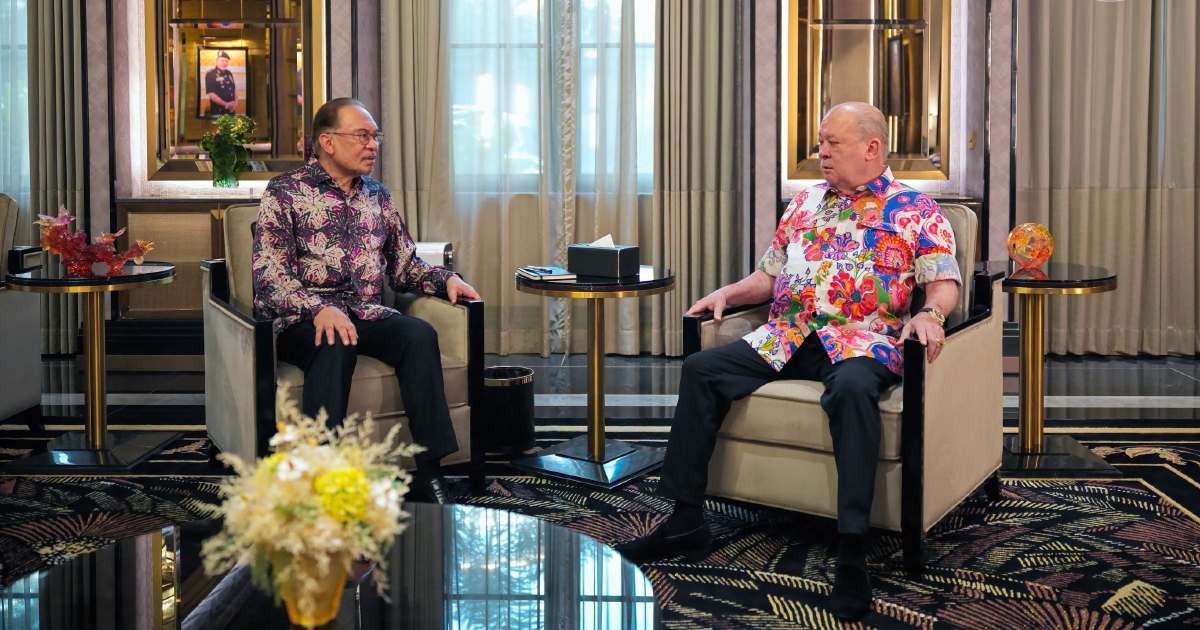
His Majesty Sultan Ibrahim, King of Malaysia, held an audience with Prime Minister Datuk Seri Anwar Ibrahim at Istana Bukit Tunku in Kuala Lumpur, a ceremonial meeting scheduled in advance of the nation's 69th National Day celebrations. The encounter represents the customary protocol by which the constitutional head of state receives the chief executive officer of government during significant national observances, underscoring the institutional relationship between the monarchy and the executive branch.
The timing of the audience, held immediately prior to Malaysia's most significant annual commemoration, reflects the structured engagement between the two offices as the country prepares for festivities marking nearly seven decades since independence. National Day remains a pivotal occasion for reaffirming national identity and reviewing progress achieved since Merdeka in 1957. Such royal audiences before major national events typically encompass briefings on arrangements, symbolic endorsements of government initiatives, and discussions on matters of national importance.
Istana Bukit Tunku, the official royal residence of the Malaysian monarch, served as the venue for this formal meeting. The palace has historically hosted numerous state functions and receptions involving senior government officials, foreign dignitaries, and representatives of various institutions. The choice of venue emphasises the ceremonial and constitutionally significant nature of the engagement between the sovereign and the prime minister.
The audience occurs within the context of Malaysia's constitutional monarchy framework, where the King functions as the nominal head of state while the Prime Minister directs the government. This relationship, rooted in the Federal Constitution, requires regular communication and coordination on matters affecting national governance and public interest. Such meetings facilitate the constitutional monarch's role in staying informed about government decisions and national affairs.
Anwar Ibrahim's appointment as Prime Minister in November 2022 initiated a new chapter in his political career following decades of activism and imprisonment. His tenure has focused on economic stabilisation, addressing cost-of-living pressures, and strengthening institutional governance. Regular engagement with the royal institution demonstrates continuity in respecting constitutional protocols that have defined Malaysia's governance structure since independence.
The 69th National Day celebration represents a significant milestone in the nation's post-independence journey. The annual commemoration serves multiple functions: honouring the achievement of independence from British colonial rule, celebrating national achievements and progress, and reinforcing citizen identity and cohesion. Each anniversary provides an opportunity for reflection on challenges overcome and consideration of future aspirations.
Malaysia's pathway from independence to its current status as a middle-income Southeast Asian economy encompasses considerable transformation. The nation has navigated multiple political transitions, economic restructuring, and social evolution. National Day observances typically emphasise these achievements while government leadership uses the occasion to articulate policy directions and national priorities for the coming year.
The formal nature of the audience reflects established protocols governing interactions between the constitutional monarch and government officials. Such meetings ensure that major policy announcements, national initiatives, and significant decisions receive proper acknowledgement within the constitutional framework. This structured communication reinforces public confidence in institutional functioning and demonstrates respect for constitutional structures that Malaysian citizens rely upon for governance.
Regional observers often note Malaysia's stable institutional arrangements compared to some neighbouring countries in Southeast Asia. The effective functioning of the constitutional monarchy alongside democratic institutions has provided continuity during periods of political change. Royal audiences with prime ministers form part of this institutional architecture, serving both ceremonial and substantive purposes in national governance.
The audience's occurrence just before National Day celebrations suggests coordination between palace and government offices regarding the occasion's execution and messaging. Such advance meetings allow discussion of ceremonial details, security arrangements, and statements that will emanate from both the monarchy and government during festivities. Effective coordination between these institutions enhances the celebratory experience for Malaysian citizens.
Looking forward, the 69th National Day celebrations will likely feature traditional elements alongside contemporary activities reflecting modern Malaysia. These observances typically include the raising of the national flag, patriotic performances, and speeches emphasising national values and achievements. The Prime Minister's meeting with the King beforehand ensures alignment on key themes and messages that will resonate throughout the celebration.

