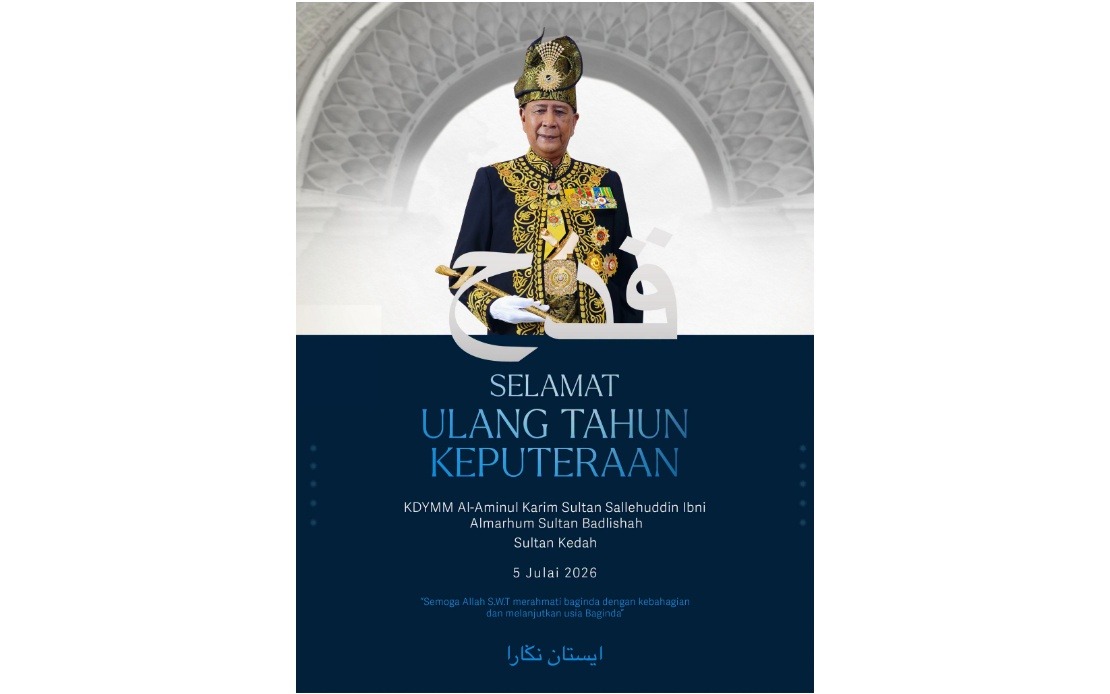
His Majesty Sultan Ibrahim, King of Malaysia, has extended warm birthday greetings to the Sultan of Kedah, Al-Aminul Karim Sultan Sallehuddin Sultan Badlishah, marking the royal state's senior monarch's 84th birthday milestone. The gesture, communicated through the official Facebook page of Sultan Ibrahim Sultan Iskandar, reflects the constitutional monarch's recognition of the long and distinguished tenure of one of Malaysia's most senior royal figures in the hereditary sultanate system.
In his message, the King expressed his prayers for Sultan Sallehuddin's continued well-being and longevity, invoking Allah's blessings upon the Kedah ruler. The formal acknowledgement carries particular significance within Malaysia's constitutional framework, where such inter-royal courtesies reinforce the bonds between the nine royal houses that collectively select the nation's paramount ruler. Sultan Sallehuddin's four decades of service in Kedah has positioned him as a respected elder statesman within the Malaysian monarchy, and the King's recognition underscores the institutional respect accorded to his contributions to the sultanate and the nation.
Prime Minister Datuk Seri Anwar Ibrahim similarly marked the occasion by conveying his heartfelt birthday wishes to Sultan Sallehuddin through social media. The Prime Minister's message extended beyond the sultan himself to encompass the broader royal household, including Sultanah Maliha Tengku Ariff and the entire Kedah royal family. This wider acknowledgement reflects diplomatic protocol and the interconnected nature of Malaysia's federal structure, where state rulers and the federal government maintain formal channels of mutual respect and cooperation on matters of national importance.
The Prime Minister invoked blessings for Sultan Sallehuddin and his family, praying that they would continue to receive Allah's mercy and guidance while enjoying good health and enduring prosperity. His message, which concluded with the traditional salutation "Daulat Tuanku. Dirgahayu Tuanku," adhered to the formal conventions typically observed when senior government officials address members of the royal institution. These courtesies form part of Malaysia's constitutional monarchy tradition, where the ceremonial and symbolic role of rulers is maintained alongside their constitutional functions within state governance.
Sultan Sallehuddin's 84 years span a transformative period in Malaysian history, beginning from the pre-independence era through the nation's transition to independence, modernization, and contemporary development. As a long-reigning monarch of a northern state, he has witnessed and participated in the evolution of Malaysia's federal system, the development of Kedah's economy, and the changing role of traditional rulers in a modernizing society. His sustained presence provides continuity and institutional memory within Malaysia's royal structure, which has itself adapted significantly over recent decades.
The public acknowledgement of Sultan Sallehuddin's birthday by both the King and Prime Minister demonstrates the formal recognition accorded to senior members of Malaysia's royal hierarchy. While such gestures might appear ceremonial on the surface, they carry deeper significance within Malaysia's constitutional framework. The monarchy occupies a unique and protected position in the Malaysian polity, defined by the Federal Constitution, and the maintenance of respectful relations between the government and royal institutions is considered essential to the health of Malaysia's constitutional democracy.
The exchange of birthday greetings between high officials serves multiple purposes within Malaysia's political culture. It reinforces the principle of constitutional monarchy, affirms the hereditary nature of the sultanates, and demonstrates the continuity of institutional respect that transcends political differences. Such moments, while seemingly routine, contribute to the broader fabric of Malaysia's governmental traditions and the shared commitment to the federal constitutional framework that has governed the nation since 1957.
Sultan Sallehuddin's position as Sultan of Kedah places him within the upper echelon of Malaysia's nine state rulers, all of whom hold significant ceremonial and constitutional roles. The state of Kedah, situated in Malaysia's northwest, possesses a distinct historical identity and cultural heritage that Sultan Sallehuddin has represented during his tenure. The state's development agenda, economic policies, and local governance have all occurred under his constitutional authority, making him a central figure in northern Malaysia's institutional landscape.
The timing and nature of these birthday acknowledgements reflect the structured protocols that govern interactions between Malaysia's executive government and the royal institution. Birthday tributes to senior royals serve as formal occasions for reaffirming the bonds between government and monarchy, a relationship that remains foundational to Malaysia's system of governance despite the substantial powers wielded by the elected government. The public nature of these greetings ensures that the broader population witnesses this institutional respect, reinforcing the cultural and constitutional importance of the monarchy within Malaysian society.

