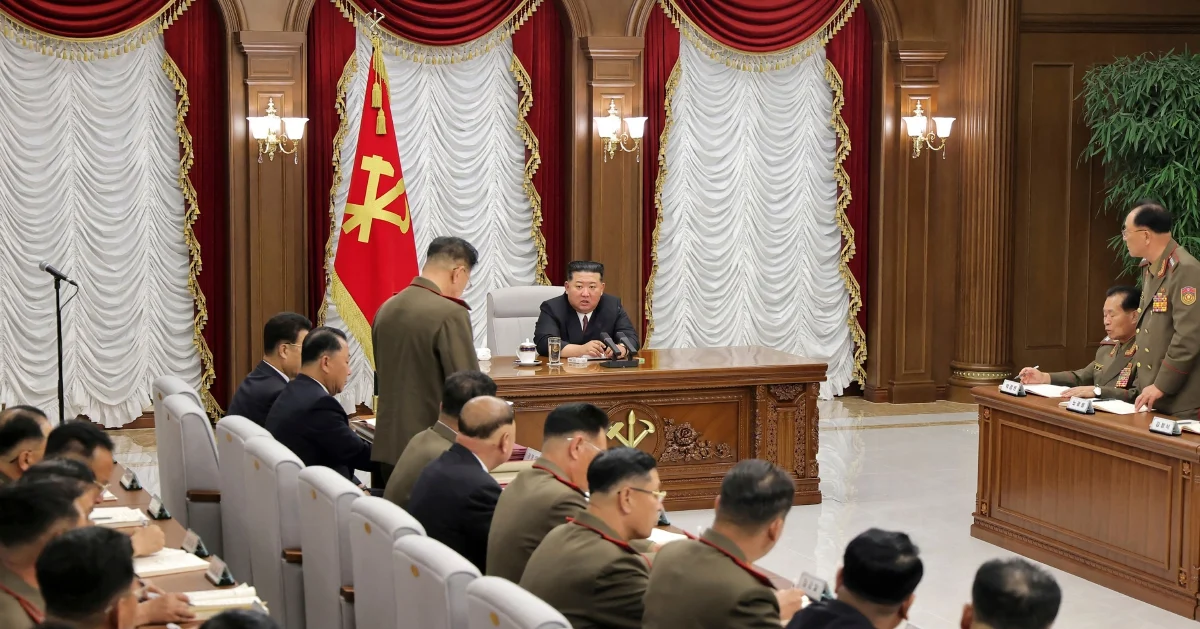
Kim Jong Un has taken decisive action against institutional corruption within North Korea's military establishment, expelling a senior defence official from the ruling party and branding his alleged graft as a gravest form of political wrongdoing. The state-controlled media announced the disciplinary measure on Saturday, marking another episode in the North Korean leader's pattern of purging high-ranking figures accused of undermining party discipline and personal enrichment at the state's expense.
The removal of the unnamed military official for accepting bribes underscores persistent vulnerability within North Korea's command structure, despite the regime's carefully curated image of organisational cohesion and loyalty. Corruption within the military apparatus represents a particular threat to Kim Jong Un's authority, as armed forces loyalty remains foundational to maintaining his grip on power. By publicly characterising the official's misconduct as a political crime rather than a merely administrative failing, the North Korean leader signals his determination to enforce accountability standards that he deems essential for regime stability.
This incident reflects broader patterns in how North Korea's top leadership manages internal dissent and perceived disloyalty. Since assuming power in 2011, Kim Jong Un has orchestrated numerous high-profile removals targeting officials across military, party, and government structures. Some analysts interpret such purges as routine mechanisms for consolidating power and eliminating potential rivals, while others view them as responses to genuine administrative breakdown. The frequency of these actions suggests systemic challenges in controlling sprawling state institutions where opportunities for unauthorised enrichment proliferate, particularly among officials commanding resources or overseeing commercial activities.
The characterisation of bribery as a political crime carries profound implications within North Korea's ideological framework, which emphasises absolute loyalty to the Kim dynasty and subordination of individual interests to state objectives. By elevating corruption charges to the level of political transgression, Kim Jong Un frames economic misconduct not merely as theft but as betrayal of foundational revolutionary principles. This rhetorical approach allows the regime to justify severe punishment while maintaining the fiction of principled governance rooted in socialist ideology.
For regional observers and intelligence analysts tracking North Korean internal dynamics, such disciplinary actions provide rare windows into the regime's operational vulnerabilities and leadership priorities. The timing and specificity of anti-corruption campaigns often signal which sectors or institutions Kim Jong Un considers problematic or insufficiently controlled. Military purges particularly warrant scrutiny, as they reveal tensions within the defence establishment and potentially affect force readiness, strategic decision-making processes, and the balance of power among competing factions within the regime.
The incident also illuminates how corruption functions within command economies lacking transparent institutions and rule of law. When state officials control scarce resources and face no meaningful accountability mechanisms, bribery becomes endemic rather than exceptional. North Korea's parallel systems—including military-run commercial enterprises and special economic zones—create ample opportunity for officials to accumulate unauthorised wealth. The regime's sporadic anti-corruption drives suggest repeated failure to establish sustainable deterrents against such behaviour.
From a Southeast Asian perspective, North Korea's internal governance challenges carry strategic implications. A military establishment weakened by factional tensions or undermined by officials prioritising personal gain over state objectives could affect the regime's external behaviour, operational capabilities, and calculations regarding regional security. Conversely, successful consolidation of Kim Jong Un's control through disciplinary measures might embolden more aggressive posturing internationally.
The removal also demonstrates how North Korea's elite operates within parameters fundamentally different from those governing most state institutions globally. Without constitutional constraints, judicial independence, or civil society oversight, punishment for officials depends entirely upon the leader's discretion. A military official discarded for corruption today might have enjoyed privileges and influence yesterday, illustrating the precariousness of position within authoritarian hierarchies lacking institutional safeguards.
State media's reportage of the purge serves multiple domestic and international audiences. Domestically, it reinforces Kim Jong Un's image as a decisive leader maintaining discipline and combating selfishness incompatible with revolutionary virtue. Internationally, such announcements provide limited transparency into regime operations while simultaneously demonstrating that leadership changes and enforcement mechanisms do occur within North Korea's opaque structures.
The broader pattern of military purges during Kim Jong Un's tenure has prompted strategic reassessments among regional powers. South Korea, the United States, and neighbouring nations monitor such developments for indicators regarding force structure changes, command relationships, and potential shifts in North Korea's strategic orientation. Personnel reshuffles occasionally precede significant policy changes or military initiatives, making intelligence analysis of these actions consequential for regional security planning.

