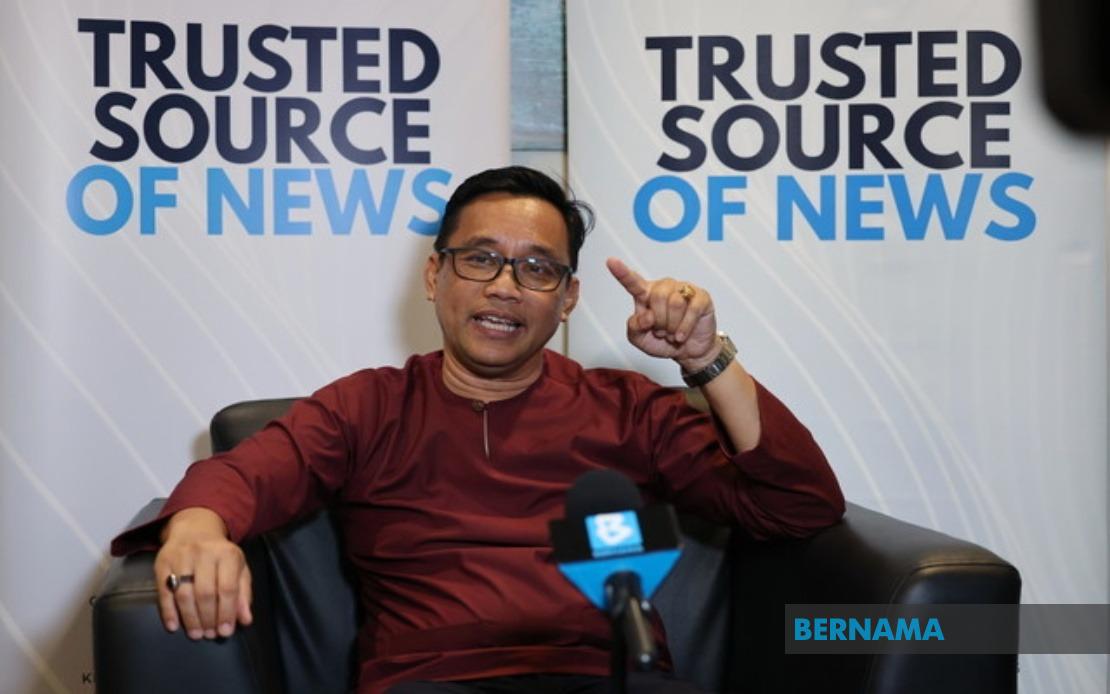
Mohd Khuzzan Abu Bakar, the Pakatan Harapan (PH) candidate for Semerah, is returning to contest the seat in the 16th Johor state election with a mission rooted in unfinished business rather than redemption. Having previously won and then lost in the last state election, the 58-year-old is framing his comeback not as an attempt to reverse past defeat, but as a chance to resurrect development initiatives that stalled when PH exited Johor's state administration in 2020. This reframing is significant in Malaysian electoral politics, where narratives of comeback often invite scrutiny about motivation and staying power. By emphasising continuity and community commitment over personal vindication, Khuzzan is attempting to reset the conversation around his candidacy ahead of the July 11 polling date.
During his tenure as chairman of Johor's Youth, Sports, Culture and Heritage Committee, Khuzzan oversaw several initiatives that remain incomplete. The Taman Sri Sulong Youth Mini Complex stands as a physical reminder of interrupted ambitions, while water supply inadequacies and recurring flash floods in Semerah, Batu Pahat, and Tanjung Laboh represent the practical frustrations affecting constituents daily. These are not abstract policy failures but tangible service deficits that shape voter experience. In a state where development expectations have risen alongside economic growth, particularly in manufacturing and technology corridors, the inability to deliver basic services like reliable water and flood mitigation becomes a political liability that extends beyond a single term. Khuzzan's decision to spotlight these incomplete projects suggests PH's strategy involves holding the outgoing administration accountable for maintenance and delivery gaps rather than exclusively advancing new proposals.
Personal connections underpin Khuzzan's electoral positioning. Born in Jalan Mesjid, Batu Pahat, and married to someone from Semerah, his roots run deep in the constituency. This biographical detail matters in Malaysian politics, where local credibility and family networks significantly influence voter behaviour. Unlike parachuted candidates who must rapidly establish legitimacy, Khuzzan enters with established social capital and institutional knowledge of community needs. He leverages this advantage by positioning himself as having a vested interest in the area's welfare that transcends political office—a framing that resonates particularly among older voters and those sceptical of transient political engagement. In constituencies like Semerah, where 37.4 percent of the 47,431 registered voters are aged between 18 and 39, maintaining this balance between traditional localised appeals and contemporary messaging requires sophisticated campaign execution.
The campaign machinery has evolved significantly since Khuzzan's previous contest. Digital platforms now form the backbone of voter engagement, with TikTok, Instagram, and Threads serving as primary channels for sharing community activities and articulating policy positions. Khuzzan's observation that senior citizens are following his TikTok account reflects a broader democratisation of social media adoption across age groups in Malaysia, particularly among retirees with growing digital literacy. This reality reshapes campaign strategy away from age-segmented messaging toward integrated content that appeals across demographics. Traditional on-ground activities have not disappeared but rather integrated with digital extensions—youth-oriented activities including e-sports, sepak takraw, and carrom competitions now generate content for social distribution, effectively doubling their reach and engagement potential.
Youth employment and economic adaptation form central pillars of Khuzzan's platform, reflecting Johor's transition toward investment-driven and technology-intensive sectors. With younger voters comprising over one-third of the electorate and facing structural changes in labour markets, promises of job creation must address emerging opportunities in digital economy and emerging technologies. Khuzzan's approach combines exposure programmes in artificial intelligence and digital technology with traditional SME support, acknowledging that most young Semerah voters will likely seek employment in firms reliant on these skills. The recognition that youth economic security depends on systematic upskilling sets this campaign apart from generic employment promises that characterise many Malaysian political contests.
Financial inclusion and SME development receive particular emphasis in Khuzzan's economic vision. Drawing on his background as a banking officer, he has observed that access to government financing through schemes like TEKUN Nasional and Amanah Ikhtiar Malaysia (AIM) remains only partial without accompanying financial literacy and structured guidance. His proposal to pair lending with management training addresses a genuine bottleneck in Malaysian entrepreneurship, where ambitious business owners often lack the accounting sophistication and forecasting discipline necessary for sustainable growth. This approach demonstrates how sectoral expertise can inform policy formulation at constituency level, offering voters something more granular than broad rhetorical commitments. By speaking to the specific mechanics of SME finance, Khuzzan positions himself as someone with technical understanding rather than merely political aspiration.
The broader electoral context shapes Khuzzan's confidence and strategy. The 16th Johor state election features 172 candidates contesting 56 seats, with polling on July 11 and early voting on July 7, creating a competitive landscape markedly different from the 2022 Johor election. That previous contest occurred during Malaysia's post-pandemic recovery period when voter priorities and turnout patterns differed from current conditions. Khuzzan expects stronger participation in this election, particularly among Johoreans working in Singapore who possess heightened awareness of cross-border economic integration and infrastructure quality. The B40 income group and e-Kasih recipients, whom Khuzzan identifies as offering encouraging feedback, represent voters whose support depends on tangible welfare outcomes rather than ideological positioning—a constituency that rewards demonstrable delivery.
The 2022 result provides baseline context for understanding this contest's significance. Mohd Fared Mohd Khalid won Semerah for Barisan Nasional (UMNO) with a majority of 4,041 votes, demonstrating neither overwhelming dominance nor unassailable strength. This margin leaves the seat genuinely competitive, suggesting PH's chances of reclamation depend on meaningful swing among swing voters and improved turnout among PH-leaning constituencies. Khuzzan's emphasis on incomplete development projects implicitly argues that the current representative has not matched the previous administration's momentum on visible improvements, a comparison that benefits if voter perception aligns with that narrative. The contest thus becomes less about abstract ideological choice and more about which candidate can credibly claim superior capacity for service delivery and project completion.
Water security and flood management have emerged as signature issues for Semerah in particular and Johor more broadly. The state's climate vulnerability and the increasing frequency of monsoon-related disruptions mean that infrastructure resilience has transcended local concern to become a statewide political issue. Candidates offering detailed technical understanding of water resource management and flood mitigation rather than rhetorical commitment to addressing these challenges gain credibility with voters who have experienced repeated service disruptions. Khuzzan's specific mention of water supply problems and flood risks affecting multiple communities suggests engagement with constituent grievance data rather than generic policy positions, though delivering on such commitments requires sustained investment and interagency coordination that extends beyond individual representatives' influence.
The election occurs within Malaysia's broader political realignment, where state-level contests increasingly reflect national coalition dynamics while remaining shaped by local factors. Johor's significance extends beyond the 56 state seats in question, as the state remains economically important and politically symbolic within Peninsular Malaysia. PH's performance in Semerah and other Johor seats will be interpreted as referendum on the coalition's appeal in heartland constituencies and among traditionally UMNO-aligned voters. Conversely, BN's defence of gains made in 2022 reflects its consolidation of momentum post-Sheraton Move. Khuzzan's positioning as a continuity candidate attempting to restore previous initiatives rather than pioneer entirely new directions reflects PH's broader electoral strategy of defending previous accomplishments rather than proposing radical rupture.
The demographic composition of Semerah—with nearly 38 percent of voters aged 18-39—suggests younger voters will determine marginal outcomes. These voters typically demonstrate lower partisan loyalty than older cohorts, making them responsive to candidate-specific factors and visible service delivery. Khuzzan's integration of digital-first campaigning with youth-oriented activities demonstrates recognition that this segment requires engagement modalities distinct from older voter bases. The effectiveness of this dual-track approach will become apparent on July 11, but it reflects contemporary reality that Malaysian election campaigns must function simultaneously across multiple media ecosystems and communication norms.
The stakes for Khuzzan personally and for PH's Johor revival strategy remain substantial. A successful Semerah reclamation would provide momentum for broader state gains and demonstrate PH's capacity to recover ground lost since 2020. Conversely, defeat would reinforce narratives about PH's declining appeal in peninsular heartland constituencies. For voters in Semerah, the choice between Khuzzan and the incumbent involves fundamental questions about development priorities, service delivery mechanisms, and which coalition offers better prospects for addressing long-standing infrastructure deficiencies. The unfinished agenda that Khuzzan emphasises—Taman Sri Sulong's stalled development, water supply gaps, flood vulnerability—provides concrete anchors for evaluating competing claims about governance capacity and voter responsiveness.

