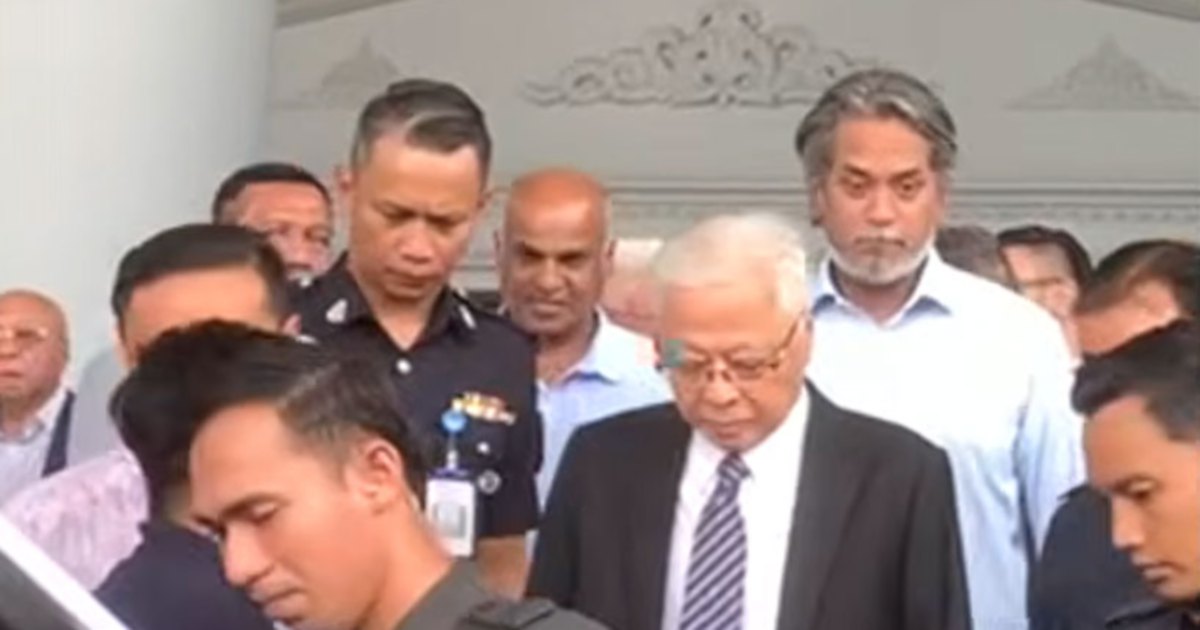
Khairy Jamaluddin's arrival at the Kuala Lumpur Court Complex to attend charge proceedings involving former Prime Minister Datuk Seri Ismail Sabri Yaakob underscored the visible solidarity within Umno's upper echelons at a sensitive moment for the party. The former Umno Youth chief's presence at the courtroom drew considerable notice from observers present, marking a deliberate show of support from a influential party figure.
The gesture carries significance within Umno's internal dynamics, where factional alignments have historically shaped political fortunes. Khairy's decision to publicly attend the proceedings demonstrates a calculated positioning at a time when party hierarchy and loyalty are under scrutiny. Such appearances serve as statements in Malaysian political circles, where symbolic gestures often convey messages about coalition-building and factional relationships that may not be immediately apparent from official statements.
Ismail Sabri's legal proceedings have become a focal point of national attention, affecting not only his political standing but also the broader perception of Umno's institutional strength. The charges against the former premier, while serious, also represent a moment of institutional reckoning for Malaysia's most dominant political party. How senior party members respond to such developments becomes a barometer of party unity and the viability of its leadership structures.
Umno has historically weathered significant challenges by maintaining cohesion among its elite membership, particularly during periods when key figures face legal or political adversity. The presence of figures such as Khairy at court proceedings serves multiple functions: it signals that the party machinery remains intact, that internal rivalries are secondary to collective interests, and that senior members recognise the importance of presenting a unified front to the broader political establishment and electorate.
For Khairy personally, the appearance reinforces his positioning as a pragmatist willing to navigate Umno's complex internal landscape while maintaining relevance within the party's decision-making circles. His tenure as Youth chief and subsequent political evolution have positioned him as a bridge figure between traditional party conservatism and modernising impulses within Umno's ranks. Such appearances at significant moments demonstrate his continued engagement with party affairs beyond formal positions.
The broader context involves Umno's navigation of a complex political environment where the party continues to negotiate its role within federal governance structures while addressing internal challenges. The court proceedings involving Ismail Sabri occur against a backdrop of Malaysia's evolving political settlement, where questions about institutional integrity, accountability, and the role of traditional political machinery remain contested terrain. How Umno manages these questions will influence not only its internal coherence but also its capacity to influence national political trajectories.
For Malaysian observers, such scenes at courthouses offer insights into the durability of political relationships and the mechanisms through which power is negotiated within elite circles. Khairy's appearance reflects the reality that legal proceedings involving prominent political figures are never purely legal matters—they also function as political events where alignment and positioning matter considerably. This intersection of law and politics remains a defining feature of Malaysia's contemporary political landscape.
The implied message of support from senior party members like Khairy may also influence perceptions among Umno's broader membership and coalition partners about the legitimacy of institutional processes and the standing of those involved. In Malaysian politics, where party discipline and hierarchical loyalty remain consequential, such demonstrations of solidarity from respected senior figures carry weight in shaping narratives about fairness, institutional legitimacy, and the continuation of political business as usual.
Umno's capacity to maintain unity during such challenging moments will prove consequential for its future electoral viability and influence over national governance. The party has traditionally relied on its organisational depth and ability to sustain cohesion across diverse membership to retain its dominance within Malaysian politics. Court proceedings involving former prime ministers test this cohesion while also presenting opportunities for the party to demonstrate institutional stability through leadership solidarity.
The appearance also underscores the enduring significance of personal networks and factional relationships within Malaysian political parties. Despite modernisation pressures and institutional evolution, traditional mechanisms of loyalty, patronage, and collective positioning remain operative. Khairy's presence at the court complex served as a reminder that Malaysian politics continues to function through carefully orchestrated displays of alignment and support among elite actors.

