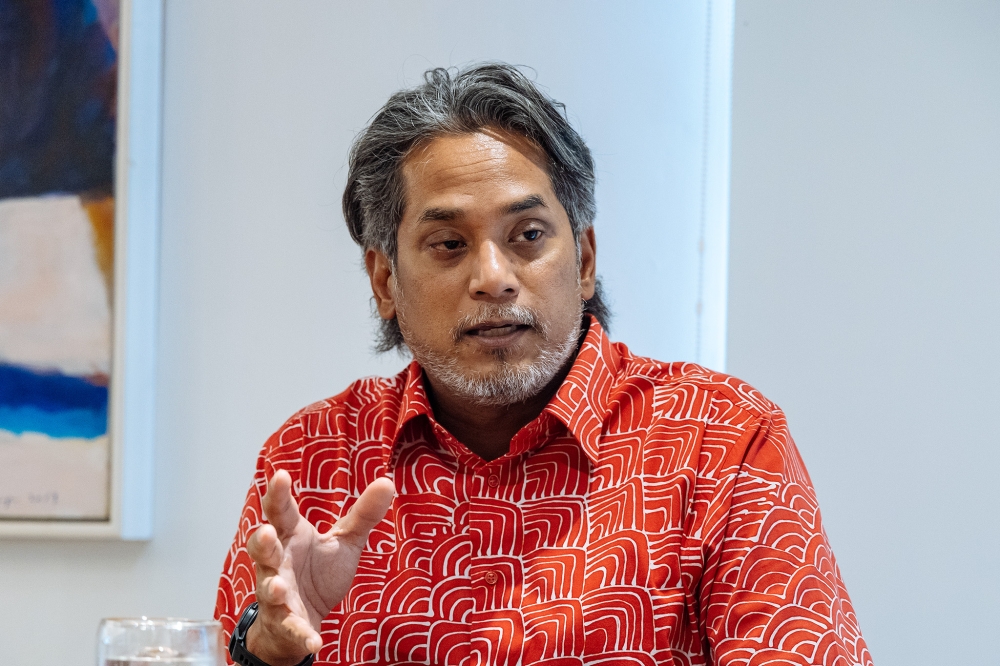
The Barisan Nasional coalition appears to be reconsidering Khairy Jamaluddin's political trajectory by potentially fielding him as a candidate for the Rembau state assembly seat in Negeri Sembilan, according to coalition insiders familiar with the deliberations. The former leader of Umno's youth wing, whose political standing has undergone significant transitions in recent years, is under active consideration for the constituency, with the coalition's machinery reportedly weighing his candidacy amid broader strategic discussions about future leadership configurations in the state.
The prospect of Khairy's nomination for Rembau represents a noteworthy development in Barisan Nasional's internal politics, particularly given his previous roles and the coalition's ongoing efforts to strengthen its electoral positioning ahead of potential state elections. His candidacy has sparked wider conversations within party circles about whether such a nomination might serve as a springboard to more senior positions, including the possibility of his elevation to Menteri Besar should the coalition succeed in securing state control or maintaining its existing majority in Negeri Sembilan.
Negeri Sembilan, with its strategic location in the western corridor between Kuala Lumpur and the southern states, holds considerable political significance for Barisan Nasional. The state has traditionally been a coalition stronghold, and the succession planning for key positions reflects the coalition's intent to maintain institutional control. Rembau, as a specific constituency, occupies an important position within this broader state-level calculus, and the decision to potentially field Khairy there signals that both the seat and the candidate are viewed as strategically important.
Khairy's political biography encompasses periods of considerable prominence and subsequent repositioning. His tenure as Umno Youth chief saw him emerge as a prominent voice within the party's younger faction, and his contributions to Umno's organisational strategy were widely noted. However, like many Malaysian political figures, he has navigated complex internal party dynamics and external political pressures that have shaped his current standing and future prospects within the broader coalition structure.
The timing of these considerations is significant given Malaysia's evolving political landscape. The strengthening of Barisan Nasional at the federal level following the 2023 general election has created fresh momentum for the coalition, and state-level candidates are being evaluated not merely for their local appeal but also for their capacity to contribute to broader coalition narratives and objectives. Khairy's potential nomination embodies this calculus, as his profile extends beyond Rembau itself to encompass coalition-wide messaging and positioning.
Menteri Besar appointments in Malaysian states operate within a framework of constitutional convention, party hierarchy, and consensual decision-making among coalition partners. The speculation surrounding Khairy's potential elevation to such a position suggests that those advocating for his candidacy view him as capable of commanding the necessary support within Umno and among Barisan Nasional partners to secure this higher office. Such conversations typically occur years in advance of actual elections, reflecting the coalition's preference for managed transitions and careful succession planning.
Negeri Sembilan's political composition includes not only Umno but also other significant Barisan Nasional components, whose perspectives would necessarily factor into any Menteri Besar appointment. The broader coalition's internal balance and the specific arrangements governing state governance would therefore constrain the options available, even as Umno, as the largest federal party, maintains substantial influence over state-level decisions in its traditional strongholds.
The consideration of Khairy for Rembau also reflects broader patterns within Malaysian politics whereby experienced politicians are occasionally repositioned across different constituencies to maximise their political utility and adapt to changing electoral dynamics. Such moves can serve multiple purposes: revitalising a candidate's political profile, strengthening a particular region's representation, or signalling organisational confidence in an individual's future trajectory within the party hierarchy.
For Malaysian observers, these developments offer insights into how Barisan Nasional is organising its state-level strategy following the federal-level gains it consolidated recently. The coalition's apparent willingness to position experienced figures like Khairy in state-level races demonstrates a comprehensive approach to elections that spans federal and state tiers. This vertical integration of strategy has become increasingly characteristic of Malaysian coalition politics, where national momentum is carefully translated into state-level electoral gains through strategic candidate placement and organisational preparation.
The unfolding situation in Negeri Sembilan warrants close attention from political analysts tracking coalition dynamics, as the Rembau selection and any subsequent leadership positioning decisions will provide valuable indicators regarding Barisan Nasional's internal decision-making processes and its evolving approach to succession planning. Whether Khairy ultimately receives the party's nomination for Rembau, and whether such a nomination eventually leads to a Menteri Besar opportunity, will reflect both his standing within Umno and the coalition's broader strategic calculations for the state.

