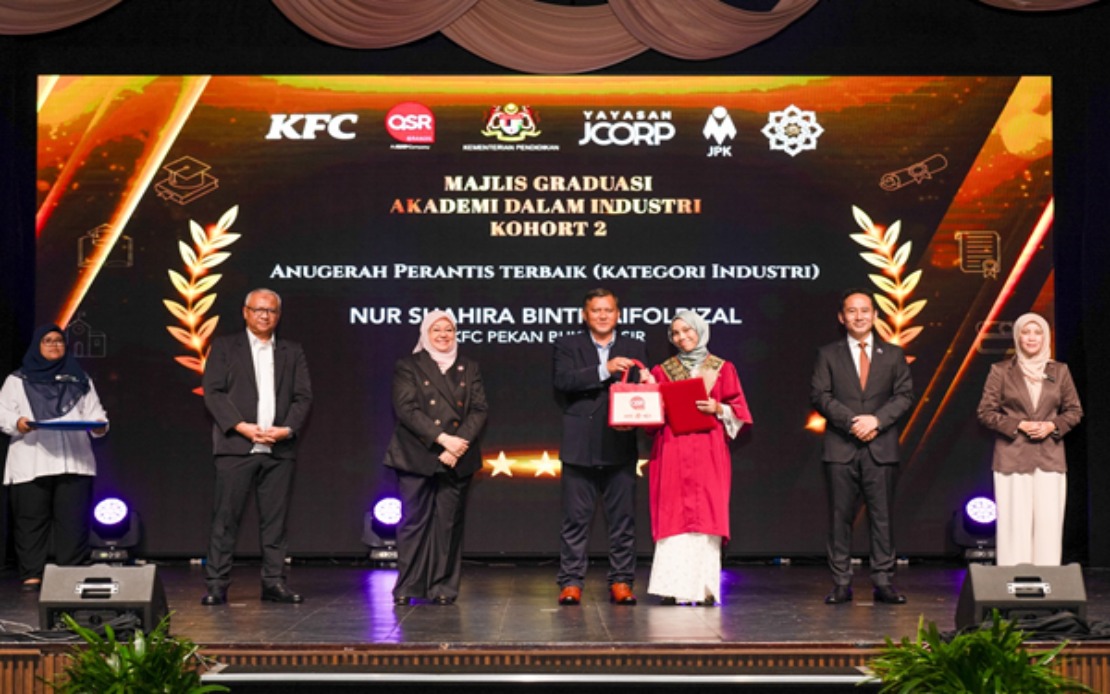
A collaborative vocational training initiative between QSR Brands' KFC Malaysia and Yayasan JCorp has successfully graduated its second cohort of 37 skilled workers, demonstrating the viability of blending classroom education with practical industry experience in Malaysia's quick-service restaurant sector. The second group of trainees completed their qualifications following an inaugural intake of 23 students who finished their placements in March 2025, marking a significant expansion of the Apprenticeship Development Initiative (ADI) programme that formally launched in June 2023.
The ADI represents a pioneering effort within Malaysia's fast-food industry to institutionalise the connection between educational institutions and commercial operators. Rather than viewing vocational training as secondary to academic pathways, the programme positions practical skills acquisition and classroom learning as complementary elements essential to workforce development. Trainees based at KFC locations in Johor Bahru underwent comprehensive exposure to fast-food operations including food preparation, customer service delivery, restaurant management protocols, and adherence to workplace safety standards—competencies that employers consistently identify as critical yet often lacking in school-leaving candidates.
Ministry of Education Technical and Vocational Education and Training director Zulkernai Fauzi has publicly endorsed the model as exemplifying best practice in industry-education integration, suggesting that similar partnerships warrant expansion across Malaysia's TVET ecosystem. His remarks reflect growing recognition within government that Southeast Asian nations struggle to bridge the persistent gap between academic credentials and employers' practical requirements. The ADI framework directly addresses this challenge by embedding certification processes within operational contexts, allowing students to earn nationally recognised qualifications while simultaneously demonstrating competency under real workplace conditions.
Performance metrics from the second cohort underscore the programme's effectiveness in producing job-ready graduates. All 37 participants achieved full marks in Vocational Stream Subjects (MPAK) and both Malaysian Skills Certificate (SKM) levels 2 and 3, while 95 percent successfully completed their Sijil Pelajaran Malaysia (SPM) examinations. Each graduate received five distinct qualifications: the Vocational SPM, both SKM certifications, a programme completion certificate, and formal recognition from QSR Brands. Beyond aggregate pass rates, the cohort also competed for merit-based distinctions, with selected individuals recognised for exceptional apprenticeship documentation, academic excellence, and superior workplace performance.
Yayasan JCorp, operating as the institutional partner managing student recruitment and selection, has positioned the ADI as a vehicle for social mobility and workforce inclusion. Chairman Rozaini Mohd Sani emphasised that the programme opens pathways for young people across diverse socioeconomic backgrounds to develop professional confidence and acquire marketable competencies. This framing carries particular resonance in Malaysia, where vocational pathways have historically struggled against persistent cultural preferences for academic university tracks. By demonstrating that restaurant operations training can yield internationally comparable skills certifications, the ADI potentially shifts perceptions of TVET as a legitimate career foundation rather than a fallback option.
Dr Sharifah Musainah Syed Alwi, chief human resources officer for QSR Brands, emphasised that the initiative transcends ceremonial credential-awarding by recognising graduates who have demonstrated mastery of industry standards within operational environments. This distinction matters strategically, as it positions KFC Malaysia's training as yielding substantively different value than traditional classroom instruction alone. Graduates enter the employment market with verifiable practical experience, familiarity with commercial workflows, and documented performance in settings resembling their eventual workplaces. For KFC Malaysia, the investment in systematic training yields additional benefits: building a pipeline of pre-screened, partially trained candidates available for permanent positions while simultaneously demonstrating corporate social responsibility.
The curriculum framework itself merits consideration for its comprehensiveness. Rather than narrowly focusing on food preparation techniques, the ADI exposes participants to the multi-faceted demands of quick-service restaurant operations: managing customer expectations, maintaining food safety protocols, coordinating team activities, and adapting to high-volume service requirements. This breadth distinguishes the programme from simpler apprenticeships and positions graduates competitively for advancement into supervisory or management roles. The emphasis on compliance and standards-based competencies particularly matters for international brands operating to global specifications.
From a labour market perspective, the ADI addresses documented skills deficits within Malaysia's hospitality and food service sectors. These industries historically face high turnover and difficulty recruiting candidates with appropriate foundational training. By systematising the transition from education to employment, KFC Malaysia and its partners reduce recruitment friction while simultaneously improving initial employee quality. The success metrics—zero dropout rates, high certification achievement, and measurable workplace competency—suggest the model could be replicated across other quick-service operators and potentially adapted for broader hospitality applications.
The timing of the second cohort's graduation carries additional significance given Malaysia's broader emphasis on reskilling and upskilling initiatives outlined in various economic transformation plans. Government backing from the Ministry of Human Resources and Ministry of Education indicates official recognition that private sector-led training models merit encouragement and potential scaling. The ADI's July 2025 milestone demonstrates sustainability beyond the pilot phase, suggesting that partnerships between major employers and community foundations can institutionalise high-quality vocational pathways.
Looking forward, the expansion from 23 inaugural graduates to 60 cumulative participants signals confidence among all stakeholders in the model's viability. Questions remain regarding scalability—whether KFC Malaysia intends to expand cohort sizes, whether other QSR Brands divisions might establish similar programmes, and whether competing restaurant chains will develop parallel initiatives. Additionally, post-graduation employment tracking would strengthen the case for replication, by demonstrating that ADI graduates achieve superior career outcomes compared to conventionally trained peers.
The initiative also addresses Malaysia's positioning within regional labour markets. As Southeast Asian economies compete for investment and talent, the ability to develop vocational workforces meeting international standards becomes strategically important. By producing graduates certified to Malaysian Skills Certificate standards while demonstrating competency in multinational corporate environments, the ADI contributes to building human capital aligned with regional commercial practices. This matters for companies considering Malaysia as a training and operations hub.
Yayasan JCorp's continued role alongside QSR Brands reflects evolving corporate governance in Malaysia, where major family-controlled conglomerates increasingly leverage foundations and philanthropic arms for workforce development initiatives. This structure allows JCorp to pursue developmental objectives aligned with government priorities while maintaining operational independence from Johor state politics. The partnership model itself—combining commercial operator expertise with educational institutional capacity and philanthropic resources—potentially offers a replicable template for other Malaysian corporations seeking to contribute meaningfully to TVET expansion.

