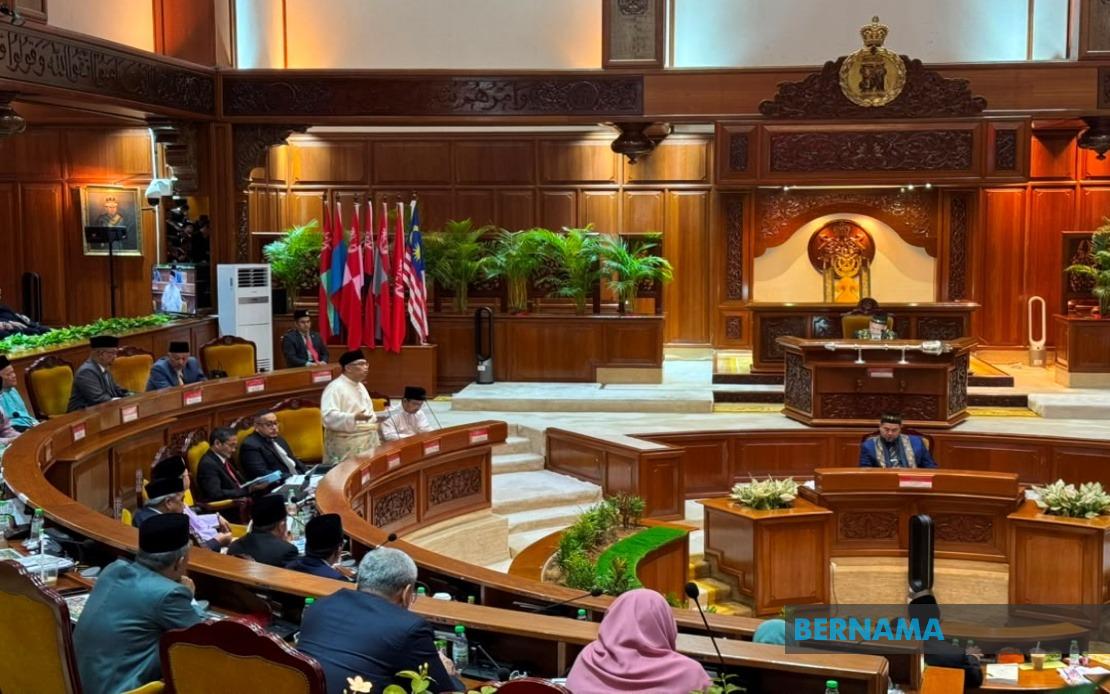
The Kelantan State Legislative Assembly has unanimously passed the Syariah Criminal Offences (Kelantan) Bill 2026, marking a comprehensive overhaul of the state's Islamic criminal justice framework. The legislation represents a significant shift in how Kelantan addresses religious offences, introducing mechanisms designed to balance rehabilitation with enforcement and creating a more structured legal architecture for Islamic law implementation. According to Kelantan Deputy Menteri Besar Datuk Dr Mohamed Fadzli Hassan, the Bill encompasses nine distinct parts, 62 clauses, and one schedule, fundamentally restructuring how syariah offences are classified, prosecuted, and penalised.
At the heart of the legislative reforms lies the introduction of restorative sentencing provisions, which fundamentally reshape how courts approach punishment for certain offences. Rather than focusing exclusively on custodial or corporal penalties, the framework emphasises community service as a rehabilitative mechanism. Under the new arrangements, individuals sentenced to community service must complete their obligations within a twelve-month period, creating a defined timeframe that encourages timely reintegration into society. This approach reflects evolving thinking within Islamic jurisprudence that acknowledges both accountability and the potential for offender reformation through structured community engagement.
The Bill introduces a novel compounding mechanism that grants significant discretionary authority to the Sultan of Kelantan in determining which offences may be settled through compensation or negotiation rather than formal prosecution. This framework operates through gazette-published orders that establish the categories of compoundable offences, procedural guidelines, and requisite documentation forms. The compounding mechanism represents a deliberate attempt to reduce court congestion while allowing complainants flexibility in seeking resolution, particularly for offences where reconciliation or restitution may serve justice more effectively than punitive measures.
Penalty enhancements constitute another cornerstone of the reforms, with the legislation prioritising corporal punishment through whipping for what authorities classify as serious religious violations. These enhanced penalties apply to offences including attempted apostasy, parental neglect regarding a child's religious upbringing, breaches of modest dress and bodily propriety standards, consumption of intoxicating substances, gambling activities, unlawful sexual relations, and out-of-wedlock pregnancies. The escalated penalties reflect Kelantan's determination to strengthen enforcement against offences deemed particularly damaging to Islamic principles and community moral standards.
Six entirely new criminal provisions have been inserted into Kelantan's syariah legal code through this Bill, each addressing specific religious obligations or prohibitions previously lacking dedicated legislative attention. Clause 10 criminalises the neglect or abandonment of obligatory prayers, establishing a legal duty to observe mandatory Islamic worship practices. Clauses 15 and 16 introduce distinct offences relating to the obligation to guard private parts and the obligation to maintain modesty regarding other body areas respectively. These provisions operationalise Islamic jurisprudential concepts concerning bodily propriety and sexual conduct within a criminal legislative framework.
Clause 33 addresses the protection of intellect from substances and activities considered damaging to mental faculties, extending Islamic legal protections beyond physical propriety into cognitive preservation. Clauses 59 and 60 establish the procedural and institutional mechanisms enabling compounding, specifically delineating the powers vested in relevant authorities to negotiate settlements and authorise alternatives to prosecution. Together, these six new provisions substantially expand the scope of syariah criminal law in Kelantan, introducing legal precision to previously uncodified religious obligations.
Significant portions of Kelantan's existing syariah criminal legislation have undergone substantial revision through this Bill. The provisions concerning desecration of places of worship have been repealed and replaced with enhanced language specifically addressing disturbances to Muslim places of worship, strengthening protections for religious spaces through more precise legislative drafting. Section 14 of the 2019 Syariah Criminal Code Enactment addressing sodomy has been entirely repealed, with related conduct now addressed under the new provisions on maintaining private parts and guarding body parts other than private parts. This structural reorganisation consolidates conduct previously scattered across multiple provisions into a more coherent legislative framework.
For Malaysian and Southeast Asian observers, these reforms warrant careful attention given their implications for Islamic legal implementation across the region. Kelantan, as a state with significant autonomy over syariah matters, frequently serves as a test case for more stringent Islamic legal frameworks that may subsequently influence other Malaysian states or regional jurisdictions. The restorative sentencing mechanisms reflect international criminal justice trends toward rehabilitation, yet implemented within an explicitly Islamic legal context. This hybrid approach may prove instructive for other Muslim-majority jurisdictions seeking to modernise Islamic law implementation while maintaining theological fidelity.
The compounding mechanism similarly represents a pragmatic attempt to accommodate Islamic jurisprudential principles emphasising mercy and settlement with contemporary criminal justice concerns about proportionality and procedural fairness. By vesting compounding authority in the Sultan rather than individual judges, the framework maintains centralised institutional control while creating flexibility for case-by-case resolution. This approach contrasts with common law systems where prosecutorial discretion typically governs such decisions, instead placing settlement authority within the constitutional monarchy structure.
The introduction of specific penalties for prayer neglect and bodily propriety offences marks an important development in how secular-leaning East Malaysian states and more Islamic-oriented jurisdictions conceptualise criminal law's reach into personal religious practice. While many Muslim-majority nations recognise prayer as a fundamental religious obligation, criminalising its neglect remains comparatively uncommon, making Kelantan's approach distinctive within ASEAN contexts. The legislation essentially extends criminal law's jurisdiction into domains traditionally regulated through social pressure, family influence, and religious teaching rather than state punishment.
Implementation challenges will prove significant for Kelantan's Islamic courts and enforcement authorities. The restorative sentencing framework requires institutional capacity for community service programme administration, including monitoring, supervision, and compliance verification systems currently underdeveloped in most Malaysian state syariah structures. The compounding mechanism necessitates transparent, accessible procedures ensuring complainants understand settlement options without feeling pressured into abandoning legitimate grievances. Prosecutors will require training in navigating expanded criminal definitions while applying enhanced penalties proportionately across diverse fact patterns.
The Bill's unanimous passage through the State Assembly suggests broad political consensus regarding Kelantan's direction on Islamic legal matters. However, the legislation will inevitably generate discussion regarding the appropriate balance between religious law enforcement and individual liberty protections, particularly concerning provisions addressing prayer observance and bodily propriety standards. Religious scholars may debate whether expanded criminalisation aligns with Islamic jurisprudential principles emphasising gradual moral development and community religious education over state coercion. Civil society organisations focused on individual rights will likely scrutinise implementation patterns to ensure procedures operate fairly and transparently.
Looking forward, the Syariah Criminal Offences (Kelantan) Bill 2026 represents an important benchmark for understanding how Malaysian states are evolving their Islamic legal frameworks. The combination of restorative elements with enhanced penalties, expanded criminal definitions with compounding flexibility, and institutional centralisation within constitutional monarchy structures reflects sophisticated legislative draftsmanship attempting to accommodate multiple jurisprudential and policy objectives. As implementation proceeds, the Bill's practical effects on Kelantan's religious communities, court systems, and social dynamics will merit ongoing regional attention.

