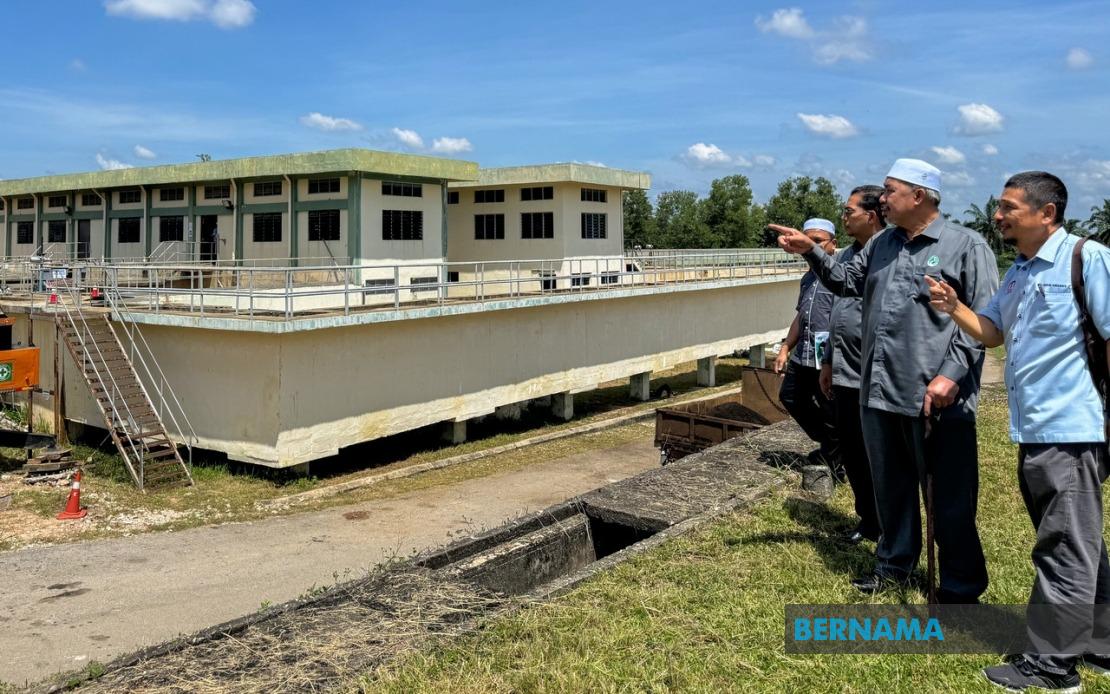
Approximately 34,000 account holders across Machang, Pasir Puteh, and southern Kota Bharu in Kelantan will receive more reliable water supply from September onwards, following completion of a RM11.5 million enhancement project at the Merbau Chondong Water Treatment Plant that significantly expands its production capabilities. The upgrade represents a major step in addressing longstanding water scarcity issues that have plagued the eastern state, where water supply constraints have historically limited the ability of authorities to meet residential and commercial demand.
The upgrade nearly doubles the plant's output, with treated water production capacity set to increase from 45 million litres per day to 80 million litres daily. Datuk Dr Izani Husin, chairman of Kelantan Public Works, Infrastructure, Water and Rural Development Committee, explained that the facility's raw water treatment capacity will now handle between 70 to nearly 90 million litres daily, a substantially higher throughput than previously possible. This expansion addresses a critical operational constraint that had previously prevented Air Kelantan Sdn Bhd from pushing the plant to higher output levels without risking water quality deterioration.
Central to the upgrade is the installation of the Xylem Underdrain Leopold filtration system, which represents a qualitative leap in treatment technology. This advancement enables the plant to process raw water more efficiently while simultaneously improving the final product quality. The turbidity level, measured using the Nephelometric Turbidity Unit (NTU) scale, has been successfully reduced from over 10 NTU to 3 NTU—a significant enhancement in water clarity and purity that meets stricter quality standards. For consumers in the affected districts, this means not only greater water availability but also improved water quality, addressing dual concerns that have plagued the region.
Izani indicated that the project is on track for completion by the end of July, with water distribution from the upgraded system commencing in early September. This timeline provides affected households and businesses with concrete assurance that relief is imminent, though the phased approach means water security concerns will persist through the remainder of the dry season. The relatively tight completion window suggests that the upgrade has been a priority for state infrastructure planners, reflecting the urgency of the water supply crisis in these districts.
Looking beyond the immediate Merbau Chondong upgrade, the Kelantan state government is pursuing an ambitious longer-term strategy to expand the state's overall water treatment infrastructure. Working alongside Pengurusan Aset Air Berhad (PAAB), authorities are planning a new facility called Machang 1 Water Treatment Plant worth RM120 million, expected to come online by 2030. This additional plant will have capacity to supply 50 million litres daily, specifically designed to serve the growing needs of Machang residents while allowing existing capacity at Merbau Chondong to be redirected toward other water-stressed districts across Kelantan.
The dual-investment approach reflects recognition that singular infrastructure solutions cannot address the state's water challenges comprehensively. By building new treatment capacity in Machang while maximising output from existing facilities, authorities can create redundancy and flexibility in the distribution network. Currently, the Machang 1 project awaits finalisation of formal agreements between the state government and PAAB before contractor selection proceeds, suggesting administrative processes may determine its actual timeline despite the 2030 target date.
For Malaysian readers tracking water security across the country, Kelantan's experience illustrates broader challenges facing rural and secondary urban areas where population growth and climate variability strain aging infrastructure. The state's situation is not unique; water supply constraints affect multiple regions, particularly during dry seasons when river levels drop and treatment plants cannot extract sufficient raw water. However, Kelantan's systematic approach to both immediate remediation and long-term capacity expansion offers a model that other states may consider.
The achievements outlined by Izani also demonstrate measurable progress in addressing the wider water crisis affecting the state's 270,000 account holders. Air Kelantan Sdn Bhd has reportedly resolved approximately 70 percent of water supply issues affecting this population and aims to reach at least 90 percent resolution by 2035. While the 2035 target remains distant, this trajectory suggests that a combination of technological upgrades, infrastructure investment, and operational improvements is gradually stabilising water security across the state.
The implications for Kelantan's economic development are substantial. Water supply reliability directly influences investment decisions by manufacturers, agricultural operations, and service providers who require consistent access to adequate clean water. The Merbau Chondong upgrade removes a significant constraint on three districts, potentially enabling commercial and residential expansion that had previously been limited by infrastructure capacity. Enhanced water quality additionally reduces health risks and treatment costs for businesses and households relying on the supply.
From a regional perspective, Kelantan's water challenges reflect Southeast Asia's broader vulnerability to climate variability and seasonal fluctuations. As the region experiences increasingly unpredictable rainfall patterns, water treatment plant upgrades become critical adaptive infrastructure investments. The Xylem technology adoption also indicates growing integration of advanced filtration systems into Malaysian water management, a trend that could improve supply reliability across multiple states if capital investments continue.
The human impact of these upgrades should not be understated. Residents of affected districts have endured extended periods of low water pressure, irregular supply schedules, and water quality concerns. The September commencement of improved supply represents relief from daily inconvenience and health uncertainties that accompany unreliable water access. For commercial operators and service providers, the upgrade enables expansion and normalisation of operations previously constrained by scarcity.

