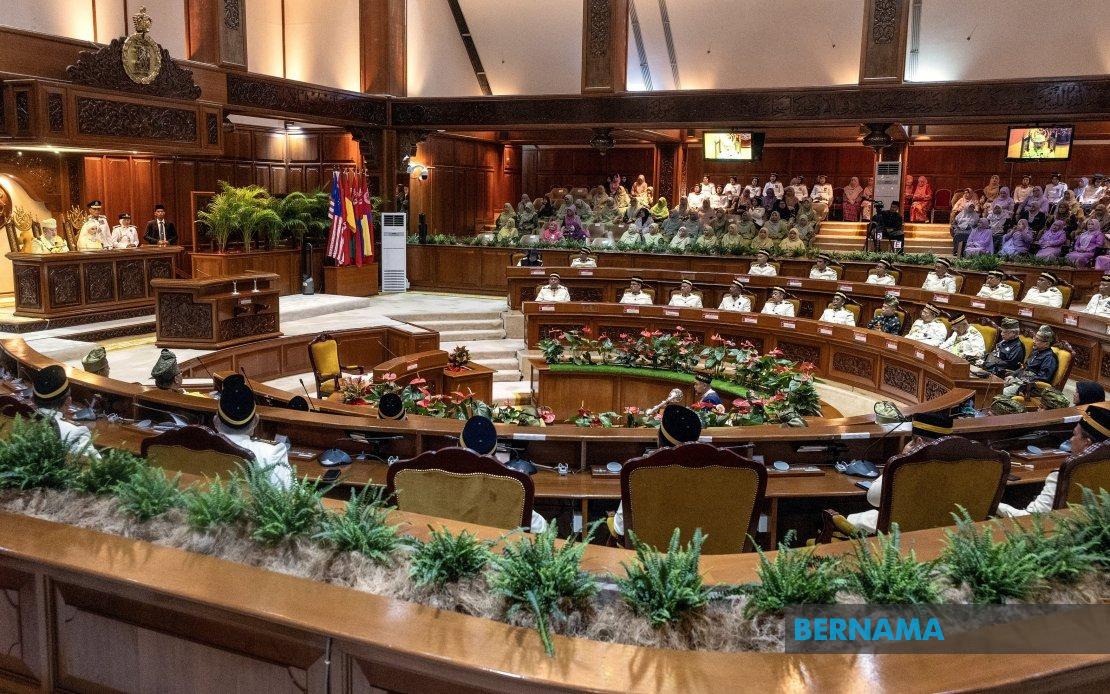
The Kelantan state government is set to introduce fresh legislation governing Syariah criminal offences at its state assembly sitting scheduled for next Tuesday, marking a significant response to a landmark constitutional decision handed down earlier this year. The proposed Syariah Offences (Kelantan) Bill 2026 represents a carefully reconstructed legal framework designed to address concerns raised by Malaysia's highest court regarding the proper boundaries of state legislative power in religious matters.
Deputy Menteri Besar Datuk Dr Mohamed Fadzli Hassan confirmed that the bill will replace the Kelantan Syariah Criminal Code (I) Enactment 2019, which has been substantially weakened by judicial intervention. On February 9, 2024, the Federal Court delivered an 8-1 majority judgment declaring sixteen of the eighteen challenged provisions of the 2019 enactment constitutionally invalid. This decisive ruling fundamentally reshaped the legal landscape for Syariah criminal jurisdiction across Malaysia, establishing clear limits on what state legislatures may lawfully regulate without infringing on Parliament's exclusive authority.
The genesis of the court's intervention lay in a constitutional challenge mounted by Kelantan lawyer Nik Elin Zurina Nik Abdul Rashid and another party. Their case raised critical questions about federalism and the distribution of legislative powers under the Malaysian Constitution. The Federal Court's reasoning centered on the principle that while states possess certain Syariah criminal jurisdiction, they cannot unilaterally extend that authority into matters that Parliament has already claimed. The judgment effectively invalidated provisions that the court concluded fell beyond the constitutional remit of the state legislative assembly, triggering widespread debate across the nation about the proper equilibrium between federal and state powers in Islamic legal affairs.
Work on crafting the replacement bill commenced in mid-2024, reflecting the government's commitment to expeditiously restore a functioning statutory framework within constitutional boundaries. The drafting process involved substantial institutional collaboration, bringing together a committee comprising civil and Syariah legal practitioners, academic experts, constitutional law specialists, and serving Syariah judicial officers. This multidisciplinary approach reflects an understanding that merely reissuing the struck-down enactment would prove futile; instead, a fresh bill required careful constitutional calibration to ensure legislative competence.
The draft legislation underwent additional scrutiny from the Kelantan Council of Ulama operating under the Kelantan Islamic Religious and Malay Customs Council (MAIK). This consultation process ensured that religious expertise and scholarly consensus informed the bill's substance, addressing concerns that any new enactment must reflect both constitutional propriety and Islamic jurisprudential soundness. The involvement of religious scholars alongside legal experts underscores the complexity of reconciling modern constitutional law with traditional Islamic governance principles in the Malaysian federal context.
The new bill comprises nine distinct parts structured around sixty-two clauses plus a schedule, a configuration that reflects deliberate effort to align the legislation with the "pith and substance" constitutional doctrine. This principle requires that laws be classified according to their essential purpose and substance, ensuring that measures ostensibly addressing one area do not clandestinely regulate matters allocated elsewhere under the constitution. By organizing the bill around this framework, the drafters sought to craft provisions that withstand judicial scrutiny while maintaining meaningful Syariah criminal regulation.
According to Dr Mohamed Fadzli, the bill emphasizes religious obligations whilst incorporating several new and reformative provisions that advance beyond the 2019 enactment. This suggests a qualitative shift not merely toward constitutional compliance but toward a more sophisticated articulation of Syariah criminal law in contemporary Malaysia. The inclusion of innovative provisions indicates that the government views this exercise not simply as damage control following judicial invalidation, but as an opportunity to strengthen and modernize the legislative framework within properly defined constitutional limits.
The Federal Court's judgment and its aftermath have proven consequential for Malaysia's broader constitutional architecture. The decision fueled nationwide discussion about federalism, the relationship between secular and religious law, and the proper scope of state autonomy in Islamic affairs. For states like Kelantan with strong Islamic governance mandates, the ruling necessitated recalibration of legislative strategy, forcing lawmakers to respect the constitutional division of power whilst preserving meaningful room for state-level Syariah criminal regulation.
Deputy Menteri Besar Dr Mohamed Fadzli expressed hope that assemblymen across the political spectrum would support the bill, acknowledging that legislative consensus on matters touching religion and constitutional law strengthens both the legitimacy and stability of the legal framework. The state government's apparent confidence in the bill's constitutional soundness derives from the extensive consultative and analytical process undertaken since the Federal Court decision, providing stakeholders with confidence that the new legislation should survive judicial challenge.
From a broader Malaysian perspective, the Kelantan bill represents a case study in how states adapt to judicial pronouncements on constitutional limits. As Southeast Asia's plural legal systems face increasing scrutiny regarding jurisdictional boundaries, Kelantan's approach demonstrates how jurisdictions can respect superior court rulings whilst remaining responsive to local governance priorities. The bill's introduction next week will test whether the careful drafting process has indeed produced legislation capable of operating effectively within the constitutional space the Federal Court demarcated.

