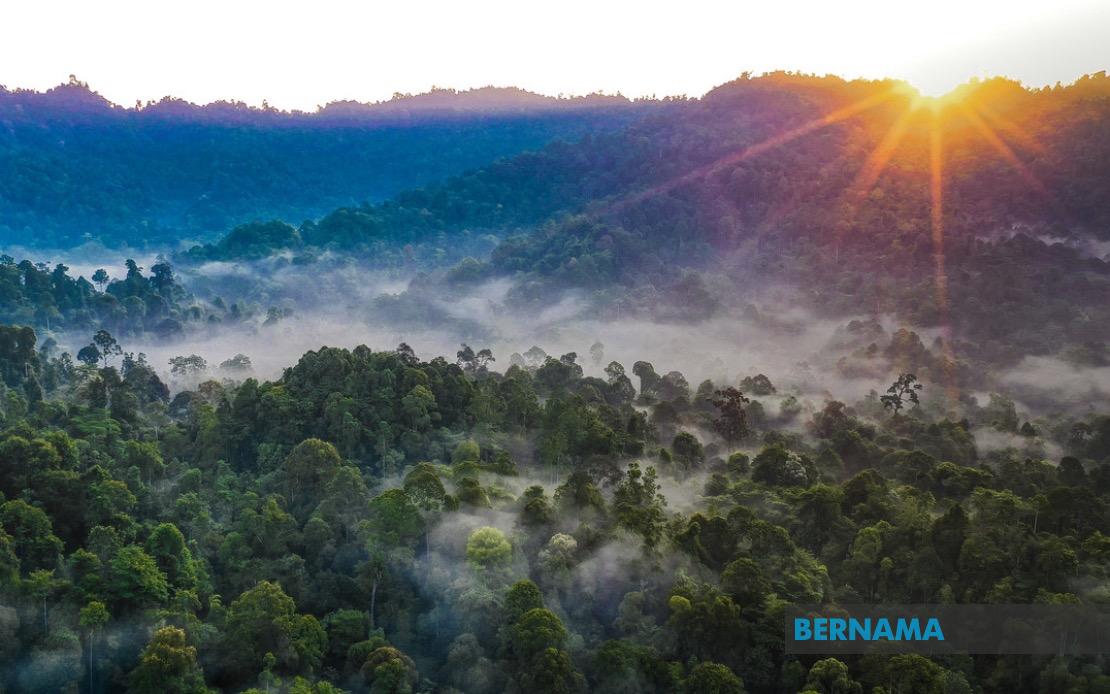
The Kelantan state government has committed to preserving the state's total forest coverage by replacing every forest reserve area that is degazetted for commercial or developmental purposes. The assurance came from Deputy Menteri Besar Datuk Dr Mohamed Fadzli Hassan following a state government executive council meeting at Kota Darulnaim Complex in Kota Bharu on July 15, marking an attempt to address mounting environmental concerns about forest conservation in the state.
The pledge specifically encompasses the controversial Temangan Forest Reserve in Machang district, which has been degazetted to facilitate ongoing granite mining operations. This particular case has drawn scrutiny from environmental advocates and local communities, making it a touchstone for the government's broader forest management policies. The reserve's degazettement represents a significant shift in how Kelantan is managing its natural resources, balancing economic development with environmental stewardship.
According to Datuk Dr Mohamed Fadzli, the circumstances surrounding Temangan are historically rooted. A mining company received approval for granite extraction within the reserve in 2009, but the actual degazettement of the forest reserve occurred only recently to enable the long-standing approval to proceed. This timeline suggests that regulatory frameworks and corporate permissions sometimes operate on different schedules, creating periods of limbo before implementation can legally commence.
The Deputy Menteri Besar explained that he personally sought clarification from the Kelantan State Forestry Department regarding the replacement protocol for cancelled reserves. The state forestry authorities have confirmed that there is a mandatory requirement for any degazetted forest reserve to be replaced with an alternative area of equivalent conservation value. This assurance represents a formal commitment within the state's environmental governance structure, though the mechanisms for identifying and designating replacement areas remain to be elaborated.
For Malaysian readers concerned about forest degradation and environmental conservation, this announcement carries both promise and uncertainty. Kelantan, like other states in Peninsular Malaysia, has experienced considerable pressure from resource extraction and agricultural expansion. Forest reserves serve multiple functions beyond timber production, including watershed protection, biodiversity conservation, and climate regulation, making their preservation crucial for long-term environmental health.
The specificity of replacement commitments becomes important when considering implementation. Kelantan would need to identify suitable replacement forest areas, navigate land acquisition or reclassification processes, and ensure that the replacement meets the conservation standards of the original reserve. The capacity of state forestry departments to manage such transitions efficiently often determines whether such pledges translate into genuine environmental outcomes.
The granite mining approval from 2009 indicates that resource extraction in forest reserves is an established practice in Kelantan, subject to regulatory oversight. Granite and other construction minerals remain in demand for Malaysia's ongoing infrastructure development and urbanisation projects. However, the extraction process inevitably involves forest clearance and ecological disruption, raising questions about whether replacement forests can truly compensate for the loss of established ecosystems.
Environmental observers in Southeast Asia have noted that forest replacement policies can vary significantly in their effectiveness. While new plantings can eventually provide ecological functions, the timeline for restoration and the quality of replacement ecosystems often fall short of original conditions. Biodiversity, soil quality, and ecological relationships take decades or longer to fully regenerate, meaning that temporal losses are real even where spatial replacement occurs.
The Kelantan government's public assurance appears designed to address growing environmental consciousness among Malaysian citizens and concerns raised by non-governmental organisations monitoring forest loss across the country. By articulating a replacement principle, authorities aim to demonstrate that development and conservation are not mutually exclusive objectives. However, the actual implementation of this policy will be the true test of governmental commitment.
Regional context matters here as well. Malaysia's forest cover has declined steadily over recent decades, and individual state-level policies significantly influence national environmental outcomes. Kelantan's approach will likely influence how other states handle similar requests for forest degazettement, potentially establishing precedents for forest management across Southeast Asia's tropical landscape.
Looking forward, transparency in the identification and gazetting of replacement forest areas will be essential for public confidence. Kelantan stakeholders should monitor whether replacement areas are designated promptly and whether they meet established forestry standards. The Deputy Menteri Besar's direct involvement in seeking clarification from the state forestry department suggests that accountability lines exist, though formal mechanisms for public reporting on replacement progress would strengthen credibility.
The granite mining case in Temangan exemplifies the complex negotiations between economic development and environmental preservation that characterise modern Malaysia. As the nation continues pursuing infrastructure expansion and industrial growth, how individual states manage such trade-offs will shape both the country's environmental trajectory and its capacity to meet international climate commitments and sustainable development obligations.

