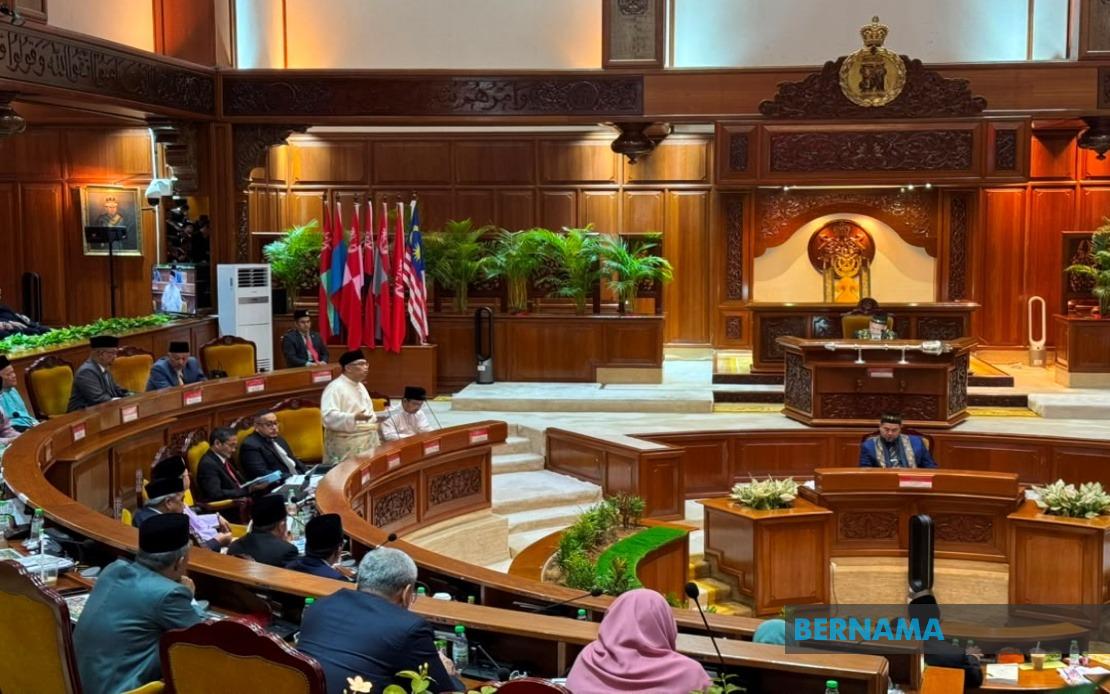
The Kelantan state legislative assembly has unanimously approved the Syariah Criminal Offences (Kelantan) Bill 2026 in what officials describe as a pivotal moment for the state's religious legislation framework. Deputy Menteri Besar Datuk Dr Mohamed Fadzli Hassan tabled the legislation, which was subsequently debated and passed by the full assembly in the presence of Speaker Datuk Mohd Amar Nik Abdullah. The approval represents the state government's response to significant legal challenges that had undermined its previous attempts to codify religious criminal law.
The passage of this bill carries considerable weight given the turbulent history of Kelantan's Syariah criminal legislation. In February 2024, the Federal Court delivered a decisive blow to the state's ambitions when eight of nine judges ruled that 16 of 18 provisions in the Kelantan Syariah Criminal Code (I) Enactment 2019 were unconstitutional. The court determined that the state assembly had exceeded its jurisdictional authority, as certain criminal offences fell under federal rather than state legislative purview. This decision prompted extensive national debate about the constitutional boundaries between federal and state governments in matters of Syariah law, a fundamental question that continues to shape Malaysia's federal structure.
Menteri Besar Datuk Mohd Nassuruddin Daud emphasised during assembly proceedings that the new bill represents the outcome of meticulous planning and extensive refinement across multiple stages before reaching the floor. His remarks underscore a conscious effort to distinguish this legislation from its ill-fated predecessor, suggesting that state officials have carefully studied the Federal Court's reasoning and sought to address the constitutional deficiencies identified by the judges. The process reflects an awareness that legislative ambition must be balanced against constitutional constraints, particularly in a federation where power remains divided between centre and states.
The bill's architecture comprises nine distinct parts, 62 clauses, and a single schedule, introducing several substantive reforms to how Kelantan approaches Syariah criminal matters. These reforms include new provisions addressing the obligation to perform obligatory prayers, protecting bodily integrity and private parts, safeguarding intellectual capacity, implementing restorative justice approaches, establishing whipping as a prioritised punishment mechanism, and introducing a compound system for certain offences. This structure attempts to create a more systematic and transparent framework than its predecessor, translating religious principles into clearly defined legal categories and procedural safeguards.
The emphasis on restorative punishment and compound mechanisms represents a particularly significant evolution in Kelantan's approach. Rather than relying solely on custodial or corporal measures, the new framework contemplates alternative forms of accountability that align with broader criminal justice trends. The prioritisation of whipping as a punishment also reflects deliberate legislative choice, establishing a hierarchy of sanctions that may have been absent from the earlier enactment. These technical refinements suggest state legislators have engaged with both constitutional law and comparative jurisprudence in designing a framework intended to withstand legal scrutiny.
State assemblymen representing six constituencies—Pasir Tumboh, Melor, Galas, Jelawat, Kota Lama and Chempaka—participated in the assembly debate, indicating that the bill attracted engagement across the state's political geography. The unanimous passage, despite the polarising nature of Syariah law debates in Malaysian politics, suggests either broad consensus within the Kelantan assembly or disciplined political management by the ruling coalition. The unanimity stands in contrast to the ideological divisions that often characterise discussions of religious law across the federation.
Kelantan's legislative strategy raises important questions for Malaysia's federal design. The state government has not abandoned its ambitions to strengthen Syariah criminal law but has instead recalibrated its approach following the Federal Court's intervention. This pattern—of constitutional setback followed by legislative revision—reflects the ongoing tension between state religious authority and federal constitutional constraints that characterise Malaysian federalism. The outcome will likely influence other states contemplating similar legislation, particularly Terengganu and Pahang, which have explored comparable provisions.
The timing of the bill's passage also merits attention within Malaysia's broader political context. Kelantan remains under the governance of Parti Islam Se-Malaysia, which has consistently prioritised Syariah law advancement as a core policy objective. The 2026 bill represents this commitment's continuation, demonstrating that constitutional obstacles, while significant, have not deterred the state from pursuing this legislative agenda. Whether this revised bill survives potential legal challenges will test whether the state government has genuinely addressed the Federal Court's constitutional concerns or merely repackaged provisions that remain problematic.
For Malaysian and Southeast Asian observers, this development illuminates how Malaysia navigates the intersection of religious authority and constitutional law. Unlike secular democracies where such questions remain theoretical, Malaysia must continuously manage the practical implementation of Syariah law within a federal constitutional framework. The Kelantan bill exemplifies this ongoing negotiation, demonstrating both the courts' willingness to enforce constitutional boundaries and state governments' persistence in advancing religious legislative agendas despite judicial obstacles.
The bill's passage also carries implications for religious freedom discourse in Malaysia. Provisions addressing obligatory prayer performance and bodily integrity raise questions about the scope of Syariah law enforcement and its potential intersection with individual autonomy. How these provisions are implemented will reveal whether Kelantan interprets the bill as establishing broad supervisory authority over religious observance or maintains more circumscribed enforcement approaches. This interpretation will likely generate commentary from civil society organisations and international observers monitoring Malaysia's human rights trajectory.
Looking forward, the true significance of this legislation will emerge through implementation and enforcement rather than passage. State authorities will face decisions about prosecution priorities, sentencing approaches, and whether the restorative mechanisms actually divert cases from more punitive pathways. Additionally, the bill's constitutionality remains untested; despite being drafted with the Federal Court's 2024 decision ostensibly in mind, it could still generate legal challenges if plaintiffs identify provisions that continue to transgress federal boundaries. The years ahead will determine whether Kelantan has successfully navigated the constitutional minefield or whether this legislation becomes subject to similar judicial invalidation.

