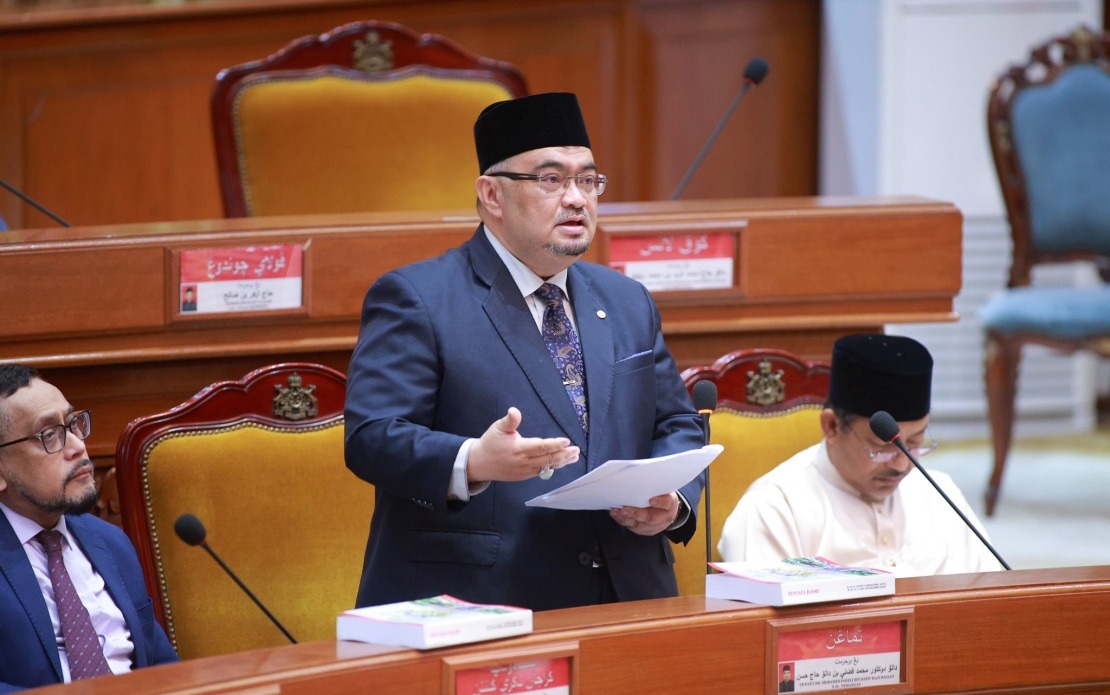
Kelantan's state government has ramped up enforcement action against illegal mining and land encroachment, with authorities opening 63 investigation papers stemming from operations conducted between the start of 2025 and June this year. The figures, disclosed by Deputy Menteri Besar Datuk Dr Mohamed Fadzli Hassan during a session at the Kelantan State Legislative Assembly in Kota Bharu, reflect mounting concern over unauthorised resource extraction and property violations in the predominantly rural northern state.
The enforcement push involved 77 separate operations targeting known problem areas across four districts identified as hotspots for such violations. Gua Musang, Kuala Krai, Jeli and Tanah Merah have emerged as focal points for illegal mining and encroachment activities, prompting the state government to dedicate significant resources to enforcement. These four districts, which encompass some of Kelantan's less densely populated regions, have historically attracted illegal operators seeking to exploit mineral deposits and unregistered land with minimal oversight.
Beyond opening investigation papers, the enforcement agencies have made substantial material progress in disrupting illegal operations. Authorities seized a total of 65 excavators and heavy machinery used in mining and land clearance activities, with the impounded equipment valued at RM15.8 million. The confiscation strategy targets the logistical backbone of these operations, rendering it more difficult for operators to resume activities even after investigations conclude. The seizure of such valuable equipment represents a tangible deterrent and shifts the cost-benefit calculation for would-be violators.
All 63 investigation papers have been forwarded to the Prosecution Unit of the Kelantan Land and Mines Office for further action, marking the transition from field enforcement to formal prosecutorial proceedings. This handoff suggests the state government views these cases as sufficiently substantiated to warrant legal action. The movement through the prosecution pipeline will determine whether these investigations ultimately result in charges, fines, and potential imprisonment for those identified as responsible.
When questioned about the possibility of organised networks benefiting from these activities, Dr Mohamed Fadzli acknowledged that investigations would specifically target middlemen, organisers, masterminds and any parties offering protection or financial support to illegal operators. This recognition signals awareness that individual excavator operators may be part of larger networks involving land speculators, corrupt officials, or criminal syndicates. The state government's commitment to investigating upstream beneficiaries represents a more sophisticated enforcement approach than simply apprehending on-site workers.
The identification of land ownership and subsequent investigation of those involved demonstrates a layered prosecutorial strategy. By cross-referencing seized equipment, operational sites and ownership records, authorities can construct networks of liability extending beyond frontline operatives. This approach requires cooperation between the Land and Mines Office, district authorities and police, creating opportunities for intelligence sharing across enforcement agencies.
The state government has signalled its intention to pursue policy reforms alongside enforcement. Discussions with relevant authorities and the Land and Mines Office focus on reviewing existing penalty structures, particularly for repeat offenders. This suggests that current penalties may be viewed as insufficiently stringent to deter habitual violators. Strengthening legal consequences for recidivism could prove more effective than merely increasing initial penalties, as it targets those who calculate that fines represent acceptable business costs.
For Malaysian and Southeast Asian contexts, the Kelantan crackdown reflects broader regional struggles with illegal mining and land governance. Similar enforcement campaigns have been launched in other Malaysian states, though success rates and sustainability vary considerably. The sophistication of enforcement in Kelantan, combining field operations with property investigations and prosecutorial follow-up, mirrors international best practices in combating resource crime.
The illegal mining phenomenon carries environmental and social costs extending beyond the immediate operational zones. Unregulated excavation destabilises hillsides, contaminates water sources and destroys habitat in already ecologically sensitive areas. Land encroachment, when linked to criminal networks, often displaces indigenous communities and undermines legal property frameworks essential for economic development. The Kelantan campaign thus serves purposes beyond merely protecting government revenue or preventing trespass.
The scale of enforcement activity in Kelantan during the first six months of 2025, with 77 operations yielding 63 cases, suggests either a recent intensification of illegal activity or an improvement in enforcement capacity and political will. The sheer volume of seized equipment indicates these are not isolated incidents but systematic operations requiring substantial capital investment. This pattern suggests either profit-driven commercial enterprises or organised criminal involvement, elevating the significance of the investigation papers beyond simple regulatory violations.
Maintaining momentum in enforcement will present challenges for Kelantan authorities. Illegal operators often have financial incentives exceeding the cost of penalties and may attempt to circumvent enforcement through corruption, intimidation or relocation to less-patrolled areas. The state government's emphasis on investigating protection networks and improving penalty structures suggests leadership recognises these obstacles and seeks to address them comprehensively rather than through enforcement alone.
The disclosure of these figures during legislative assembly proceedings also serves a political function, demonstrating government responsiveness to concerns raised by elected representatives. Both questions came from assembly members, indicating that illegal mining and encroachment feature prominently in constituent grievances. The state government's detailed response, including specific numbers and operational details, signals transparency and commitment to addressing public concerns through institutional channels.

