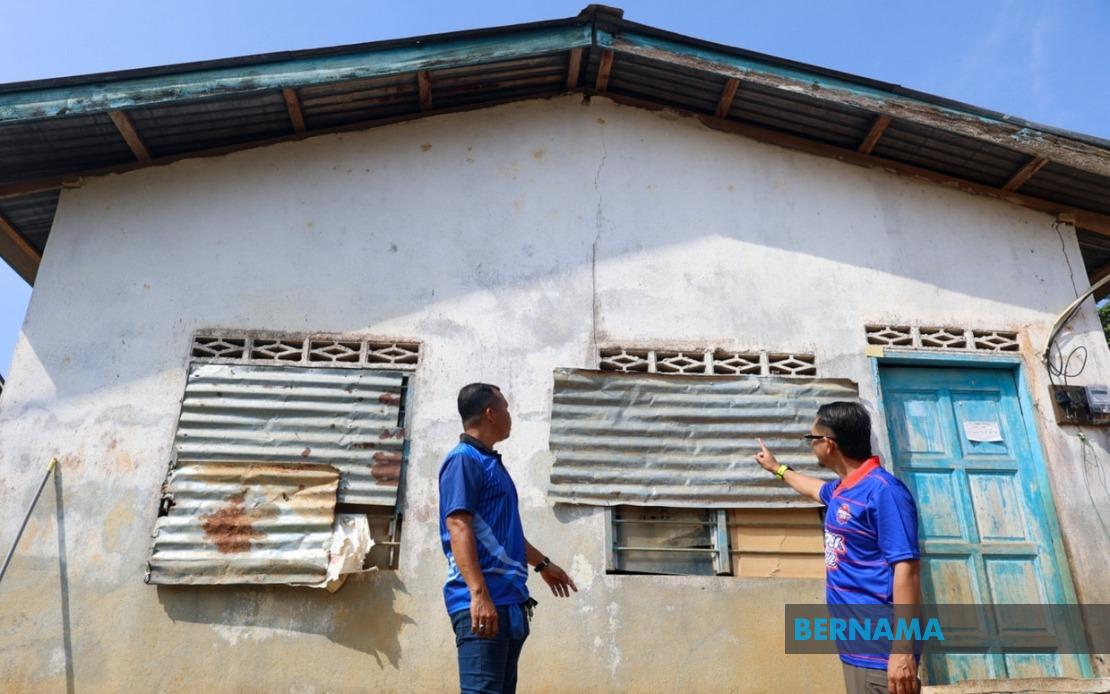
The Kelantan state government has mapped out a comprehensive action plan addressing the most pressing concerns of 1,524 Orang Asli residents living in the Pasik Resettlement Scheme (RPS) and Kampung Kuala Wok, following official visits to these geographically isolated communities. Nenggiri Assemblyman Mohd Azmawi Fikri Abdul Ghani outlined the government's strategic focus across five interconnected areas that directly impact the daily wellbeing and economic prospects of these indigenous populations, signalling a recognition that coordinated intervention is essential for meaningful development in these marginalised areas.
The most immediately pressing concern involves the deteriorating condition of residential structures throughout both settlements. Fieldwork conducted on August 3 and 4 revealed widespread structural deficiencies affecting multiple households, with numerous dwellings requiring comprehensive remedial work. The inventory of necessary repairs encompasses roof replacement to prevent water ingress during monsoon seasons, fundamental structural stabilisation of weakening foundations, and critically, the rewiring of dangerously substandard electrical installations that pose serious fire and electrocution hazards. Beyond addressing these existing shortfalls, the assemblyman noted that community members have submitted requests for the construction of entirely new residential units to accommodate demographic changes, particularly among newly married couples seeking to establish independent households within their ancestral territories. This housing shortage reflects broader demographic pressures within confined settlement boundaries and will require close coordination with the Department of Orang Asli Development (JAKOA) to determine feasibility and funding mechanisms.
The escalating threat posed by wild elephant intrusions represents an ongoing security and livelihood crisis that has fundamentally altered daily existence since 2022. These large mammals have progressively encroached upon human settlements, disrupting agricultural activities, destroying stored food supplies, and creating an atmosphere of constant vigilance among residents. The psychological toll of living under persistent danger is compounded by the practical impossibility of conducting normal economic activities or allowing children safe outdoor access. Mitigation strategies must balance wildlife conservation imperatives with human security requirements, a delicate equilibrium that regional authorities continue to navigate with limited resources.
Electricity supply remains inadequate across both communities, restricting educational opportunities for children during evening hours and limiting productive economic activities that could generate supplementary household income. The absence of reliable power infrastructure undermines broader development ambitions and perpetuates dependence on government assistance programmes. Extending and stabilising electrical networks to these remote locations requires substantial capital investment and ongoing maintenance commitments that state authorities must prioritise within broader development budgets.
The Essential Goods Distribution Programme currently provides subsidised staple items to qualifying residents, yet the government is actively considering an innovative expansion that would include RON95 petrol within the programme's scope. This proposal addresses a critical logistical constraint affecting the settlements: the nearest commercial petrol station operates approximately 50 kilometres distant, effectively making fuel procurement an expensive and time-consuming undertaking. By incorporating petrol into subsidised distribution arrangements, authorities would substantially reduce transportation costs and improve residents' capacity to access medical facilities, markets, and government services located in more distant urban centres.
The Jualan Rahmah programme, which delivers affordable essential commodities directly to participating communities, represents another component of the government's social safety net. However, the current operational frequency may prove insufficient given transportation challenges and the remote nature of these settlements. Officials are examining proposals to increase the regularity of these supply missions, recognising that more frequent deliveries would enhance food security and reduce the burden on households to undertake expensive journeys for basic necessities.
Geographic isolation fundamentally constrains every aspect of development in these communities. The single access route to RPS Pasik and Kampung Kuala Wok demands four-wheel-drive vehicles capable of traversing poorly maintained tracks, and residents must contemplate approximately 200 kilometres of round-trip travel from Gua Musang to access any major services or markets. This severe infrastructural deficit transforms routine activities—purchasing medicine, obtaining government documents, selling agricultural produce—into expensive, time-consuming expeditions. The road network itself requires urgent rehabilitation to reduce travel times and vehicle wear, yet such improvements demand coordinated investment across state and federal levels.
These settlements exemplify broader developmental disparities affecting indigenous communities throughout the Malaysian peninsula. The convergence of geographic remoteness, inadequate basic infrastructure, environmental pressures, and limited economic opportunities creates a complex policy challenge requiring multi-sectoral responses. Addressing housing deficiencies alone cannot succeed without simultaneously tackling elephant mitigation, energy access, and transportation connectivity. The government's identification of these five priority areas represents an important first step in acknowledging the interconnected nature of rural indigenous development challenges.
For Malaysian policymakers and development practitioners, the Pasik and Kuala Wok situations offer instructive lessons about implementation realities in peripheral communities. Aspirational development programmes often fail when delivery mechanisms do not account for geographic isolation and when communities lack the infrastructure to participate meaningfully. The frequency and accessibility of distribution programmes matter substantially when recipients must invest significant resources simply to collect subsidised goods. Similarly, housing rehabilitation initiatives must accommodate local population dynamics and genuine resident preferences rather than imposing standardised solutions.
The assemblyman's commitment to engage JAKOA regarding new housing construction suggests recognition that state-level action alone cannot resolve these challenges. Effective solutions will require coordinated effort involving multiple government agencies, adequate budget allocation, community consultation, and sustained political commitment extending beyond election cycles. The success of whatever comprehensive development package emerges will ultimately depend upon whether authorities can translate identified priorities into concrete infrastructure improvements, sustained service delivery, and genuine economic opportunities that allow these communities to thrive rather than merely survive.

