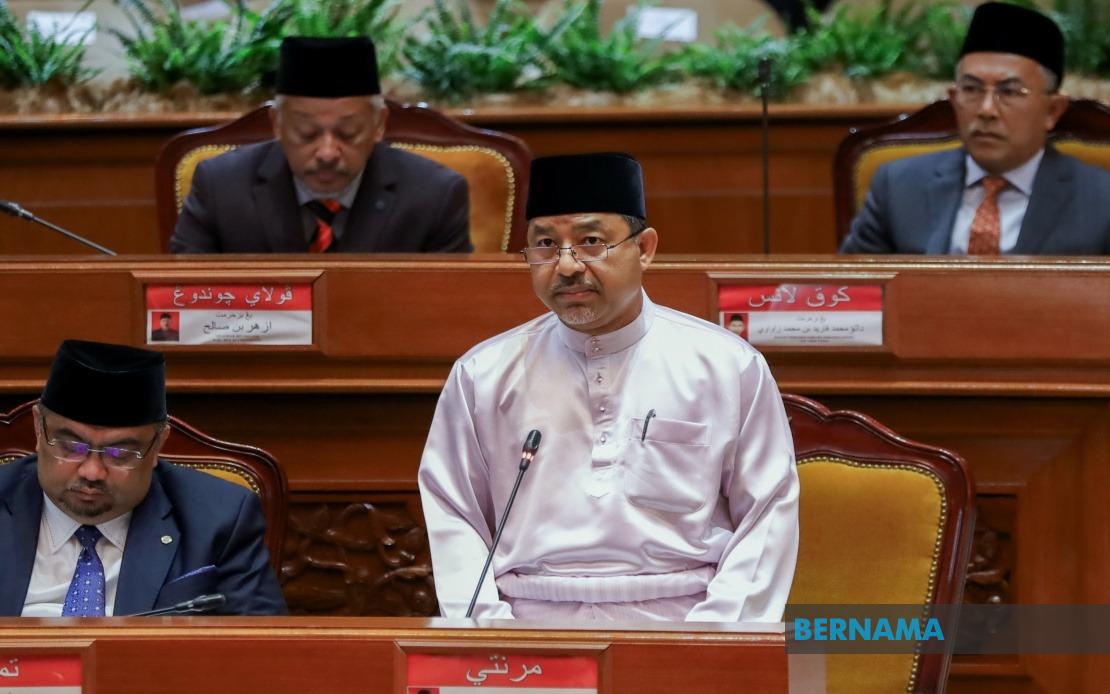
Kelantan has consolidated its standing as Peninsular Malaysia's state with the most extensive Malay reserve land holdings, a distinction underscored by Menteri Besar Datuk Mohd Nassuruddin Daud during a recent State Legislative Assembly session in Kota Bharu. The state's Malay reserve lands encompass 526,083 hectares distributed across 816,020 individual ownerships, figures that reflect the administrative records compiled through June 2026. This substantial landmass represents 91.5 per cent of Kelantan's entire land ownership portfolio, demonstrating the preponderance of Malay-reserved terrain across the northeastern state.
Beyond the reserve category, Kelantan contains 48,344 hectares designated as non-Malay reserve land, accounting for 8.4 per cent of the state's total and involving 43,255 separate titles. When combined, these figures establish Kelantan's overall land ownership at 574,427 hectares distributed among 859,275 titles. The overwhelming proportion allocated to Malay reserves reflects constitutional protections established under Article 153 of the Malaysian Constitution and corresponding state enactments that safeguard indigenous Malay-Muslim interests in land tenure. For regional observers, Kelantan's stewardship of such extensive reserve lands underscores the state's commitment to preserving communal land rights within a predominantly Malay demographic context.
District-level analysis reveals significant variation in reserve land concentration across Kelantan's 11 administrative divisions. Gua Musang commands the largest reserve acreage at 122,735 hectares, a considerable expanse reflecting the district's vast geographical footprint in the state's interior. Pasir Mas follows with 56,656 hectares, trailed by Tanah Merah at 56,246 hectares and Kuala Krai at 53,473 hectares. These four districts collectively represent nearly half of the state's total reserve land endowment, concentrated in regions that blend rural agricultural activities with nascent industrial development. The distribution pattern demonstrates how historical land allocation decisions have shaped contemporary property ownership patterns across Kelantan's diverse landscape.
When measured by proportional concentration, the reserve designation achieves near-total saturation in several districts. Tanah Merah reaches the highest percentage at 99.9 per cent reserve designation, effectively rendering the district almost entirely within protected reserve categories. Tumpat, Pasir Puteh, Bachok, Pasir Mas, Kota Bharu, and Jeli follow with similarly elevated percentages, indicating that large swathes of Kelantan's populated and commercially active regions maintain robust reserve protections. This concentration in multiple districts contrasts sharply with some peninsular counterparts where reserve lands have become increasingly fragmented through subdivisions and conversions. The consistency of these figures across diverse district types—from coastal to inland, agricultural to urbanising—speaks to systematic implementation of reserve preservation policies.
A critical distinction in Kelantan's reserve administration centres on the absence of any documented reduction in total reserve landholdings despite decades of socioeconomic development. The Menteri Besar's explicit confirmation that no reduction has occurred provides important reassurance regarding the integrity of the reserve system, particularly given regional pressures for land conversion and modernisation. This stability contrasts with historical patterns in other states where reserve lands have progressively diminished through alienation, urbanisation pressures, and regulatory adjustments. Kelantan's maintained quantum suggests either exceptional vigilance in enforcement mechanisms or perhaps limited external demand for conversion, circumstances that warrant deeper investigation into the underlying drivers.
The legal framework governing Kelantan's reserves derives from the Kelantan Malay Reservations Enactment, which provides both protective mechanisms and controlled flexibility. Section 13A explicitly permits non-Malay land ownership within designated reserve areas under specified conditions, acknowledging that absolute prohibition would prove administratively unwieldy and economically counterproductive in mixed communities. This provision reflects evolved thinking about reserve land management, balancing heritage protection with practical accommodation of diverse populations and economic integration. Simultaneously, the same enactment grants state authorities comprehensive regulatory authority over all transactions within reserves, including power to prohibit dealings deemed prejudicial to reserve interests. This dual approach—permitting carefully-regulated exceptions while maintaining state supervisory capacity—represents a sophisticated legal architecture for preserving community interests.
For Malaysian policymakers and Southeast Asian observers, Kelantan's reserve land profile illuminates broader constitutional and governance questions about indigenous property rights protection in multiethnic states. The scale of Kelantan's reserve holdings, substantially exceeding those in other peninsular states, reflects historical settlement patterns, demographic composition, and political commitment to constitutional safeguards. The systematic documentation of reserve statistics through quarterly administrative reviews indicates institutional capacity for precise land tenure management, a capability that remains unevenly distributed across Malaysian states. Kelantan's apparent success in maintaining reserve quantum while permitting measured economic development offers potential lessons for other jurisdictions wrestling with balancing heritage preservation against developmental imperatives.
The implications extend beyond territorial administration into questions of economic opportunity and social equity. Reserve designations, while protecting communal interests, can simultaneously constrain capital mobilisation and collateral usage for Malay landholders, potentially affecting agricultural financing, business development, and intergenerational wealth creation. Kelantan's significant reserve concentration thus represents both protection and potential limitation, a paradox that economic planners must navigate carefully. The state's relatively modest economic indicators compared to more developed peninsular states raise questions about whether extensive reserves contribute to or detract from prosperity, a causality that demands rigorous economic analysis rather than ideological assertion.
Prospective policy considerations for Kelantan must address how reserve preservation can coexist with agricultural modernisation, industrial diversification, and urban development in competitive national and regional economies. The state's geographic position along the east coast, with potential benefits from China-backed infrastructure initiatives and regional economic corridors, creates tensions between heritage preservation and commercial opportunity. Strategic review of reserve land utilisation—potentially through enhanced cooperative farming schemes, Islamic finance innovations, and community-based development enterprises—could harmonise protective objectives with progressive economic engagement. Kelantan's documented success in maintaining reserve quantum provides a baseline from which more sophisticated, outcomes-focused land management strategies might emerge.
The administrative precision evident in Kelantan's reserve documentation, disaggregated by district and ownership category, suggests institutional capacity for implementing more nuanced land policies responsive to contemporary conditions. Future developments might include enhanced transparency regarding reserve land utilisation rates, economic productivity metrics, and community satisfaction indicators. Digital land administration systems, increasingly adopted across Malaysian states, could facilitate real-time monitoring of reserve land transactions, enabling rapid identification of compliance issues while maintaining data security and privacy protections. Kelantan's sustained commitment to reserve preservation, coupled with institutional sophistication in land management, positions the state to potentially pioneer next-generation approaches that advance both heritage conservation and inclusive economic development within constitutional frameworks.

