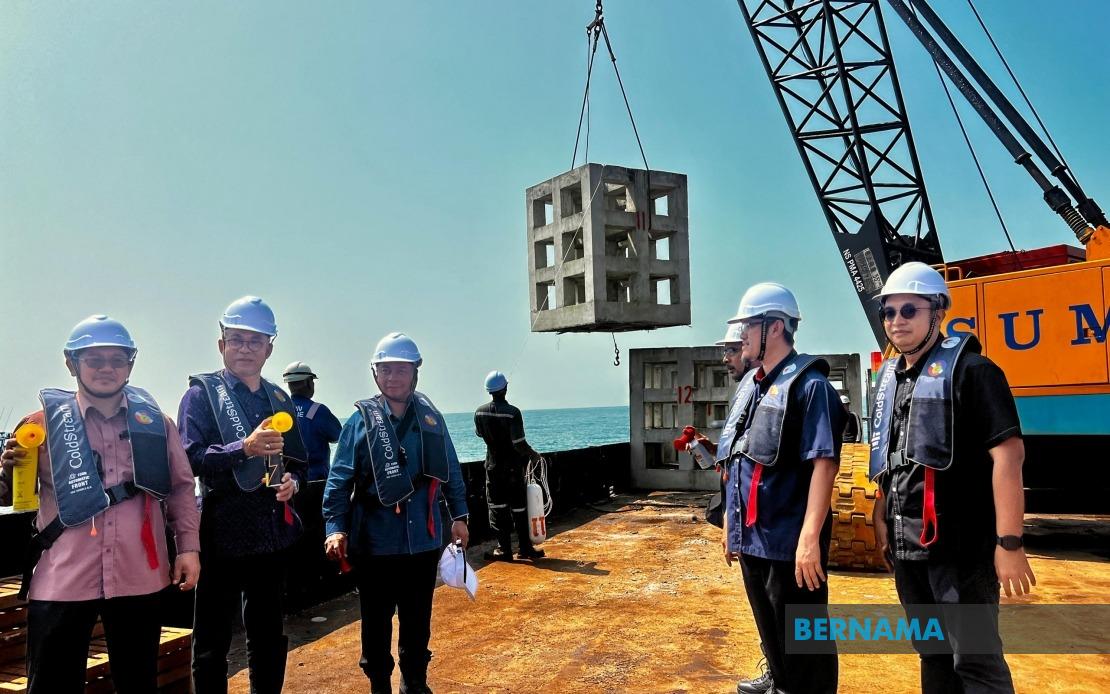
The Kelantan Fisheries Department has unveiled a dual-purpose strategy to safeguard the livelihoods of small-scale coastal fishermen whilst simultaneously enhancing marine productivity. Through an Artificial Reef Deployment Programme conducted near Tok Bali, the state has positioned 30 newly constructed artificial structures approximately 4.6 nautical miles offshore, marking the first major initiative funded specifically through conservation contributions from Sultan Muhammad V. This intervention represents a pragmatic response to mounting pressure on inshore fishing grounds, where industrial-scale vessels have increasingly competed with artisanal fishers for declining fish stocks.
Beyond conventional conservation thinking, these submerged structures serve a protective function that extends beyond simple habitat creation. According to Kelantan Fisheries Department director Ismail Ibrahim, the physical design of the artificial reefs creates an inherent deterrent to large commercial fishing operations. When industrial trawlers attempt to deploy their nets in areas populated by these structures, fishing equipment becomes entangled and damaged, rendering the location economically unviable for large-scale operators. This design feature effectively establishes a no-go zone for industrial vessels without requiring expensive enforcement patrols or controversial regulatory bans that often face resistance from powerful fishing lobbies.
The ecological benefits complement this enforcement mechanism. Fish species utilise the reef structures as spawning and nursery grounds, creating localised abundance that sustains coastal fishing communities. When juvenile fish mature within these protected zones, they replenish surrounding waters accessible to small boats operating from jetties like Tok Bali. The department anticipates measurable improvements in fish landings within six months, contingent upon ecosystem development and environmental conditions. For communities dependent on daily catches, this timeline represents a meaningful pathway toward food security and income stability.
Kelantan's investment reflects a broader conservation trajectory that extends back more than a decade. Since 2007, the Fisheries Department has systematically deployed approximately 400 artificial reefs across four designated locations throughout state waters. The programme has accelerated this year, with plans to add another 72 units in staged installations. This cumulative approach demonstrates commitment to systematic marine resource management rather than ad-hoc interventions, creating interconnected sanctuary zones that collectively strengthen fish populations across inshore ecosystems.
The sultan's financial contribution carries political significance within Malaysia's devolved fisheries governance structure. State rulers occasionally channel development funds toward specific sectors, signalling priority and securing royal endorsement for departmental initiatives. This patronage can facilitate bureaucratic cooperation and justify budget allocations that might otherwise face scrutiny. The Kelantan initiative therefore positions artificial reef deployment as a development priority aligned with royal conservation values, potentially influencing resource allocation decisions in subsequent budgeting cycles.
Sustaining these structures demands ongoing operational commitment that many developing nations struggle to maintain. The Kelantan Fisheries Department acknowledges this reality through regular monitoring and cleaning programmes designed to remove entangled ropes, fishing nets, and other marine debris. Without such maintenance, reefs gradually accumulate waste and lose effectiveness as functional habitats. The department's explicit commitment to these secondary activities suggests institutional awareness that infrastructure alone guarantees nothing—successful marine conservation requires sustained management effort over years.
Geographic positioning reflects careful strategic thinking. By locating reefs less than five nautical miles from the coast, the department maximises accessibility for small artisanal boats whilst positioning structures beyond the immediate nearshore zone where many traditional fishing grounds concentrate. This buffer zone strategy prevents disruption to established small-scale fishing patterns whilst creating distinct conservation areas that large vessels cannot reasonably exploit. The proximity to Tok Bali Jetty ensures that participating communities receive visible benefits rather than experiencing conservation measures as abstract environmental policy imposed from distant capitals.
For Malaysian policymakers observing from other coastal states, the Kelantan model offers valuable lessons regarding alternative approaches to fisheries management. Rather than pursuing direct confrontation with industrial fishing interests through regulatory restriction or enforcement escalation, artificial reef deployment channels conflict-prevention through infrastructure design. Large vessel operators cannot easily circumvent structures that damage equipment; the economic logic naturally steers them toward alternative grounds. This approach may prove replicable across Southeast Asia, where similar tensions between industrial and artisanal fisheries generate political friction and social discontent.
The initiative also addresses food security dimensions that resonate beyond fishing communities. Malaysia's fish consumption ranks among the highest globally, with seafood constituting a crucial protein source across diverse population groups. Depleting coastal fish stocks threatens nutritional security and amplifies import dependency. By revitalising inshore productivity, Kelantan's programme contributes marginal gains toward domestic production capacity, reducing vulnerability to international market fluctuations and supply chain disruptions that increasingly characterise global food systems.
Longer-term success depends on whether neighbouring states and federal authorities coordinate complementary initiatives. Artificial reefs positioned in one state's waters create migration corridors for mobile fish species that recognise no political boundaries. Comprehensive ecosystem management therefore requires multi-jurisdictional cooperation—a challenging proposition given Malaysia's federated structure and occasional inter-state tensions. The Kelantan effort represents constructive environmental stewardship, but realising its full potential requires engagement from Terengganu, Pahang, and federal fisheries regulators managing shared waters.
Stakeholder buy-in from fishing communities will ultimately determine whether these structures deliver anticipated benefits or become expensive marine monuments. Local fishermen must integrate reef locations into their operational knowledge, adjust routes accordingly, and observe conservation protocols that restrict exploitation within designated zones. The department's engagement with Tok Bali communities during the deployment programme suggests awareness of this necessity, though sustained communication and trust-building remain essential as the programme expands.

