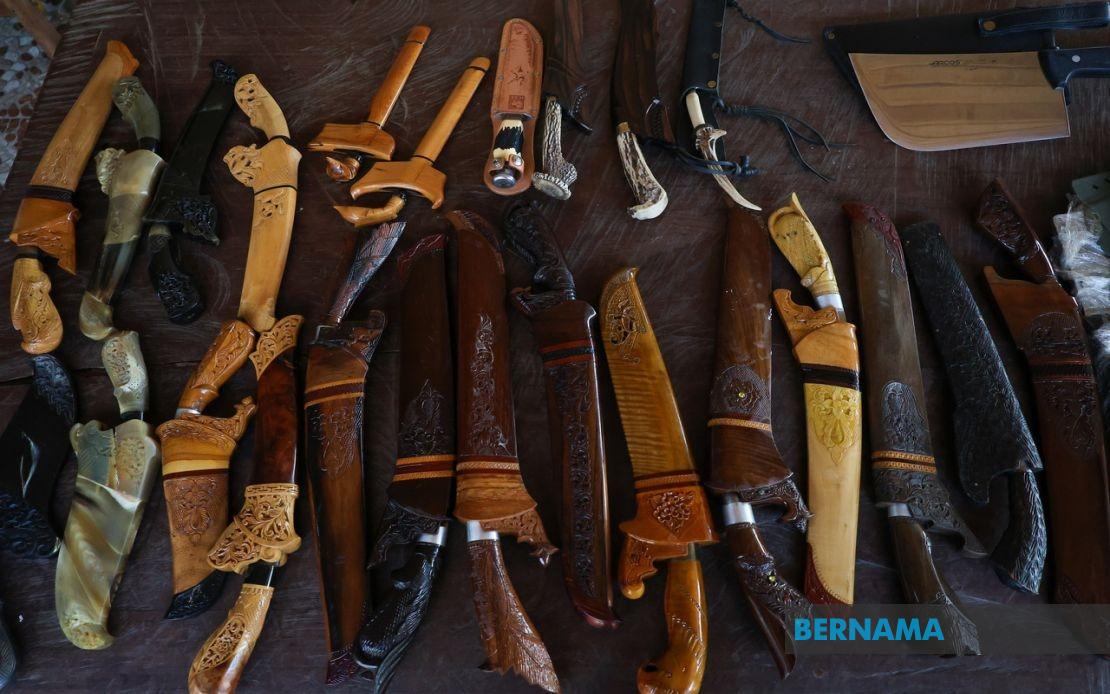
Ahmad, 71, has become an unlikely custodian of Kelantan's blacksmithing heritage, a tradition that once defined the state's cultural and economic identity but now faces the risk of extinction. His extensive collection of more than 100 traditional and modern weapons, valued at approximately RM20,000, exists as a living archive of metalwork that might otherwise disappear forever. The pieces span continents—sourced from Germany, Sweden, Denmark, England, the United States, Japan, China, Spain and Portugal—yet what makes this collection truly significant is not its global reach but its fierce anchoring to local artistic values and the skills of deceased master craftsmen whose techniques can never be fully replicated.
The centrepiece of Ahmad's collection is the bird-headed golok, a machete whose hilt is carved in the shape of a bird. This design choice reflects far more than aesthetic preference; the bird motif connects directly to historical Kelantan, evoking the Petalawali figure that adorned the boats of the Kelantan Sultanate centuries ago. The bird-shaped grip offers practical ergonomic advantages for users, yet its primary significance lies in the marriage of form and cultural memory. Each carved hilt represents the unique artistic fingerprint of the blacksmith who created it—a visual signature embedded in wood and metal that tells the story of that maker's values, techniques and vision.
Ahmad's entry into this world began two decades ago almost by accident. While assisting a friend who worked as a traditional blacksmith, he found himself drawn into the intricate process of crafting weapon hilts and scabbards. What started as casual collaboration evolved into a passion for understanding and preserving a craft that was already slipping away. As he worked alongside his mentor and observed the meticulous steps involved in creating each piece, he recognised something troubling: there were few young Malaysians learning these skills, and when the master craftsmen died, their knowledge departed with them, leaving gaps that formal apprenticeships could never entirely fill.
This generational rupture represents the most pressing threat to Kelantan's blacksmithing legacy. Ahmad speaks with particular gravity about this loss, noting that whenever a master blacksmith passes away, a portion of the craft's accumulated knowledge—techniques refined over lifetimes, aesthetic judgments developed through decades of practice, and historical connections encoded in design—vanishes unless it has been consciously transmitted to the next generation. Malaysia's traditional weapon-making does not exist merely as a historical curiosity; it embodies a sophisticated understanding of materials, ergonomics, aesthetics and cultural symbolism that took centuries to develop.
Among Ahmad's prized possessions are pieces that exemplify this artisanal excellence. A knife featuring a deer-antler hilt from Sarawak demonstrates how different Malaysian regions contributed distinctive materials and design philosophies to the broader tradition. A keris crafted from black kemuning wood with a golden kemuning wood hilt showcases the level of precision and artistic refinement that characterised master work. Each acquisition came through patient hunting and building relationships with other collectors, yet Ahmad explicitly refuses to view his collection as an investment to be liquidated. Despite receiving interest from collectors willing to pay handsomely, he has never considered selling individual pieces because doing so would fragment the historical narrative and betray the memory of blacksmiths now deceased.
Preservation of these weapons demands the kind of meticulous, unglamorous labour that rarely commands public attention. Ahmad maintains his collection in a dedicated cabinet and conducts inspections every three months without fail. During each inspection, he applies protective oil to the blades, a practice that prevents rust and deterioration in Kelantan's humid tropical climate. This cyclical maintenance reflects not obsessive hobby behaviour but rather a recognition that metal and wood are organic materials that degrade without intervention. The commitment required is substantial—decades of vigilance to ensure that pieces created by now-deceased artisans remain intact for potential future study and appreciation.
The broader context of Ahmad's work extends well beyond his personal initiative. Across Malaysia, traditional crafts face similar pressures as younger generations pursue educational and economic pathways that do not intersect with heritage trades. The financial economics of traditional blacksmithing have shifted dramatically; mass-produced weapons are cheaper and faster to manufacture, and consumer demand for handcrafted goloks and keris has narrowed primarily to heritage enthusiasts and cultural institutions. The skill-intensive, time-consuming nature of traditional work makes it economically unviable for many would-be apprentices, particularly in an era when alternative employment offers greater stability and income.
Yet Ahmad's collection also illustrates an important counterpoint to the narrative of inevitable decline. He argues that handcrafted pieces have become increasingly valuable precisely because their scarcity and the distinctive identity embedded in each blade make them irreplaceable. When a blacksmith's hands shape a hilt or forge a blade, the resulting object carries that maker's unique artistic signature—something that industrial production cannot replicate. This recognition of uniqueness and authenticity may offer a partial economic rescue for the tradition, if contemporary collectors and institutions begin valuing these pieces not as weapons but as heritage artefacts worthy of curatorial attention.
Ahmad's vision extends beyond preservation toward what he describes as innovation grounded in tradition. He hopes that Malaysia's traditional weapon-making heritage will not merely survive in museums or private collections but will continue to evolve and thrive, adapting to contemporary contexts while maintaining the identity, artistry and cultural values that define the craft. This requires a delicate balance: respecting the historical techniques and aesthetic principles established by past masters while allowing contemporary blacksmiths to make creative contributions that speak to modern concerns and aesthetic sensibilities. Without this living evolution, the tradition risks becoming a museum piece—honoured but inert.
The stakes of Ahmad's custodial work resonate far beyond Kelantan. Malaysia's ethnic and regional diversity has historically been expressed through distinctive craft traditions—the intricate designs of traditional weapons, textiles, ceramics and metalwork that emerged from different communities and geographies. As these traditions atrophy, the country loses not just technical knowledge but also tangible expressions of cultural identity and regional heritage. A young Malaysian who might otherwise never encounter the artistic sophistication embedded in a traditionally-crafted keris loses the opportunity to understand a dimension of their own cultural inheritance.
Movement toward genuine preservation likely requires intervention beyond Ahmad's personal initiative. Educational institutions could establish apprenticeship programs that make traditional blacksmithing economically viable for young practitioners. Cultural agencies might create registries of living master craftsmen and document their techniques before knowledge is lost. Museum collections could expand to include contemporary work alongside historical pieces, signalling that the tradition remains alive rather than archaeological. Collectors and cultural enthusiasts could deliberately seek out pieces created by remaining active blacksmiths, creating demand that sustains the craft economically. Without such coordinated support, Ahmad's collection—no matter how lovingly maintained—remains a monument to loss rather than a foundation for revival.

