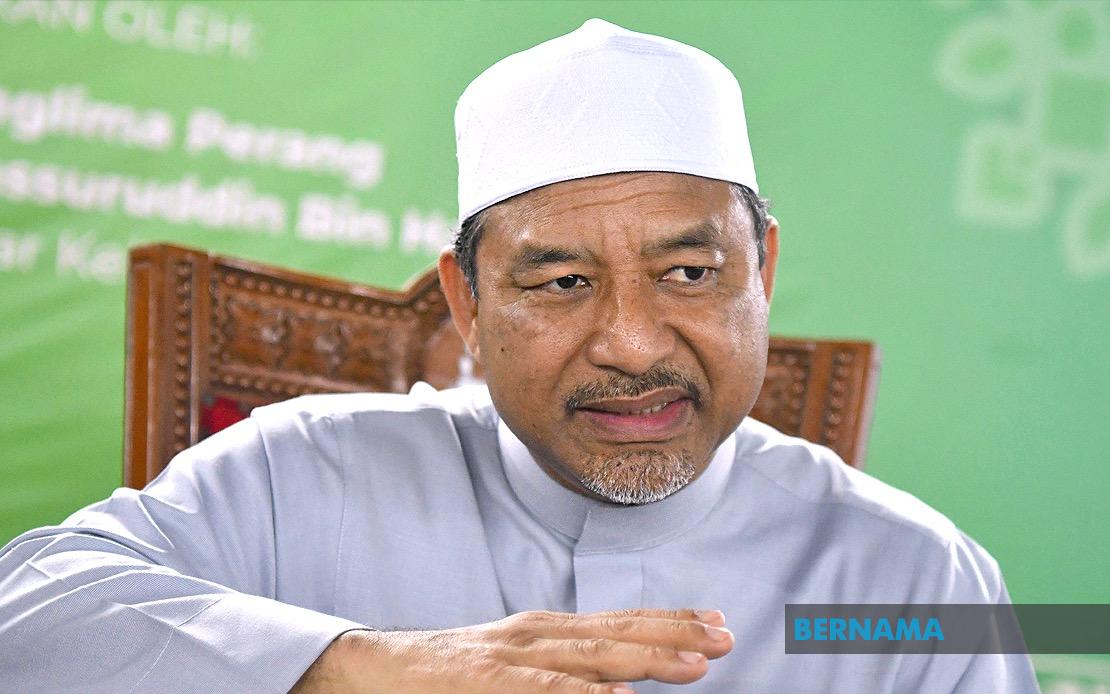
The Kelantan state government has reaffirmed its commitment to safeguarding the state's artistic and cultural legacy, provided such endeavours remain consistent with Islamic teachings. Speaking at the conclusion of the Kelantan Arts Festival (FKRK) 2026 in Pasir Puteh, Menteri Besar Datuk Mohd Nassuruddin Daud outlined a nuanced policy that seeks to preserve heritage while maintaining religious and moral standards. This approach positions cultural protection as integral to both state identity and economic development through tourism, reflecting a balanced framework that has long characterised Kelantan's administration.
The Menteri Besar clarified that the state government does not categorically reject traditional artistic forms simply because of their historical roots. Rather, the administration adopts a refinement strategy, working with practitioners and community leaders to identify and modify elements that conflict with Islamic values while preserving the cultural essence of traditional practices. This methodology distinguishes between the intrinsic value of heritage and specific manifestations that may require adjustment, allowing Kelantan to maintain its distinctive cultural profile without compromising religious principles that guide governance in this predominantly Muslim state.
Mohd Nassuruddin emphasised that Islam itself has historically been a nurturing force for knowledge, artistic expression, language development and cultural practices throughout Kelantan's history. The interweaving of Islamic values with local traditions has created a unique cultural tapestry that, far from suppressing creativity, has shaped how artistic traditions have evolved and been transmitted across generations. This historical perspective underpins the current administration's approach, suggesting that rather than representing a modern constraint, Islamic principles have long provided the philosophical foundation for Kelantan's cultural development.
The government's position extends to specific instances where traditional performances were previously restricted due to perceived religious incompatibility. Mohd Nassuruddin indicated that such restrictions are not permanent; performances may resume once offending elements are modified or discontinued, demonstrating flexibility within the framework of religious adherence. This pragmatic stance suggests the state is open to dialogue with cultural practitioners about how traditional forms can be adapted rather than abandoned entirely, potentially allowing more heritage activities to flourish under revised conditions.
Among the cultural assets the state considers essential for future generations are performing arts, traditional games, handicrafts, and ancestral culinary practices. These elements are viewed not merely as entertainment relics but as repositories of Malay community wisdom and philosophical insights deserving preservation and transmission. The recognition of handicrafts and traditional food alongside performance arts indicates a comprehensive understanding of culture extending beyond theatrical forms to encompass material heritage and gastronomic traditions that shape daily life and identity.
The four-day FKRK 2026 festival served purposes beyond conventional entertainment or tourism marketing, according to the Menteri Besar's remarks. The event functioned as a convergence point for heritage practitioners and contemporary artists, enabling knowledge exchange across generations and disciplines while simultaneously generating economic activity and projecting Kelantan's distinctive character to domestic and international visitors. This multi-layered functionality demonstrates how cultural festivals can simultaneously honour tradition, support artisans economically, and enhance regional tourism competitiveness.
Particularly significant is the state's emphasis on reviving traditional games such as gasing uri, congkak, dam aji and tating. The Menteri Besar characterised these activities as counterbalances to technology's pervasive influence on younger Malaysians' lifestyle choices and recreational habits. In an era where digital entertainment dominates youth engagement across Southeast Asia, the deliberate promotion of physical, skill-based traditional games addresses contemporary concerns about physical activity levels and cultural disconnection among younger generations. This revival strategy positions heritage preservation as a public health and social cohesion initiative, not merely nostalgic preservation.
The FKRK 2026, organised collaboratively by the Ministry of Tourism, Arts and Culture and the National Culture and Arts Department (JKKN) Kelantan, reflects institutional commitment at both state and federal levels to cultural protection. This partnership structure ensures that Kelantan's specific needs and values inform cultural policy implementation while maintaining alignment with broader national cultural frameworks. The annual format provides consistency and predictability for practitioners, tourists and local communities, establishing FKRK as an institutionalised platform rather than an ad-hoc initiative.
Kelantan's approach holds broader relevance for Malaysia and Southeast Asia, where multiple states and nations navigate similar tensions between cultural preservation, modernisation pressures, and religious or traditional values. The state's emphasis on refinement rather than prohibition offers a potential model for other regions seeking to maintain heritage authenticity while accommodating contemporary ethical or religious concerns. This framework acknowledges that cultural evolution is not inherently incompatible with value-based governance, but rather reflects how traditions naturally adapt to changing social contexts.
The government's framing of culture as an identity component and economic asset positions heritage preservation within development agendas rather than viewing it as conservation divorced from practical concerns. Tourism development, artisan economic empowerment, and community social cohesion emerge as tangible benefits flowing from cultural protection efforts. This integration of heritage work with economic and social objectives makes cultural preservation politically sustainable and financially viable, encouraging broader stakeholder participation.
For practitioners and cultural communities throughout Kelantan, the state's explicit endorsement of heritage preservation provides reassurance regarding the viability of traditional crafts and performance forms despite past restrictions. The message that refinement rather than elimination is the policy direction may encourage more artists to engage with state institutions and cultural initiatives, strengthening institutional relationships between government and creative communities. This collaborative positioning potentially transforms what might otherwise be experienced as regulatory oversight into partnership for mutual cultural and economic benefit.

