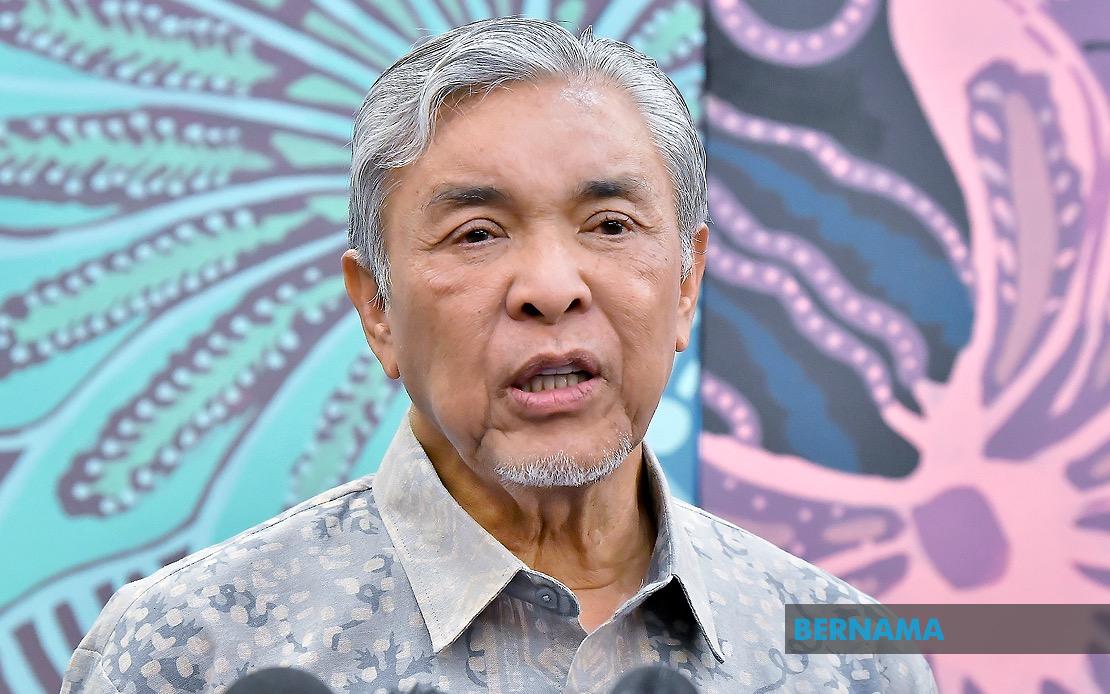
Deputy Prime Minister Datuk Seri Dr Ahmad Zahid Hamidi moved to address widespread concerns about the South East Johor Development Authority's planned territorial expansion, emphasising that the initiative centres on orchestrating coordinated development across the region rather than assuming ownership of land holdings. Speaking at an event in Kota Tinggi, Zahid, who simultaneously holds the Rural and Regional Development portfolio, sought to dispel public apprehension regarding KEJORA's intentions, stressing that the agency would function as a coordinator of growth initiatives across the targeted districts rather than as a land-acquisition entity.
The clarification reflects mounting public discussion about KEJORA's expansion plans, with stakeholders questioning the implications for local property ownership and administrative boundaries. Zahid's statement represents a deliberate effort to reframe the narrative around the proposal, positioning it as a mechanism for facilitating economic activity and infrastructure development rather than a consolidation of state control over territorial assets. This distinction carries significant weight in Malaysian governance, where questions about federal versus state authority and individual land rights remain sensitive policy terrain.
The Deputy Prime Minister anchored his pitch for the expansion on KEJORA's documented performance metrics. The authority has achieved a 98.3 per cent success rate across its implemented projects, a track record that Zahid presented as the fundamental justification for extending its development mandate. This statistic underscores a broader argument: an organisation demonstrating such consistent project delivery warrants expanded scope to multiply the positive impact across a wider geographic footprint. The logic suggests that constraining a high-performing institution to its current territorial boundaries represents a missed opportunity for accelerating regional prosperity.
Central to the expansion proposal is the rapid transformation occurring within the targeted areas, particularly Pengerang, which has emerged as a growth hub driven by large-scale industrial projects and tourism infrastructure development. Zahid characterised the expansion as a response to this existing momentum, framing KEJORA's enlarged authority as essential for maintaining coordination and preventing fragmented, uncoordinated development. By positioning the expansion as reactive to demonstrated market forces rather than prescriptive or expansionary in intent, the government seeks to present the proposal as pragmatic adaptation to changing circumstances on the ground.
Public receptiveness to the initiative appears robust, at least according to internal KEJORA polling. The authority conducted a feedback study that yielded 96 per cent support among respondents for the expansion proposal. This figure, if representative of broader public sentiment, provides political cover for the initiative and suggests that communities within the targeted expansion areas view KEJORA's expanded role as beneficial. However, such surveys conducted by the organisation proposing expansion warrant scrutiny regarding methodology and respondent composition, factors that Zahid did not address in detail.
Notwithstanding the Deputy Prime Minister's enthusiasm, the expansion remains contingent on constitutional and institutional consent structures. Implementation requires approval from His Majesty Sultan Ibrahim, the Yang di-Pertuan Agong, as well as the Regent of Johor, Tunku Mahkota Ismail. This requirement reflects the constitutional status of state territories and development authorities within Malaysia's federal framework, where royal assent remains essential for significant administrative changes. The deference Zahid accorded to these consent requirements signals his awareness that the proposal must navigate layers of institutional authority.
Financial commitment to KEJORA's mandate has expanded substantially, with the Rural and Regional Development Ministry allocating approximately RM138 million to the authority for regional development projects. This budgetary allocation supports implementation of 107 programmes currently underway, with approximately 350 additional smaller-scale projects queued for execution. The scale of funding and the pipeline of initiatives suggest that KEJORA's financial resources and operational capacity have grown sufficiently to justify expanded territorial responsibility, at least from the ministry's perspective.
Minister in the Prime Minister's Department Datuk Seri Azalina Othman Said, representing the Pengerang constituency, amplified calls for elevating Pengerang to full district status, a proposal complementary to KEJORA's expansion. Zahid expressed support for Azalina's vision, indicating alignment within the federal government regarding administrative restructuring in the region. Azalina simultaneously advocated for constructing a new hospital in Pengerang to accommodate the district's burgeoning population, signalling that expansion of administrative authority should accompany investment in social infrastructure.
The Pengerang hospital proposal assumes particular significance given the district's rapid development trajectory. Population growth driven by mega-industrial projects and expanding tourism activities necessarily generates demand for expanded healthcare services, suggesting that infrastructure development must pace economic transformation. Zahid's endorsement of this initiative indicates recognition that administrative reorganisation and expanded development authority must coordinate with essential service delivery enhancements.
For Malaysian observers and policymakers beyond Johor, the KEJORA expansion discourse illuminates broader questions about development authority structures and their appropriate scope within the federal system. The proposal demonstrates tension between centralising development coordination under high-performing institutions and maintaining dispersed decision-making authority that preserves local input. KEJORA's expansion essentially tests whether Malaysians accept concentrating significant development authority within specialised agencies when performance metrics justify such concentration.
The regional implications extend to how other Malaysian states might perceive and respond to Johor's administrative experimentation. Should KEJORA's expansion proceed successfully, other states hosting development authorities or regional bodies may advocate for comparable territorial enlargement, potentially reshaping the administrative landscape across Malaysia. This precedent-setting potential warrants careful attention from state governments and federal institutions concerned with preserving existing administrative equilibrium.
The government's presentation of KEJORA expansion as coordination rather than acquisition reflects sophisticated political communication aimed at neutralising property-rights anxieties. By emphasising the agency's role as a facilitator rather than a proprietor, the narrative attempts to separate territorial expansion from concerns about state land seizure. Whether this distinction proves persuasive to affected communities remains to be determined as the proposal moves through required approval processes. The pathway forward depends substantially on maintaining public confidence that expanded KEJORA authority will genuinely enhance development outcomes rather than consolidate administrative control at the expense of local interests.

