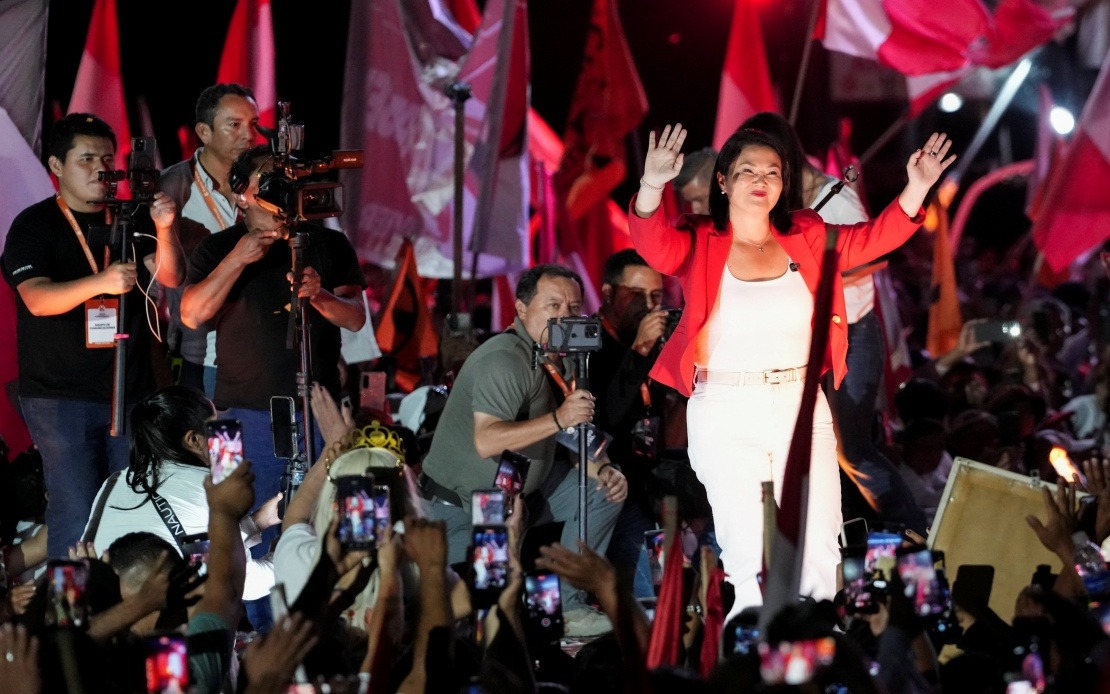
Keiko Fujimori has secured victory in Peru's presidential election, capturing 50.135 per cent of valid votes according to the complete official count released by the National Office of Electoral Processes (ONPE) on Monday. Her opponent, Roberto Sanchez of the Together for Peru coalition, garnered 49.865 per cent, leaving Fujimori with a margin of victory so narrow that it underscores the profound political divisions animating Peru's electorate at this consequential moment.
The raw vote totals crystallise just how tightly contested this election proved to be. Fujimori accumulated 9,223,396 votes while Sanchez received 9,173,755, meaning the right-wing candidate prevailed by exactly 49,641 votes. For a country of Peru's size, this razor-thin margin represents one of the closest presidential contests in recent memory, reflecting deep societal fractures and uncertainty about the nation's political direction heading into a new administration.
This victory marks a historic milestone for Fujimori personally, who has endured three previous unsuccessful presidential campaigns. Her triumph now elevates her to the presidency despite her family's complicated legacy in Peruvian politics and despite persistent controversies surrounding her father's authoritarian tenure. For many Peruvians who recall the Fujimori years with concern, this outcome signals a definitive generational shift in voting preferences, particularly among younger urban voters who helped push her across the finish line.
The comparative positions of the two candidates tell revealing stories about modern Peru's competing visions. Sanchez, who served as minister under the leftist Pedro Castillo from 2021 to 2022, represented continuity with recent progressive governance and appeals to working-class constituencies seeking expanded state intervention in the economy. Fujimori, meanwhile, campaigned as a proponent of market-oriented policies and institutional stability, attracting business-minded voters and those fatigued by political turbulence.
Alberto Fujimori, Keiko's father, remains a towering and divisive figure in Peruvian memory. His decade in power from 1990 to 2000 witnessed both economic stabilisation and severe allegations of human rights violations, particularly the targeting of indigenous communities during the anti-insurgency campaign. His daughter's success suggests that significant segments of the electorate have either forgiven or deprioritised these historical grievances in favour of her contemporary policy prescriptions, though her presidency will undoubtedly face resistance from human rights advocates and indigenous organisations.
The electoral mechanics underlying this outcome deserve closer examination for what they reveal about Peru's broader political landscape. The ONPE's processing of all 92,766 tally sheets from the June 7 election by Monday evening demonstrates that Peru's institutional apparatus, despite periodic challenges, retains the capacity to manage large-scale electoral operations with reasonable transparency and speed. Real-time vote-counting platforms such as the ONPE's have substantially reduced opportunities for electoral manipulation and boosted public confidence in final tallies.
Roberto Burneo, president of the National Jury of Elections, indicated that the electoral authority would formally proclaim these results on Friday, completing the legal confirmation process. This procedural step, while routine in institutional terms, carries symbolic weight in Peru's fragile democratic context, where electoral legitimacy remains contested and where institutional capacity has been questioned repeatedly in recent years. The official proclamation will provide the formal foundation for Fujimori's transition to the presidency.
For Southeast Asian observers, Peru's election offers comparative perspective on populism, institutional resilience, and the enduring appeal of strongman governance in developing democracies. Like several nations in this region, Peru has experienced waves of political instability, military intervention concerns, and constitutional crises that have tested the durability of democratic structures. Fujimori's emergence as a political force despite her family's controversial history parallels regional patterns whereby voters sometimes gravitate toward familiar political personalities even when their pedigrees carry problematic elements.
The extreme closeness of this result suggests that Fujimori will assume office without a clear popular mandate for radical policy shifts. She will inherit a nation confronting multiple simultaneous crises: persistent inflation eroding purchasing power, indigenous communities demanding recognition and resource rights, drug trafficking organisations destabilising rural regions, and deep institutional mistrust stemming from repeated political upheavals. Her narrow victory margin indicates that nearly half the electorate backed an alternative vision, meaning her administration will require considerable political finesse to govern effectively without deepening social fractures.
Looking ahead, Peru's international partnerships and regional standing may shift under Fujimori's leadership. Her right-wing positioning and family history suggests potential recalibration of Lima's relationships with leftist governments elsewhere in Latin America, while her market-friendly orientation may influence Peru's economic diplomacy and integration strategies. For Malaysian policymakers observing hemispheric developments, Peru's trajectory matters insofar as the nation remains a significant supplier of minerals and commodities that feed into global supply chains affecting Southeast Asia.
The months preceding formal proclamation will prove consequential for Peru's stability. Civil society organisations, labour unions, and indigenous groups already mobilising around concerns about constitutional protections and policy direction will likely intensify their engagement as Fujimori's transition team begins drafting governance priorities. International observers, particularly those from democratic nations concerned with institutional health, will be watching closely for signals about whether her administration will respect judicial independence and constitutional constraints on executive power.

