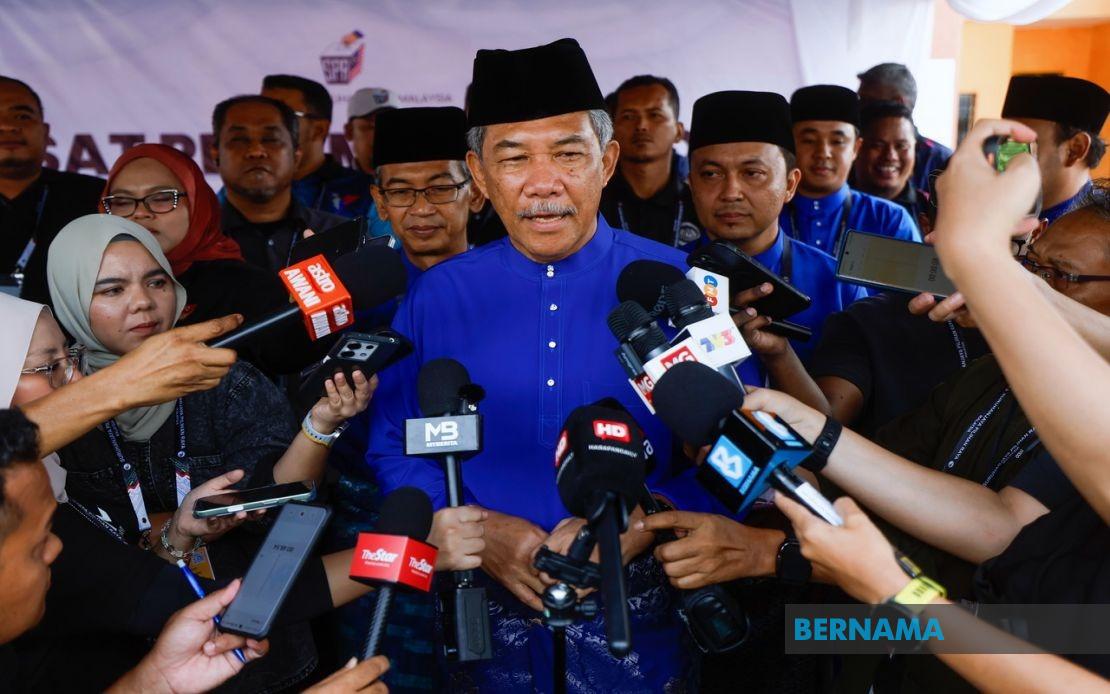
The Negeri Sembilan state election campaign is heading into sensitive territory, with Barisan Nasional's deputy chairman Datuk Seri Mohamad Hasan issuing a pointed directive to party operatives to refrain from weaponising the state's adat traditions as electoral ammunition. Speaking after nomination proceedings in Rembau on July 18, Mohamad emphasised that Negeri Sembilan's distinctive customary institutions—a cornerstone of the state's constitutional identity—must remain insulated from partisan political competition.
The warning reflects a broader anxiety within BN's senior echelons about how electoral contests can inflame sensitivities around adat, which occupies a uniquely protected constitutional position in Negeri Sembilan. Unlike most Malaysian states, Negeri Sembilan operates under a federation of nine separate Minangkabau-influenced territories, each with its own Undang and adat council. This layered governance structure means that issues touching on customary law and traditional governance carry disproportionate weight among voters and hold potential to fracture community cohesion rapidly if deployed as campaign fodder.
Mohamad, simultaneously serving as UMNO deputy president, framed his intervention not as a rebuke to specific transgressions already committed, but as a pre-emptive boundary-setting exercise aimed at channelling campaign energy toward conventional policy terrain. He stressed that dragging adat concerns into the electoral battlefield would only "complicate the situation" in the state, a diplomatically coded warning that acknowledges the volatility such moves could unleash. The explicit instruction suggests BN's leadership recognises that even marginal attempts to mobilise adat grievances or invoke customary prerogatives could provoke counter-mobilisation from rival coalitions and potentially alienate swing voters concerned about maintaining political stability.
The timing of this caution proves significant given the compressed campaign schedule. The Negeri Sembilan Legislative Assembly was dissolved on June 5, with early voting set for July 28 and general polling scheduled for August 1. This truncated timeline compresses the space available for coalition partners to execute their respective strategies, potentially heightening the temptation to deploy volatile issues for rapid electoral gain. Mohamad's intervention attempts to establish informal guardrails against such temptation at the outset, establishing an understanding among BN cadres that adat matters represent off-limits territory regardless of electoral utility.
Parallel to the adat directive, Mohamad outlined the continuing electoral arrangement between Barisan Nasional and Perikatan Nasional in Negeri Sembilan. He clarified that the two coalitions maintain a strategic understanding rather than a formal coalition structure—distinguishing the arrangement from the more integrated partnership witnessed in recent Johor elections. Under this accommodation, BN and PN coordinate to avoid splitting anti-incumbent votes in constituencies where one coalition declines to contest, thereby maximising combined support across the full spectrum of 36 state assembly seats.
This working relationship between Malaysia's two largest opposition coalitions reflects the fragmented post-2018 political landscape, where both BN and PN compete for space and influence in state-level contests. The understanding serves mutual interests: PN gains voting efficiency in constituencies where it fields candidates, while BN preserves its contested areas from PN competition. However, such arrangements introduce their own vulnerabilities, requiring careful messaging to prevent supporter defections or accusations of shadowy "back-room deals" from undermining democratic legitimacy.
For Malaysian political observers, the Negeri Sembilan contest represents a microcosm of contemporary state-level competition, where coalitions lack the dominance they once wielded, forcing more sophisticated tactical coordination. The emphasis on protecting adat from politicisation simultaneously reflects evolving sensibilities about which constituencies—cultural, constitutional, and religious—remain genuinely off-limits in modern Malaysian elections. The unwritten rule that adat institutions deserve ring-fencing from partisan warfare suggests tacit acceptance that certain institutional spheres possess legitimacy independent of election cycles.
Moreover, the caution carries particular resonance given Malaysia's experience with identity-based political mobilisation in other contexts. BN and PN have both learned, through costly experience in recent years, that campaign strategies aggressively invoking communal or religious sensibilities often produce backlash effects, particularly among younger, more cosmopolitan voters. Mohamad's appeal to restraint on adat thus reflects not merely institutional respect but also pragmatic electoral calculation: campaigns centred on substantive governance issues, economic management, and development delivery typically prove more durable than those pivoting on divisive cultural or customary prerogatives.
The broader implication for Southeast Asian observers involves how middle-income democracies navigate the tension between robust competitive politics and the preservation of constitutionally-protected institutional domains. Malaysia's experiment with informal agreements to keep certain issues outside electoral contestation—adat in Negeri Sembilan, religious affairs in other contexts—suggests recognition that unrestricted politicisation of all matters carries destabilising potential. Whether such boundaries hold throughout the campaign, given the incentives campaigns generate, remains uncertain. Mohamad Hasan's early warning constitutes an attempt to answer that question affirmatively, staking BN's reputation on the proposition that electoral victory need not require crossing every available line.

