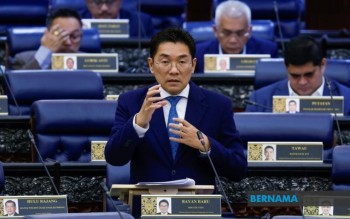
Investment activity in Kedah accelerated in the opening months of 2026, with Deputy Investment, Trade and Industry Minister Sim Tze Tzin confirming that the state secured RM1.4 billion in approved investments through 50 distinct projects between January and March. The figures highlight ongoing momentum in the northern corridor despite broader economic uncertainties, underscoring Putrajaya's determination to position the region as a significant manufacturing and technology hub for both domestic and international investors.
The government's strategy hinges on leveraging established industrial anchors—chiefly Kulim Hi-Tech Park, Kedah Rubber City, and the Kerian Integrated Green Industrial Park—as springboards for broader economic transformation. Rather than allowing investment gains to concentrate exclusively within these flagship zones, policymakers have explicitly tasked surrounding districts including Sik, Baling, and Padang Terap with capturing economic spillovers through secondary industries, employment creation, and vendor ecosystem development. This spatial approach reflects lessons learned from past industrial development elsewhere in Malaysia, where concentration of benefits bred regional disparities and political friction.
Speaking during parliamentary question time, Sim articulated an inclusive growth vision that resonates with long-standing concerns from rural parliamentarians. The deputy minister acknowledged Ahmad Tarmizi Sulaiman's (PN–Sik) pointed question about mechanisms to ensure high-income jobs and local vendor opportunities actually materialise in peripheral agricultural districts. Sim's response suggested that the government recognises the political imperative to demonstrate tangible benefits beyond the traditional industrial heartlands, particularly as competition for investor attention intensifies across Southeast Asia.
A critical element of this strategy centres on leveraging agricultural and food-processing capabilities already embedded in Baling, Sik, and Padang Terap. Rather than attempting to transplant the same high-tech manufacturing base across the region, the government is pursuing a more nuanced sectoral approach that aligns with existing comparative advantages. Agro-industries and food processing represent priority investment targets within the ministry's portfolio, offering pathways for upgrading rural productive capacity without requiring wholesale economic restructuring. This targeted diversification could prove particularly valuable as global supply chains increasingly value local, traceable production and sustainability credentials.
Infrastructure investment represents the concrete foundation underpinning these aspirations. The government is widening Federal Route FT004, the key arterial connecting Kulim Hi-Tech Park to Bukit Karangan, a project scheduled for completion by April 2028. Improved road connectivity should reduce logistics costs, shorten delivery times, and make these peripheral districts materially more attractive to investors seeking locations with reasonable access to the main industrial zones yet lower operating expenses. For companies operating in food processing or component manufacturing, transport infrastructure quality can materially influence location decisions and profitability.
Yet infrastructure alone cannot guarantee spillover. The New Incentive Framework, rolled out in March 2026, represents a more direct policy intervention aimed at embedding local supplier relationships within investment projects. This revised incentive structure explicitly rewards foreign investors who increase localisation—sourcing components, materials, and services from Malaysian vendors—by offering more generous government support. The architecture creates financial inducements for multinational firms to integrate rural suppliers into their operations, transforming potential economic leakage into concrete local participation.
This localisation emphasis carries broader implications for Malaysian industrial strategy. By tying incentives to the depth of supply-chain integration and use of local vendors, the government signals a shift away from purely quantitative investment targets toward qualitative outcomes. A RM100 million foreign investment that sources 80 per cent of components and services domestically delivers far greater developmental impact than a similar-sized project importing most inputs. For peripheral regions like Sik and Baling, this approach offers realistic pathways for participating in global value chains without requiring immediate transformation into high-tech manufacturing zones.
Technology transfer mechanisms embedded within the NIF framework add another dimension to the strategy. As foreign investors establish facilities and engage with local suppliers, knowledge flows in both directions—international firms gain insights into local market dynamics and cost structures, whilst Malaysian vendors absorb production techniques, quality standards, and management practices. Over time, these interactions build indigenous capabilities enabling local companies to compete internationally rather than remaining perpetually dependent on multinational partners. For rural districts, this capability-building function may ultimately prove more valuable than immediate job creation.
The political context underscores why this push matters. Sik, Baling, and Padang Terap represent constituencies where agricultural livelihoods have faced sustained pressure from global commodity price volatility, youth outmigration, and declining farm incomes. Promises of high-technology industrial development have arrived repeatedly in Malaysian politics without consistently materialising for peripheral districts. By articulating specific mechanisms—infrastructure projects with completion timelines, revised incentive structures, and sector-specific development targets—the government seeks to rebuild credibility on rural development commitments. Whether execution matches rhetoric will significantly influence northern voter sentiment in coming electoral cycles.
The timing of these announcements reflects competitive pressures within the region. Thailand, Vietnam, and Indonesia all pursue aggressive investment recruitment strategies, offering competitive incentive packages and improving infrastructure to attract multinational manufacturers seeking alternatives to China. Malaysia's advantage lies partly in established industrial zones, political stability, and skilled workforces, but these advantages erode if investments concentrate geographically. By systematically promoting northern peripheral regions, the government attempts to differentiate Malaysia's offering and extend the geographical footprint over which international investors perceive competitive advantages.
For Malaysian businesses, the New Incentive Framework creates both opportunities and competitive pressures. Local vendors gaining access to multinational supply chains access stable demand, technology transfer, and market intelligence that can drive business expansion. Simultaneously, suppliers unprepared to meet international quality and delivery standards face displacement as multinationals raise performance expectations. The framework thus functions as implicit industrial policy, nudging Malaysian firms toward upgrading rather than competing solely on cost.
The RM1.4 billion investment figure itself warrants contextualisation. Across Malaysia's entire manufacturing sector, quarterly approvals typically reach several billion ringgit, so Kedah's contribution represents meaningful but not exceptional activity. However, the project count—50 distinct investments—suggests broadly distributed benefits rather than dependency on one or two major facilities. Sectoral composition data would clarify whether these investments genuinely represent the agro-industrial and food-processing focus claimed, or whether concentration remains tilted toward electronics and petrochemicals.
Looking forward, success metrics should extend beyond investment approvals and employment statistics. Genuine spillover materialises when rural suppliers graduate from simple component supply to sophisticated manufacturing, when technology transfer enables independent innovation, and when local companies generate export revenues. These deeper transformations unfold over years rather than quarters, making patience and consistent policy support essential. For northern Malaysia, the next two years will prove crucial in determining whether the current policy framework translates strategic rhetoric into tangible shared prosperity.

