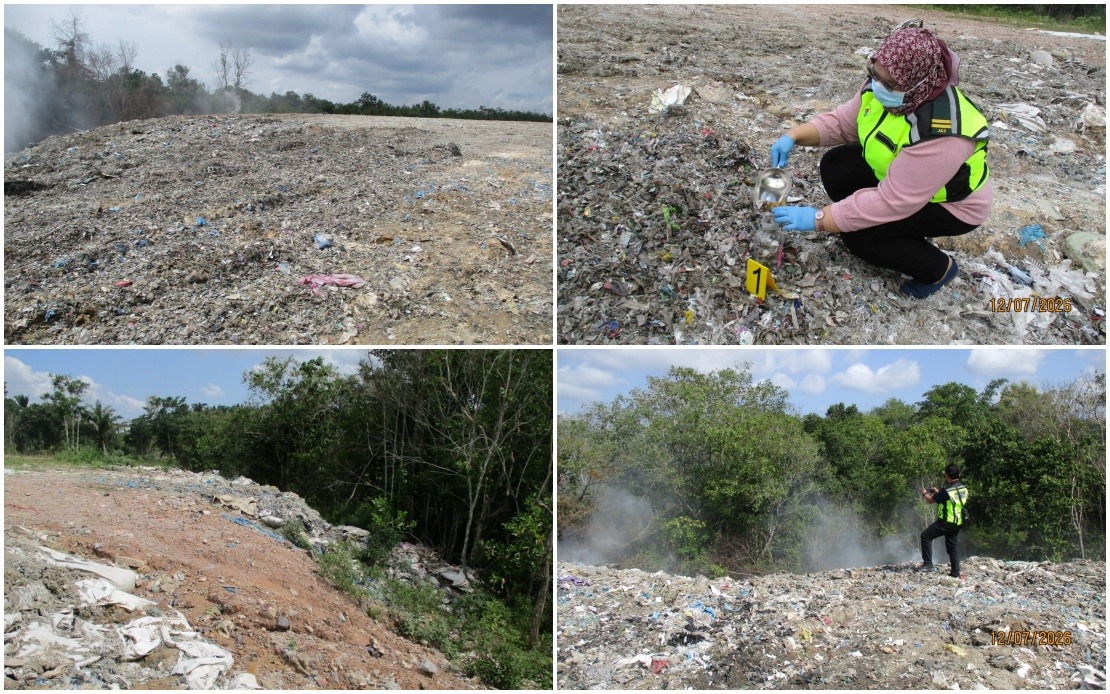
The Kedah Department of Environment has closed in on an illegal solid waste disposal operation in Bukit Banyan, following a public tip-off about noxious smoke emanating from the site. State DOE director Sharifah Zakiah Syed Sahab confirmed that inspectors visited the location after residents lodged complaints about burning odours in the vicinity, uncovering what appears to be a deliberate and ongoing scheme to dispose of waste outside official channels.
The investigation revealed a substantial dumping area, approximately 250 square metres in size, scattered across cleared land with accumulations of domestic and industrial refuse. Smoke still lingered at the site during the DOE's inspection, suggesting the burning had occurred recently and may have been a regular practice. Environmental officers determined that the smoke originated from open burning, likely conducted by individuals seeking to extract valuable metals and materials from the discarded waste—a crude and hazardous method of material recovery that poses serious health and environmental risks.
At the heart of the case lies evidence pointing to a private waste collection contractor operating across industrial zones in the district. Rather than disposing of collected waste through legitimate, licensed facilities, the contractor appears to have transported the material to the Bukit Banyan site for unauthorised dumping and processing. This circumvention of proper waste management protocols represents a significant breach of environmental regulations and suggests cost-cutting measures taken at the expense of public health and ecological integrity.
The DOE's preliminary findings have already triggered multiple legal avenues. The operation violates Section 29A(1) of the Environmental Quality Act 1974, which prohibits open burning on any parcel of land. Simultaneously, the unlicensed sanitary landfill operation infringes Section 34A(6) of the same statute, which mandates written approval from the director-general before establishing any solid waste disposal facility. The dual violation indicates both intentional and systematic non-compliance with environmental law.
To strengthen the enforcement case, DOE personnel collected solid waste samples directly from the dumping ground for submission to the Department of Chemistry's laboratory division. These analyses will provide forensic evidence of the waste composition and may help trace the materials back to specific industrial sources, potentially identifying other contractors or businesses complicit in the illegal dumping scheme. Laboratory findings could also document environmental contamination and establish the magnitude of the threat posed to local soil and groundwater.
The case now transitions into a coordination phase involving multiple government agencies with overlapping jurisdiction. The Kedah DOE will formally refer the matter to the Solid Waste and Public Cleansing Management Corporation (SWCorp), the national agency tasked with waste management oversight and enforcement. SWCorp possesses broader investigative powers and can issue substantial penalties, potentially leading to site remediation orders and criminal prosecution of the responsible parties.
For Malaysian industrial districts and surrounding communities, this case illustrates a persistent vulnerability in waste management compliance. Contractors operating in cost-sensitive environments may calculate that the financial savings from illegal dumping outweigh the risk of detection and penalties, particularly in areas with limited monitoring infrastructure. The reliance on public complaints to trigger enforcement action means that many illegal sites may operate undetected for extended periods, accumulating waste and spreading environmental contamination.
The Bukit Banyan discovery also underscores the public health dimension of waste mismanagement. Open burning of mixed industrial and domestic waste releases dioxins, heavy metals, and toxic particulates into the air, creating respiratory hazards for nearby residents and workers. The metal recovery motive suggests the waste stream includes electronics, batteries, and other materials containing hazardous substances, making the burning operation particularly dangerous and casting doubt on whether appropriate safety measures were implemented.
Kedah's industrial landscape, like much of northern Malaysia's manufacturing belt, generates substantial solid waste streams requiring proper disposal infrastructure. When licensed facilities operate at capacity or charge premium disposal rates, the economic incentive for contractors to seek unauthorised alternatives intensifies. This investigation may prompt a broader review of whether legitimate waste processing capacity meets actual demand across the state, potentially revealing systemic bottlenecks driving illegal practices.
The investigation also raises questions about contractor vetting and supply chain oversight within the industrial sector. If a single operator managed to operate an illegal dumping and burning site for an unknown duration without detection, similar operations may exist elsewhere in the district or surrounding areas. Industrial facility managers themselves bear responsibility for verifying that their contracted waste haulers deliver materials to properly licensed facilities, yet enforcement of these due diligence requirements remains sporadic.
Moving forward, the enforcement outcome will signal important messages to other waste handlers throughout Kedah and the broader region. Substantial penalties and criminal convictions would increase compliance costs for legitimate operations but create a more level playing field. Conversely, lenient treatment could inadvertently encourage similar violations by demonstrating that detection and legal consequences are manageable risks. SWCorp's handling of the Bukit Banyan case will therefore influence industry behaviour across Malaysia's waste management sector.
The incident also reflects broader Southeast Asian challenges in regulating informal waste processing activities, where material recovery and recycling operations frequently blur into uncontrolled dumping. As industrial development accelerates across the region, waste volumes expand faster than infrastructure capacity, creating conditions where illegal operations flourish despite regulatory frameworks. Successful enforcement in Bukit Banyan requires sustained attention beyond the initial investigation phase, including site rehabilitation, contractor accountability, and preventative monitoring to deter recurrence.

