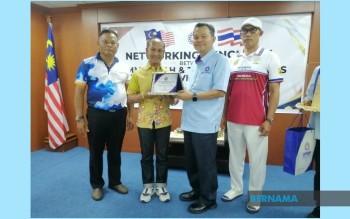
Business leaders from Kedah and Thailand's Trang Province have joined forces to unlock untapped economic opportunities along their shared border corridor, with both regions recognising the need to transform from transit zones into destination economies. The Malay Chamber of Commerce Malaysia (DPMM) Kedah and the Trang Chamber of Commerce and Industry organised a business matching and networking programme that aims to deepen bilateral commercial ties and create lasting partnerships across the tourism and halal industries. The initiative represents a pragmatic response to a longstanding challenge: both provinces have historically served as waypoints rather than destinations, with travellers passing through without stopping to spend money or engage locally.
The geographical paradox facing Kedah and Trang has become increasingly apparent to policymakers and business leaders on both sides of the border. According to DPMM Kedah adviser Zuhaizar Abdul Karim, Malaysian tourists heading to popular Thai destinations like Phuket and Krabi typically bypass Trang entirely, deterred by misperceptions about limited attractions and the availability of halal dining options. The situation mirrors Kedah's experience, where Thai nationals and foreign visitors en route to visa renewal offices, shopping destinations, and regional hubs in Penang and Kuala Lumpur traverse the state without pausing to explore local economic opportunities. This pattern reveals how both regions have become victims of their own strategic positioning, with their transit value obscuring their potential as standalone destinations worthy of extended visitor engagement.
Zuhaizar articulated the core challenge during a meeting with Trang Deputy Governor Anan Boon Samran and an accompanying delegation of 22 entrepreneurs representing diverse sectors. The absence of meaningful economic spillover has left both jurisdictions significantly disadvantaged, forgoing the multiplier effects that tourism spending generates through accommodation, dining, retail, and cultural experiences. By inviting the Thai delegation to Kedah and facilitating direct business-to-business connections, the chambers hope to catalyse a shift in mindset among regional entrepreneurs and government officials, encouraging them to view cross-border collaboration not as an occasional courtesy but as an essential business strategy.
The halal industry emerges as a particularly promising area for deepening economic integration between Kedah and Trang. Malaysia's established halal certification infrastructure, production expertise, and regional market dominance position Kedah businesses to leverage Trang's geographic proximity and emerging halal manufacturing capabilities. For DPMM Kedah members, access to Thailand's broader Southeast Asian markets through Trang presents an immediate export pathway, eliminating lengthy supply chain routes and reducing logistics costs. Zuhaizar explicitly flagged this opportunity, emphasising that Trang could serve as a commercial platform enabling Malaysian halal food producers and service providers to establish footholds in Thailand and subsequently expand throughout the region. The arrangement benefits both parties: Malaysian exporters gain market access, while Trang develops value-added industries and employment opportunities beyond conventional agriculture and tourism.
Trang's appeal as a tourism destination has historically been overshadowed by more famous Thai provinces, yet Anan Boon highlighted several competitive advantages that the region actively promotes. The province offers superior affordability compared to saturated tourist hubs, a combination of halal-compliant food and accommodation infrastructure, and a culturally diverse environment reflecting Thailand's multireligious demographics. These attributes directly address the misconceptions that currently discourage Malaysian visitors from stopping in Trang during their southbound journeys. By positioning Trang as an accessible, affordable alternative to expensive beach resorts while emphasising its halal-friendly credentials, provincial authorities seek to reverse the transit-traffic phenomenon that has constrained local economic development.
The reciprocal nature of the networking initiative underscores mutual recognition of shared interests. Plans for DPMM Kedah representatives to visit Trang soon signal genuine commitment to sustained engagement rather than one-off diplomatic pleasantries. Such visits create opportunities for Malaysian business leaders to conduct on-site market research, establish personal relationships with Thai counterparts, and identify specific collaboration opportunities in sectors ranging from food production to tourism infrastructure development. The precedent established through formal chamber-to-chamber engagement can also encourage private-sector networks to develop independently, generating organic business relationships that extend beyond government-facilitated introductions.
For Malaysian stakeholders, this initiative arrives at a particularly opportune moment. As regional supply chains diversify away from concentration in single countries and as Southeast Asian economies increasingly emphasise intra-regional trade, Kedah's proximity to Thailand represents an underexploited competitive advantage. The state's location on major transportation corridors connecting Malaysia to Thailand positions it as a natural hub for cross-border commerce, provided local businesses develop the market knowledge and relationships necessary to operate effectively in Thailand. The DPMM Kedah initiative directly addresses this capability gap by facilitating structured introductions and knowledge exchange.
The broader regional context suggests that such sub-national chamber collaborations may become increasingly important as trade dynamics shift. Traditional bilateral relations between national governments remain significant, but organised business networks operating at provincial or state levels can often move more nimbly to identify and capitalise on emerging opportunities. The Kedah-Trang partnership demonstrates how chambers of commerce can serve as intermediaries between government policy objectives and private-sector realities, translating aspirations for enhanced economic cooperation into concrete business matching activities. This model potentially offers lessons for other Malaysian states seeking to strengthen ties with neighbouring regions across the Thai and Indonesian borders.
The success of this initiative will ultimately depend on whether the business matching activities translate into sustained commercial relationships and tangible transactions. Initial enthusiasm from the 22 Thai entrepreneurs who travelled to Kedah suggests receptivity among Trang's business community to deeper engagement with Malaysian partners. However, participants will need to overcome practical obstacles including language barriers, different regulatory frameworks, currency considerations, and the challenge of building trust across unfamiliar business cultures. The chambers' role in facilitating ongoing networking and problem-solving will determine whether the current momentum develops into lasting structural changes in cross-border commerce.
For Kedah particularly, this initiative aligns with broader state development objectives to enhance regional competitiveness and diversify economic drivers beyond traditional sectors. By positioning itself as a bridge between Malaysia's consumer markets and Thailand's manufacturing and tourism sectors, Kedah can strengthen its relevance in regional value chains. The emphasis on halal industries specifically reflects Malaysia's aspirational role as a global halal centre, while pragmatically recognising that Trang represents an immediate, accessible market where Malaysian expertise commands premium value. The networking programme thus represents not merely a bilateral courtesy but a calculated strategy to reposition both provinces from peripheral transit zones into dynamic commercial hubs worthy of intentional visitor and investor attention.

