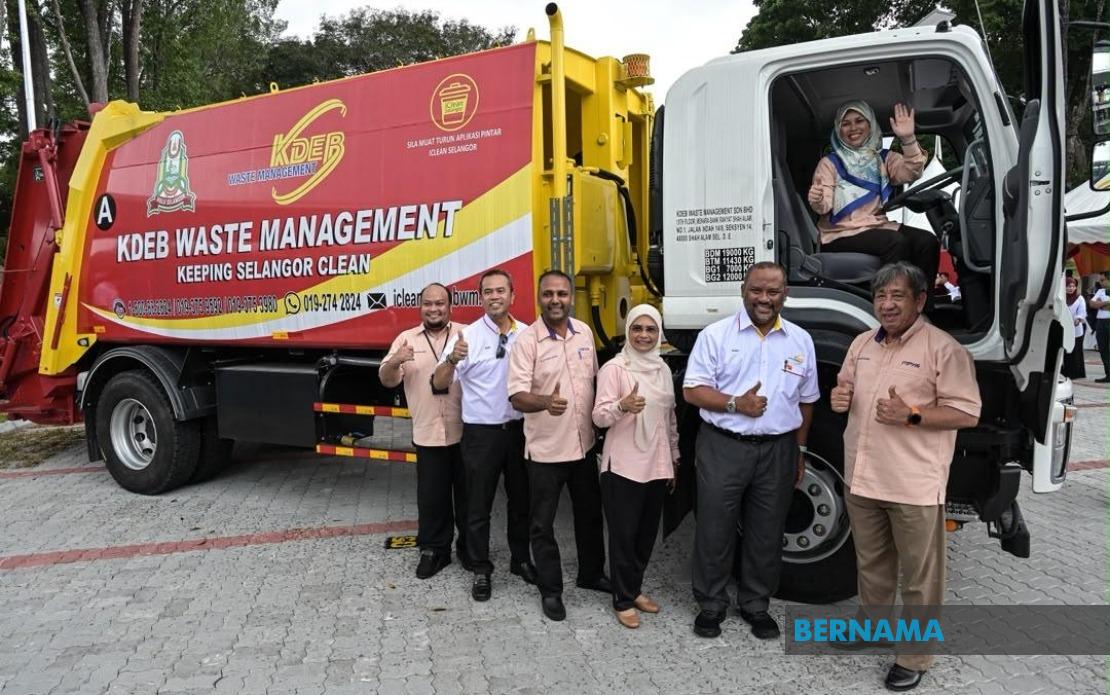
KDEB Waste Management (KDEBWM) has unveiled a modernised fleet of 33 compactor lorries to bolster refuse collection across Hulu Selangor following the commencement of its fresh seven-year contract with the Hulu Selangor Municipal Council (MPHS) on July 1. The introduction of this new equipment represents a significant scaling-up of operational capability for the waste management operator, which secured the contract through a competitive process designed to enhance service standards in the district.
The newly deployed vehicles comprise a mixed fleet tailored to operational requirements: 18 Isuzu units, five Mitsubishi Fuso vehicles, and ten UD Trucks. Each lorry incorporates advanced compaction technology and modern safety features aimed at streamlining collection routines and reducing environmental impact during transportation and disposal operations. According to Datuk Ramli Mohd Tahir, KDEBWM's managing director, the technical specifications reflect industry best practices, enabling crews to perform collections more efficiently while adhering to rigorous safety protocols and environmental compliance standards throughout the seven-year service period, which concludes on June 30, 2033.
The expansion in fleet capacity directly addresses growing demand in Hulu Selangor's residential and commercial sectors. During KDEBWM's previous tenure, which ran from 2018 until June 30 of this year, daily waste volumes ranged between 100 and 150 tonnes. The new contract baseline has already expanded collection capacity to 150 to 250 tonnes daily, with projections suggesting potential increases to 300 tonnes as the municipality continues developing. This trajectory underscores the rapid urbanisation pressures facing Selangor's outer districts and highlights the importance of proportionate infrastructure investment to maintain public health standards and environmental cleanliness.
The financial commitment underlying this expanded service reflects both the growing scale of operations and the municipality's confidence in KDEBWM's capability. MPHS has allocated RM117.2 million over the seven-year contract period, translating to approximately RM16.7 million annually. This substantial investment signals the council's prioritisation of waste management as a core municipal function, particularly as the district attracts new residential and industrial development. For Malaysian readers tracking infrastructure spending and municipal governance, the contract value demonstrates how local authorities are competing for service quality and technological modernisation in an era of rising waste generation.
Critically, the contract introduction coincides with a fundamental redesign of household waste collection methodology. Effective July 1, MPHS and KDEBWM transitioned to a door-to-door collection system replacing the previous leach bin approach. Under this new framework, residents must supply their own covered waste containers with minimum capacity of 120 litres, clearly marked with house or property numbers to eliminate administrative confusion. All domestic refuse must be bagged in plastic liners, securely fastened, and placed inside bins with lids kept shut to exclude stray animals and rainwater—a measure particularly relevant for Malaysia's tropical climate where monsoon seasons intensify contamination risks.
This systemic shift carries implications for household behaviour and compliance. The transition from communal leach bins to individual household responsibility represents a philosophical move toward residential accountability in waste segregation and containment. Malaysian municipalities implementing similar door-to-door systems have encountered variable compliance rates, particularly during initial rollout phases. For Hulu Selangor residents, the requirement to purchase compliant bins and adopt new disposal routines may necessitate a public education campaign and a transitional adjustment period. Successfully embedding these practices could enhance collection efficiency and reduce environmental spillage, benefiting both operational metrics and environmental outcomes.
Parallel to domestic waste management, MPHS is collaborating with KDEBWM to establish systematic collection protocols for industrial waste generated by small and medium enterprises (SMEs) throughout the district. Rather than direct municipal provision, industrial collection will be administered through appointed concession panel companies, a governance model increasingly common in Malaysian local authorities seeking to distribute service responsibilities and reduce direct operational burden. This approach theoretically incentivises efficiency through competitive pressure while allowing SMEs greater choice in waste service providers, though it requires robust regulatory oversight to prevent service gaps or environmental non-compliance.
The seven-year contract extension represents continuity in municipal service provision, a factor often overlooked but significant for operational stability. KDEBWM's prior seven-year tenure provided an institutional foundation—established collection routes, trained personnel, operational systems, and community familiarity—that reduces transition risks compared to service switches. Municipalities across Malaysia have experienced disruption when changing waste management contractors, with temporary service lapses and community dissatisfaction. The decision to retain KDEBWM, presumably following satisfactory performance review, prioritises stability while the new fleet investment signals commitment to capacity enhancement rather than complacency with existing capability.
From a regional perspective, Hulu Selangor's waste management evolution reflects broader patterns across Southeast Asian municipalities grappling with rapid urbanisation and rising consumer waste volumes. Malaysia's waste generation has increased substantially over recent decades, driven by economic development, rising middle-class consumption, and growing packaging intensity. As densifying districts like Hulu Selangor experience population growth, municipal authorities must preemptively scale waste infrastructure to avoid service failures that trigger public dissatisfaction and environmental degradation. The KDEBWM investment demonstrates one municipality's proactive approach, though it also underscores how resource-intensive adequate waste management has become.
Operational challenges will likely emerge during implementation. Ensuring 100 percent household compliance with the new bin requirements may prove problematic, particularly in informal settlements or low-income areas where purchasing compliant containers represents meaningful expense. Collection crews must navigate variable physical conditions—narrow lanes, illegally parked vehicles, and informal structures—that complicate door-to-door access in some neighbourhoods. Weather disruptions, vehicle maintenance cycles, and labour availability could stress the collection schedule during peak demand periods. Monitoring these operational realities will be essential for MPHS and KDEBWM to identify implementation friction points requiring mid-contract adjustment.
Looking forward, the contract structure and fleet investment position Hulu Selangor to manage near-term waste growth, though longer-term sustainability requires complementary initiatives. Waste reduction at source, comprehensive recycling infrastructure, and household source separation programs remain comparatively underdeveloped in most Malaysian municipalities. While KDEBWM's new compactor lorries improve collection efficiency, they fundamentally address logistics rather than reduction. For Hulu Selangor to achieve genuinely sustainable waste management, future municipal policy should progressively emphasise prevention and resource recovery alongside improved collection services—an evolving challenge for Malaysian local governments navigating the transition from simple disposal-oriented systems toward circular economy principles.

