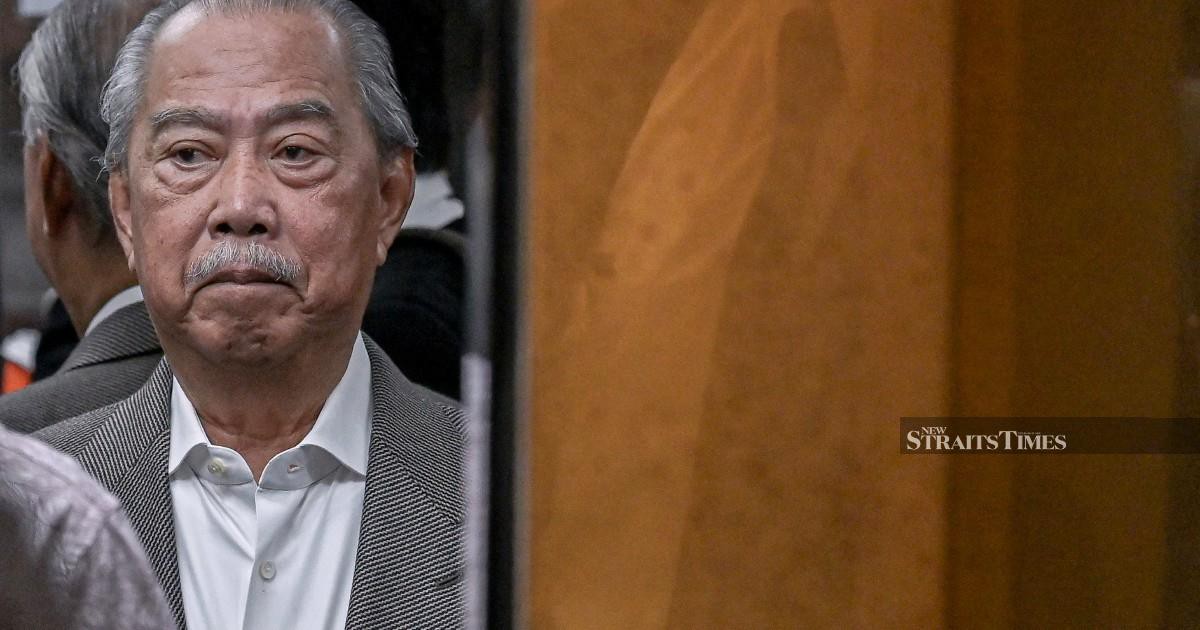
A finance manager employed at KCJ Engineering Sdn Bhd provided testimony at the High Court in Kuala Lumpur, indicating that she had received information establishing a direct connection between an RM800,000 monetary contribution to the Bersatu political party and Jana Wibawa projects that were subsequently allocated to her employer. The revelation emerged as part of ongoing court proceedings and adds a significant dimension to questions surrounding corporate donations to Malaysian political entities and their potential relationship to government contract awards.
The Jana Wibawa initiative represents a substantial infrastructure development program that has attracted considerable attention given its scale and the companies selected to participate. The connection alleged by the finance manager suggests that project allocation decisions may have been influenced by or contingent upon political contributions, a matter of considerable public interest in Malaysia's ongoing discourse surrounding government procurement practices and corporate-political relationships.
This testimony forms part of a broader investigative framework examining the flow of corporate funds into political party treasuries during a period when such donations were being scrutinised by authorities. The specificity of linking a particular donation amount to identifiable government projects raises important questions about the transparency and independence of project award mechanisms within government agencies responsible for infrastructure development.
The finance manager's account carries particular weight given her position within KCJ Engineering, which would have provided her with direct access to company financial records and communications regarding donations and project awards. Her testimony was delivered directly to the court rather than being conveyed through intermediaries, lending credibility to the account she presented regarding the nature and purpose of the substantial contribution.
For Malaysian readers and observers of corporate governance, this case illuminates the intersection between private sector donations and government contract allocation. Such matters have long been subjects of public debate, particularly following heightened public awareness of corporate accountability and political funding transparency in the years following the 2018 general elections.
The RM800,000 figure is substantial enough to represent a significant corporate expenditure, and its linkage to specific project awards suggests strategic corporate decision-making around political contributions. This pattern, if substantiated through further court findings, could indicate a systematic approach by certain companies to secure government contracts through political channels rather than purely on competitive merit.
Bersatu, the Malaysian United Indigenous Party, has been a prominent political actor since its formation and subsequent involvement in coalition governments. Political parties across the Malaysian spectrum have historically relied on corporate donations to fund their operations, campaigns, and administrative functions. However, the suggestion that such donations are contingent upon or explicitly linked to government contract awards crosses from routine political fundraising into territory that raises governance concerns.
The High Court proceedings represent an important institutional mechanism for examining such allegations through formal legal process. The testimony delivered by the finance manager will be subject to cross-examination and will need to be corroborated by other evidence, including documentary records, communications between relevant parties, and potentially testimonies from other witnesses with knowledge of the donation and the project allocation process.
Malaysian regulators and anti-corruption agencies have demonstrated increasing commitment to investigating potential linkages between political donations and government procurement decisions. Such cases contribute to the broader accountability framework that supports public confidence in government institutions and corporate conduct. The court's examination of this matter signals that mechanisms exist for scrutinising transactions that may represent improper mixing of political fundraising and government contracting.
For the construction and engineering sector more broadly, this case carries implications regarding industry standards and expectations around government procurement. Companies operating in Malaysia must navigate the tension between legitimate business relationship-building with political actors and the boundaries of ethical conduct regarding government contracts. Public scrutiny of donation-to-contract relationships encourages industry participants to maintain clear separation between political contributions and commercial negotiations.
The outcome of this High Court case may establish important precedent regarding evidentiary standards for establishing connections between corporate donations and government contract awards. Legal interpretations established through this proceeding could influence how similar cases are investigated and prosecuted going forward, affecting both corporate behaviour and regulatory approaches.
Beyond the immediate legal proceedings, this testimony contributes to an important public conversation about Malaysia's approach to corporate political engagement and government procurement integrity. The case demonstrates that courts are prepared to examine these relationships when brought before them and that individuals within companies may be willing to provide testimony regarding potentially problematic financial arrangements. As Malaysia continues to develop and refine its governance frameworks, cases such as this provide valuable information about where vulnerabilities exist in existing systems and where additional safeguards may be needed to protect the integrity of government procurement processes.

