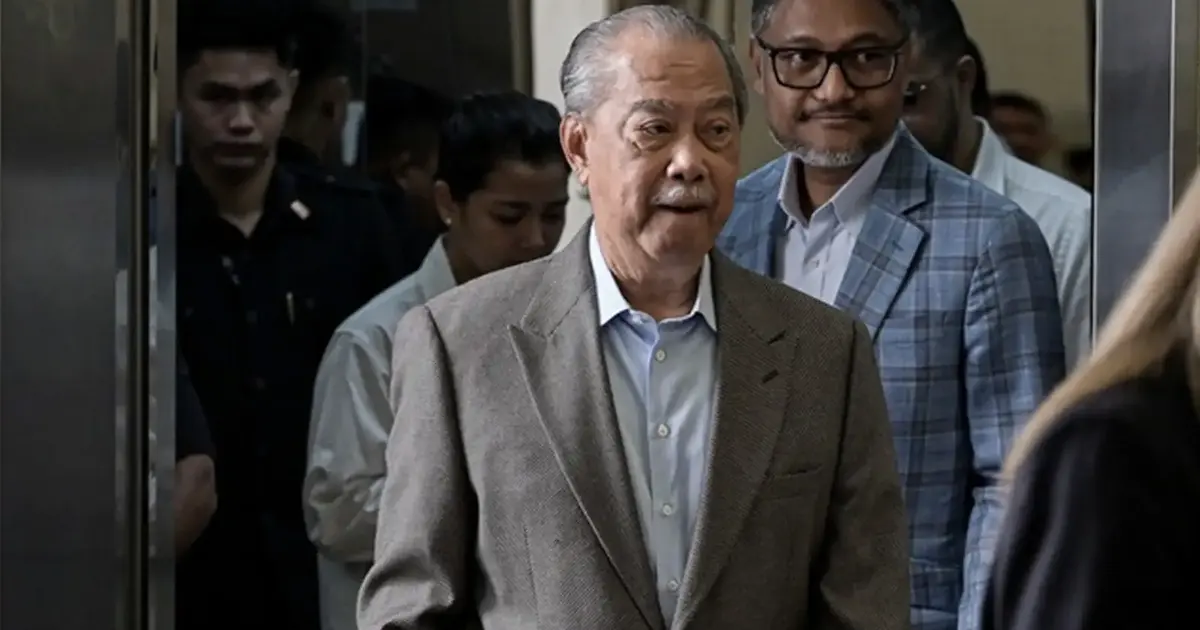
Fresh details emerged in court proceedings concerning the Jana Wibawa procurement controversy, with a finance ministry officer revealing that KCJ Engineering fell short when put through the standard technical assessment process. The disclosure adds another layer to the ongoing scrutiny of how the company secured the contract and raises questions about whether normal procurement safeguards were properly applied.
The finance ministry official provided testimony explaining that after then-Prime Minister Muhyiddin Yassin put forward a recommendation for KCJ Engineering to be appointed to the project, the customary evaluation procedures were nevertheless initiated. This sequence—where a political recommendation precedes formal vetting—reflects practices that have drawn criticism regarding adherence to transparent procurement standards in Malaysia's public sector. The court heard that despite the ministerial backing, the company did not successfully navigate the technical hurdles required at the initial stage.
The Jana Wibawa matter has become emblematic of broader concerns about contract awards and political influence in government procurement. Malaysia has faced persistent international scrutiny regarding governance and transparency in how public funds are allocated and projects are assigned. The revelation that a politically-favoured company initially failed its technical evaluation yet apparently proceeded further in the process underscores tensions between political direction and merit-based assessment frameworks that are supposed to govern such decisions.
The significance of technical assessments in procurement cannot be overstated. These evaluations exist to ensure that companies contracted to execute government projects possess the requisite expertise, capacity, and resources to deliver according to specification and timeline. When such assessments reveal deficiencies, they typically trigger a pause for remediation, resubmission, or elimination from consideration. The apparent disjunction between KCJ Engineering's initial failure and its eventual appointment warrants examination of what transpired between those two points.
This case carries implications far beyond the immediate parties involved. Southeast Asian governments, including Malaysia's, have made commitments to international bodies and civil society organisations regarding procurement reform and anti-corruption measures. The Jana Wibawa proceedings are being watched closely by those monitoring whether such commitments translate into substantive practice. How the Malaysian courts handle this case—and what consequences, if any, flow from it—will send important signals about the judiciary's willingness to scrutinise government contracts and hold decision-makers accountable.
The involvement of a former Prime Minister as a recommending authority adds political complexity. Muhyiddin Yassin's tenure as Prime Minister, which ended in 2021, remains a subject of considerable political contention in Malaysia. Several matters from his administration have become the subject of legal proceedings, reflecting the sharp partisan divisions that characterise Malaysian politics. This case therefore intersects with broader narratives about governance during his period in office and the extent to which institutional checks operated during that time.
For Malaysian business enterprises, the Jana Wibawa proceedings carry cautionary lessons about procurement integrity. Companies operating legitimately and competing on merit in government tender processes have legitimate grievances if contracts are allocated through non-transparent means. The Malaysian business community has periodic complained about procurement distortions, arguing they disadvantage efficient operators and inflate costs for taxpayers. Clear legal consequences for procurement irregularities are viewed as essential to creating more level competitive conditions.
The court testimony also illuminates the internal processes of the finance ministry itself. Officials are tasked with executing their professional responsibilities despite pressure from political superiors. The ministry officer's willingness to explain that standard assessment procedures were followed, and that they revealed KCJ Engineering's initial inadequacy, suggests that professional staff attempted to maintain procedural integrity. Whether their concerns about the technical assessment were overridden by political direction, or whether the company was somehow remediated and reassessed, remains a central question in the case.
Government procurement represents a substantial portion of Malaysia's annual public expenditure. Ensuring that these funds are spent efficiently and transparently is not merely a matter of good governance; it directly affects the government's capacity to deliver services and infrastructure. When procurement processes are compromised, the resulting cost overruns, quality deficiencies, or project delays ultimately burden ordinary Malaysians through either higher taxes or reduced service standards. This is why scrutiny of procurement practices enjoys broad public interest.
The Jana Wibawa case also reflects Malaysia's broader efforts to strengthen institutional frameworks. Recent years have seen establishment of the Malaysian Anti-Corruption Commission's expanded powers and increased prosecution of corruption cases involving senior figures. The willingness of courts to examine high-level procurement decisions represents a maturation of Malaysia's institutional response to governance lapses. However, observers note that prosecutions and civil recoveries remain inconsistent, and that political considerations still sometimes impede accountability efforts.
Looking forward, the testimony about KCJ Engineering's failed technical assessment will likely feature prominently in the case's trajectory. Legal teams will need to explain the mechanism by which a company that did not meet initial standards nonetheless progressed to appointment. Defence counsel may argue that subsequent resubmissions cured the initial deficiencies, while prosecutors and accusers may contend that standards were simply waived or bypassed due to political pressure. The court's findings on these points will substantially influence conclusions about whether procurement irregularities occurred.

