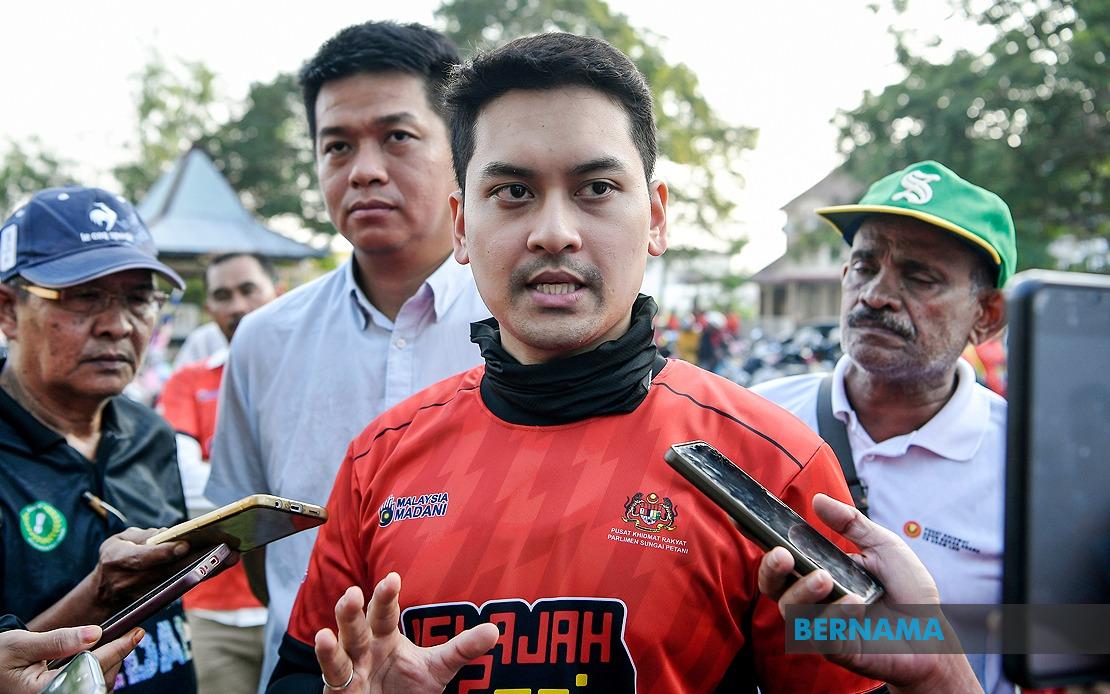
The Ministry of Youth and Sports (KBS) has embarked on an ambitious nationwide consultation initiative aimed at capturing the voices and concerns of Malaysia's youth population before the government tables Budget 2027 in October. Launched under the MADANI Youth Budget Tour framework, the initiative divides the country into six zones and represents an attempt to democratise budget-making processes by incorporating grassroots input from young Malaysians. Minister Dr Mohammed Taufiq Johari unveiled the tour at the northern zone launch at Kedah Youth and Sports Complex, signalling the beginning of an intensive engagement schedule that will traverse multiple states over the coming weeks.
The geographic scope of the tour reflects the government's commitment to ensuring representation from diverse regions across Peninsular Malaysia and the broader federation. The northern zone encompasses Kedah, Penang, and Perlis, with the consultation schedule subsequently expanding to cover remaining states in phases. Dr Taufiq emphasised that this structured approach would allow the ministry to systematically compile regional feedback and channel young people's aspirations directly to Prime Minister Datuk Seri Anwar Ibrahim for consideration during budget formulation. The tour's timing, positioned in the months preceding the October budget announcement, provides a legitimate window for youth input to influence policy priorities and budgetary allocations.
Central to the MADANI Youth Budget Tour philosophy is the recognition that young Malaysians possess valuable perspectives on issues directly affecting their futures, from employment opportunities and education financing to housing affordability and skills development. By establishing town hall sessions and engagement platforms throughout the consultation period, the ministry creates structured channels for youth to articulate their needs and aspirations beyond traditional parliamentary or bureaucratic frameworks. Dr Taufiq highlighted the genuine willingness among today's youth to participate actively in civic dialogue, noting that engagement sessions demonstrate young people's readiness not merely to consume government information but to critically voice their concerns and desires.
The broader context of this initiative reflects evolving governance approaches within Southeast Asia and Malaysia specifically, where policymakers increasingly recognise that demographic inclusion strengthens policy legitimacy and effectiveness. Youth represent both a substantial voting bloc and a generation bearing the long-term consequences of current policy decisions; their formal incorporation into budget deliberations acknowledges this dual significance. For Malaysian readers, the tour represents a tangible manifestation of the MADANI framework's commitment to participatory governance, translating philosophical commitments to inclusivity into concrete institutional mechanisms.
Parallel to the budget tour, the government has launched the Sahabat MADANI initiative nationally, which has already mobilised over 11,060 volunteers dedicated to promoting mutual respect and community service across ethnic and religious boundaries. Prime Minister Anwar Ibrahim formalised this national-level programme during the same Penang event, where he also attended the Sahabat MADANI Merdeka Eve culminating activity at UiTM Penang. This volunteer-based movement complements the budget tour by creating grassroots infrastructure for sustained government-public engagement beyond the immediate consultation period, essentially embedding community participation into longer-term governance structures.
Dr Taufiq articulated a vision positioning young Malaysians as custodians of national unity and social cohesion, emphasising that youth responsibility transcends passive citizenship to encompass active bridge-building across communal divides. This framing carries particular resonance in Malaysia's multicultural context, where generational attitudes toward religious and ethnic relations significantly influence national trajectory. By tasking youth with stewarding unity and safeguarding the nation from divisive elements, the government appeals to young Malaysians' idealism while simultaneously channelling youthful energy toward nation-building imperatives aligned with official state narratives.
The Sahabat MADANI framework, according to ministerial messaging, serves as a critical conduit between government institutions and public constituencies, ensuring that grassroots concerns percolate through policymaking hierarchies. With over 11,000 volunteers already enrolled, the network potentially represents a substantial mobilisation capacity for government programmes and civic initiatives. For observers tracking institutional adaptation within Malaysian governance, this volunteer expansion signals the government's strategic prioritisation of soft power and community engagement mechanisms as complements to formal bureaucratic channels.
The participation of Penang Chief Minister Chow Kon Yeow in the UiTM event underscores the multi-level governance dimensions of the budget tour, with state-level officials collaborating in national consultation exercises. Such coordination indicates the tour's integration into broader policy ecosystems spanning federal and state administrations, suggesting that regional variations in youth priorities may inform differentiated policy responses across states. This federal-state collaboration also reflects the reality that many issues affecting youth—education, skills training, local employment opportunities—operate at intersecting governance levels requiring coordinated solutions.
For Malaysia's growing youth population, the budget tour represents an opportunity to influence macroeconomic priorities affecting their economic futures. Whether youth concerns regarding graduate employment, vocational training funding, entrepreneurship support, or housing affordability receive substantive budget allocations will test the sincerity of participatory consultation exercises. The tour's outcomes will be closely observed by observers assessing whether government rhetorical commitments to youth inclusion translate into measurable budgetary commitments addressing young Malaysians' material concerns.
The timing of the consultation schedule, with completion expected before October's budget tabling, creates realistic space for compilation and analysis of feedback without permitting genuine incorporation into budget drafting processes. The compressive timeline raises questions about the depth of analysis possible and whether consultation functions primarily as legitimacy-building ritual or substantive input mechanism. Nonetheless, the tour's existence establishes expectations that youth concerns should feature prominently in public budget announcements, creating political incentives for visible allocation toward youth-oriented programmes.
Regionally, Malaysia's MADANI Youth Budget Tour contributes to broader Southeast Asian trends examining how governments can deepen democratic participation through targeted consultation with significant constituencies. As economies throughout the region grapple with youth unemployment, skills mismatches, and generational frustration with economic opportunity, governance innovations exploring structured youth input into economic policymaking carry relevance beyond Malaysia's borders. Other ASEAN nations observing Malaysian institutional experimentation may adapt similar consultation frameworks to their respective governance contexts.
The success of the MADANI Youth Budget Tour ultimately depends on whether government officials genuinely integrate youth feedback into budgetary priorities or whether the exercise remains symbolic consultation without material consequence. Young Malaysians' continued engagement with such initiatives will hinge on perceiving tangible responsiveness to their articulated concerns in subsequent policy announcements and resource allocation decisions. The coming weeks will reveal whether the nationwide tour generates authentic dialogue or merely performs participatory governance while predetermined budgetary priorities remain unchanged.

