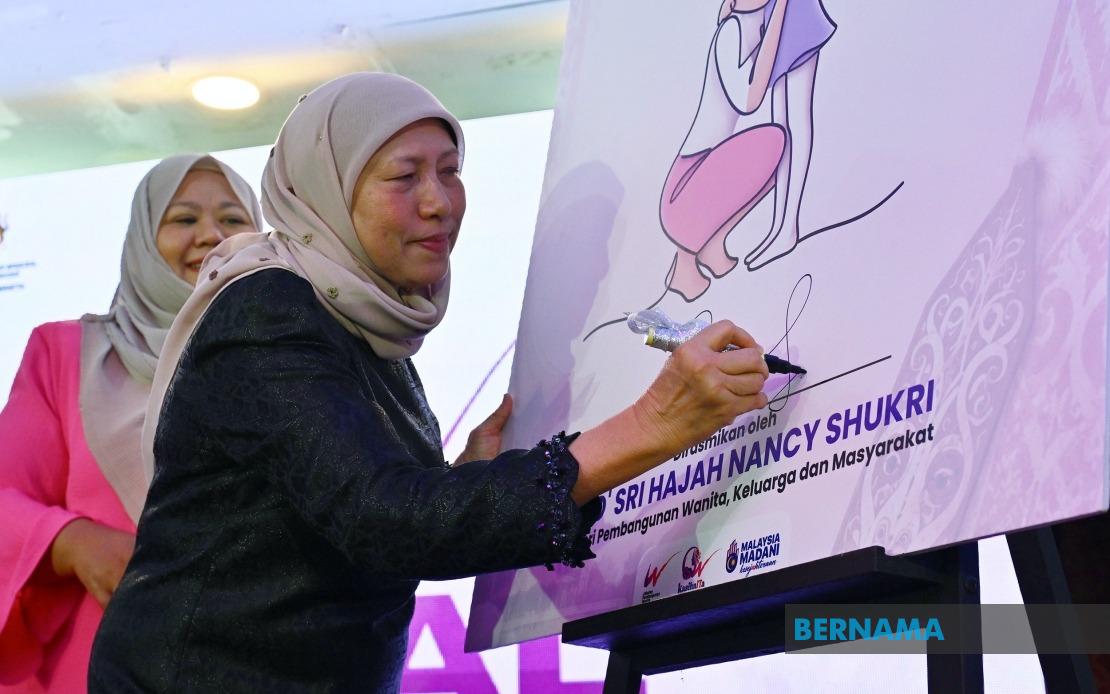
The Ministry of Women, Family and Community Development (KPWKM) has extended its Single Mothers Support programme, KasihnITa, to Sarawak as part of a carefully planned nationwide rollout designed to strengthen the social safety net for one of Malaysia's most vulnerable demographic groups. Datuk Seri Nancy Shukri, the minister overseeing the initiative, formally launched the state-level KasihnITa 2026 programme in Kuching on July 19, marking a significant expansion of support mechanisms that had previously reached Selangor. The three-day gathering attracted approximately 130 participants and represents a deliberate shift toward evidence-based policy development informed directly by the experiences of beneficiaries themselves.
The architecture of KasihnITa reflects a holistic understanding of the multifaceted challenges confronting single mothers in Malaysia. Rather than concentrating assistance in a single government department, the programme deliberately draws together a coalition of specialised agencies, each bringing distinct expertise to address interconnected problems. The Credit Counselling and Debt Management Agency (AKPK) provides targeted guidance on managing household finances under constrained circumstances, while Bank Negara Malaysia contributes macroeconomic perspectives on savings and investment strategies accessible to lower-income households. The Legal Aid Department and Syariah Judiciary Department address the formal mechanisms through which single mothers can pursue financial security and protect their children's inheritance and maintenance rights, recognising that legal knowledge itself often represents a significant barrier to accessing entitled support.
A central theme underpinning KasihnITa is the recognition that single mothers frequently lack not merely financial resources but also the technical competency and confidence to navigate complex administrative and financial systems designed with assumptions about family structure that do not reflect their circumstances. The programme's emphasis on financial management training acknowledges that even modest income can be stretched further through better planning and awareness of available services. This capacity-building dimension extends beyond simple budgeting advice to encompass understanding of government assistance schemes, educational funding for children, housing support, and other welfare provisions that remain underutilised partly due to informational gaps rather than insufficient funding.
The question of child maintenance enforcement emerged as a particular priority in the programme's design. Nancy highlighted that KasihnITa creates dedicated channels through which single mothers can access legal counsel regarding their rights and remedies when former partners fail to comply with court-ordered maintenance obligations. This element addresses a persistent gap in Malaysia's family law implementation, where significant numbers of maintenance orders remain substantially uncollected due to enforcement challenges and the financial burden of pursuing legal action. By embedding legal expertise within the broader support framework, the programme attempts to demystify processes that many single mothers might otherwise perceive as inaccessible or prohibitively expensive.
A noteworthy dimension of KasihnITa's approach involves its explicit commitment to generating direct feedback from participants to inform future policy refinement. Nancy emphasised that KPWKM recognises the danger of designing top-down interventions based on assumptions about target groups' needs rather than their lived experience. This feedback mechanism represents a methodological improvement over conventional policy development and reflects international best practices in evidence-informed governance. By systematically gathering participant input across different regional contexts, the ministry can identify whether policy gaps identified in Selangor persist in Sarawak or whether distinct local factors demand tailored interventions.
The psychological and social dimensions of the programme warrant particular emphasis. Nancy stressed that initiatives like KasihnITa function not merely as mechanisms for distributing information and financial assistance but as platforms through which single mothers can build supportive communities and reduce the isolation that often accompanies their circumstances. The peer-to-peer knowledge sharing and mutual encouragement that occurs when single mothers gather collectively can be as valuable as the formal expert advice delivered by government representatives. This recognition aligns with research suggesting that social capital and community connection significantly influence wellbeing outcomes and resilience among marginalised populations.
The regional expansion strategy, progressing from Selangor to Sarawak, carries implications for understanding Malaysia's approach to inclusive development. Sarawak's inclusion reflects acknowledgment that single mothers constitute a significant demographic segment across Malaysia's diverse regions and that the challenges they face operate within distinct local contexts shaped by different economic structures, cultural factors, and institutional capacities. The staged rollout allows the ministry to manage implementation quality and resource deployment while accumulating comparative data about how intervention outcomes vary across different settings. This methodical approach contrasts with less carefully sequenced national programmes that often encounter coordination challenges and quality inconsistencies.
For single mothers navigating Malaysia's welfare system, access to such integrated support networks can prove transformative. Rather than separately approaching AKPK for debt counselling, Bank Negara for savings strategies, the Legal Aid Department for maintenance enforcement, and the Syariah Judiciary for family law matters, KasihnITa concentrates these services within a single forum, dramatically reducing transaction costs and information barriers. This bundled approach recognises that financial stability, legal security, and psychological wellbeing remain deeply interconnected, and that compartmentalised service delivery often fails to address the underlying systemic vulnerabilities that single mothers face.
The minister's repeated emphasis on leaving no woman behind in Malaysia's development agenda signals recognition that inclusive growth requires deliberate policy attention to populations whose circumstances diverge from assumed norms. Single mothers often experience discrimination in employment markets, face barriers accessing credit and housing, and shoulder disproportionate childcare responsibilities that constrain their economic participation. Programmes like KasihnITa represent attempts to redistribute opportunity and institutional support toward groups that conventional market mechanisms systematically disadvantage. The success of this initiative will depend not only on the quality of advice delivered but on whether it catalyses broader structural reforms in employment practices, housing policy, and social welfare administration.
Looking forward, the expansion of KasihnITa across Malaysia's states will provide valuable evidence regarding the scalability and effectiveness of this integrated support model. The data gathered from participant feedback will likely inform second-generation programme improvements and potentially justify expanded resource allocation to address identified gaps. For other Southeast Asian nations grappling with similar challenges around family structure diversity and gender-informed social protection, Malaysia's experience with KasihnITa offers an instructive case study in how government agencies might coordinate more effectively to serve vulnerable populations. The programme's success ultimately rests on whether participants can translate acquired knowledge into sustained improvements in financial security, legal protection, and social inclusion.

