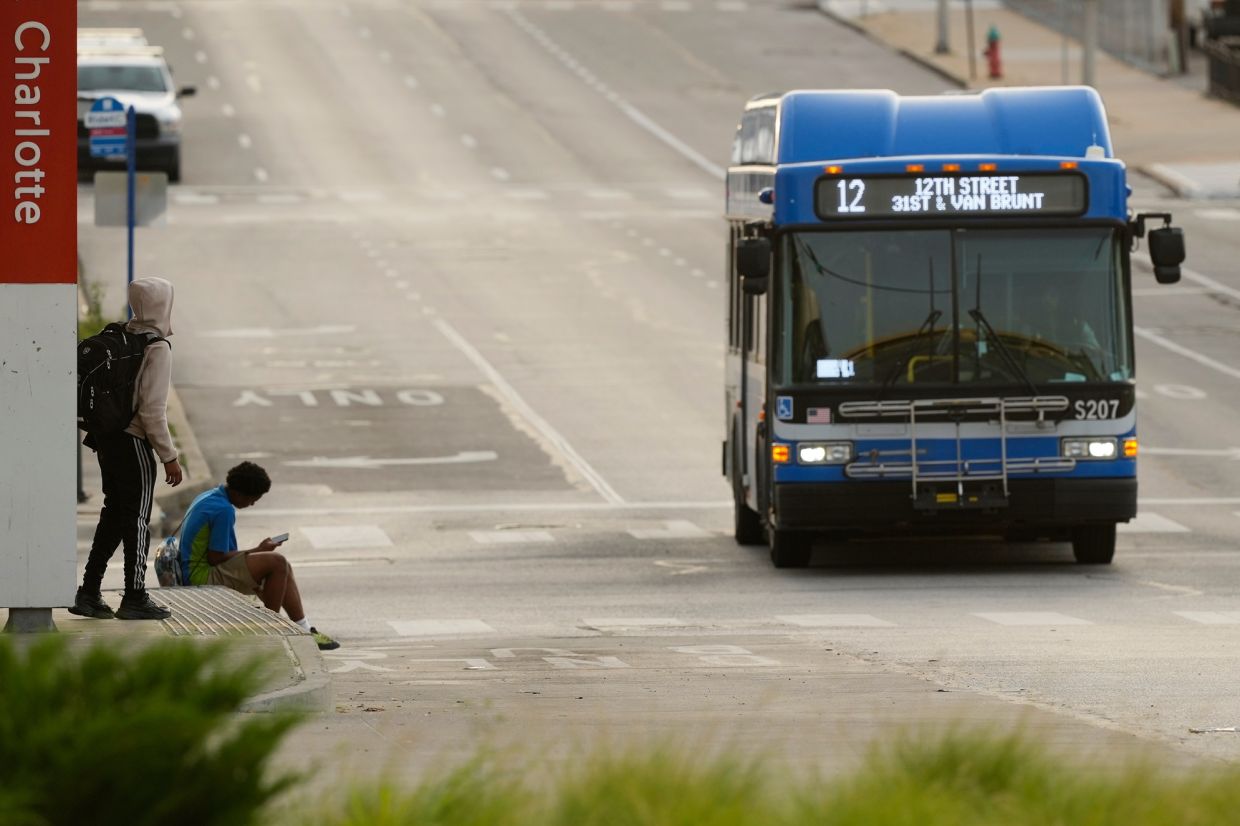
Kansas City, Missouri is moving forward with a contentious initiative to install facial recognition software on public buses, marking what supporters and critics alike acknowledge as a pivotal moment for artificial intelligence deployment in everyday civic infrastructure. The technology, which will scan passengers against databases of banned riders, missing persons, and law enforcement watch lists, represents a significant escalation in surveillance capabilities for American public transportation and offers cautionary lessons for Southeast Asian cities considering similar systems.
The project hinges on partnership with SafeSpace Global, a Tennessee-based company that has previously deployed facial recognition in nursing homes, correctional facilities and schools. Under the proposed system, cameras aboard the buses would instantly cross-reference captured facial data against active alerts maintained by the Kansas City Transportation Authority. According to company executives, facial images that fail to match any watchlist entry would be automatically discarded, with only regular video footage retained on local servers for up to five years. This selective data retention approach is being promoted as a privacy safeguard, though it remains contested among digital rights advocates.
The initiative gained momentum despite resistance from Missouri's state government, which declined to provide anticipated funding specifically because of concerns surrounding the facial recognition component. This funding gap has forced city officials to pursue alternative sources, including federal grants, while still pushing toward deployment. Tyler Means, chief mobility and strategy officer at the Kansas City Transportation Authority, has framed the technology as a natural evolution of existing security infrastructure rather than a novel intrusion. "We've always had cameras on our buses," Means explained, suggesting that facial recognition represents merely an incremental technological upgrade rather than a fundamental change in surveillance scope.
Yet this characterisation sits at odds with warnings from privacy specialists who identify a crucial distinction between passive recording and active facial scanning. Jay Stanley, senior policy analyst for the American Civil Liberties Union's Project on Speech, Privacy and Technology, emphasises that applying real-time facial recognition to live public spaces crosses a threshold that remained uncrossed throughout the previous quarter-century of surveillance camera deployment. This technical distinction carries profound implications: whereas traditional CCTV records events for retrospective analysis, facial recognition transforms public spaces into spaces where identity is automatically and continuously assessed against state and law enforcement databases.
The historical precedent for facial recognition in American public spaces provides limited reassurance about scope creep. Tampa's police deployed facial recognition cameras in the Ybor City neighbourhood shortly after the 9/11 attacks, ostensibly to identify crime suspects, but public opposition forced rapid abandonment of the program. More recently, New Orleans police operated facial recognition systems covertly via private vendor cameras despite a municipal ordinance prohibiting such technology. Detroit's partnership with gas stations and liquor stores to relay real-time feeds of violent crimes to police departments similarly encountered backlash, though former police chief James Craig has continued advocating for the technology provided it operates under strong policies and transparent accountability mechanisms.
These precedents inform contemporary concerns that Kansas City's narrow initial mandate will inevitably expand. Critics note that once facial recognition infrastructure exists on a fleet of buses, pressure will mount to broaden watchlists, extend retention periods, or share data with other agencies. The framing of the technology as merely capturing and discarding faces requires faith in both technical systems and institutional restraint—precisely the combination that repeatedly failed in previous American deployments. Stanley argues that artificial intelligence systems possess inherent expansionary properties; once integrated into civic operations, they tend toward scope proliferation rather than containment.
For Malaysian and Southeast Asian readers, the Kansas City initiative carries particular relevance given the region's rapid urbanisation and emerging transportation networks. Cities across Southeast Asia are simultaneously investing in smart transportation systems, expanding CCTV infrastructure, and grappling with questions about data governance and privacy protection. The decisions made in Kansas City—and the regulatory frameworks that either permit or constrain such deployments—will inevitably influence technology vendors, municipal planners, and government officials considering similar systems for cities from Bangkok to Singapore to Jakarta. Whether facial recognition becomes normalised in public transport depends significantly on how American cities either establish or fail to establish meaningful guardrails.
The practical implementation delays have themselves proven instructive. Kansas City was expected to deploy cameras on nine buses in time for international World Cup matches in spring, but technical and financial obstacles forced postponement. Upgrading WiFi routers to support both camera systems and fare collection technology proved more complex than anticipated, while the withdrawal of state funding created budgetary uncertainty. These practical hurdles suggest that even well-intentioned deployments face significant technical and administrative challenges before facial recognition infrastructure becomes operational at scale.
Meanwhile, project leadership has recalibrated expectations. Rather than proceeding cautiously with a nine-bus pilot, Means now suggests potentially expanding to thirty buses once financial obstacles are resolved. This scaling-up during a period of active controversy and delayed implementation suggests institutional momentum pushing toward normalisation rather than evidence-based expansion following pilot evaluation. Such trajectory mirrors patterns seen in other surveillance technology adoptions, where initial pilots justify subsequent scale-ups before comprehensive impact assessments are completed.
Civil liberties organisations have mobilised opposition framing residents as inadvertent test subjects for unproven technology developed by private technology companies. Will Owen of the Surveillance Technology Oversight Project argues that city residents should not bear the risk of surveillance systems whose accuracy, bias, and long-term consequences remain inadequately understood. These concerns gain weight from documented instances where facial recognition systems exhibit higher error rates for individuals from racial minorities, raising concerns about discriminatory application in law enforcement contexts.
City Council member Ryana Parks-Shaw, serving as mayor pro tem, has counselled deliberate rather than rushed implementation, emphasising the necessity for transparent processes and explicit guardrails governing technology use. This measured stance reflects growing recognition within municipal governance that surveillance technology deployment requires careful institutional design. The immediate response to World Cup security concerns—deploying forty additional police officers at transit centres—demonstrates that traditional security approaches remain viable alternatives, even if they prove more labour-intensive than technological solutions.
SafeSpace Global CEO Scott Boruff has expressed readiness to install cameras once financial arrangements finalise, anticipating three to four months for customising software to Kansas City's specific operational requirements. This timeline suggests that while implementation faces delays, the underlying momentum toward deployment persists. The company's previous experience with closed institutional environments—nursing homes and prisons—differs significantly from public transit, where the customer base encompasses the general population rather than selected groups. This distinction carries important implications for both technical requirements and public acceptability.
The Kansas City initiative ultimately represents a fork in the road for American cities contemplating facial recognition in public infrastructure. Depending on how the system performs, what safeguards prove effective, and how public opinion responds to routine deployments, other municipalities will either embrace or reject comparable approaches. For Southeast Asia, observing these outcomes proves essential, as the region's cities face pressure to adopt similar technologies while simultaneously building governance frameworks adequate to their regulation. Whether facial recognition in public transit becomes normalised or remains controversial will substantially influence not only American urban policy but also the technological trajectory of global cities grappling with the tension between security aspirations and privacy imperatives.

