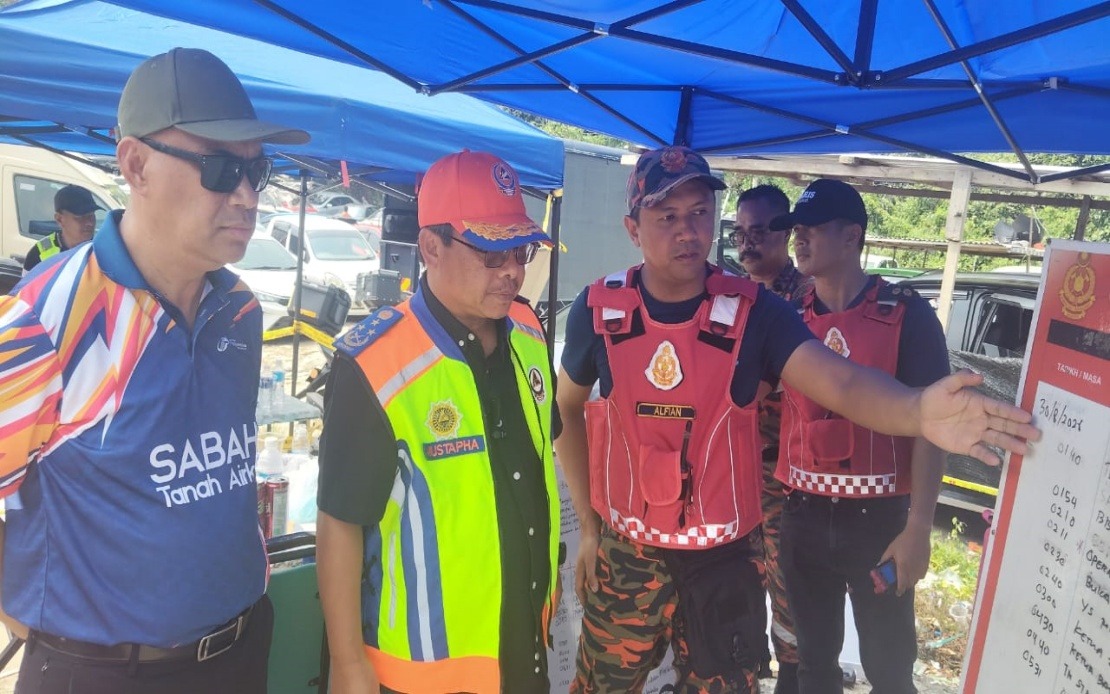
A catastrophic fire that swept through Kampung Lok Buta in Kota Kinabalu in the early hours of Friday morning has left the close-knit settlement reeling from devastating losses. The blaze, which erupted at 1:40 am, razed more than 200 residential structures and claimed the lives of three young children, leaving over 200 residents displaced and in urgent need of shelter and assistance. The tragedy has prompted swift action from federal and state authorities, who have mobilised resources to support the survivors and coordinate relief efforts across multiple government agencies.
Authorities have established two temporary relief centres at Dewan Kampung Likas and Dewan Damai to provide immediate sanctuary for the displaced residents. These facilities serve as central coordination hubs where victims can register their details, receive essential services, and access donated supplies. The systematic approach reflects official recognition that managing a disaster of this scale requires organised infrastructure to track needs and distribute assistance equitably among affected families. Such centres are critical in the immediate aftermath of calamities, particularly when entire neighbourhoods have been rendered homeless within hours.
The three children who perished in the blaze have been identified as Nana Abdullah, aged 4, her brother Mohd Asrul Abdullah, aged 6, and their cousin Nurfarahdilah Mohd Tajihah, aged 8. Their deaths underscore the particular vulnerability of young children in fire emergencies, when panic, smoke inhalation, and the speed of flames leave little time for escape. For the broader Kampung Lok Buta community, the loss of three neighbourhood children represents a profound collective trauma that will extend far beyond the immediate material destruction.
Datak Mustapha Sakmud, Minister in the Prime Minister's Department with responsibility for Sabah and Sarawak affairs, visited the fire-affected area to assess the situation personally. Following his inspection, Mustapha underscored the importance of identifying all schoolchildren among the displaced to ensure continuity of their education. This concern reflects a wider government priority to minimise long-term disruption to vulnerable populations; for children already traumatised by witnessing or experiencing the fire, educational interruption could compound psychological effects and disrupt their academic progress. The minister indicated he would liaise with the Ministry of Education to ensure students from primary schools, tertiary institutions, and vocational training programmes receive targeted support.
Kota Kinabalu City Hall formally declared Kampung Lok Buta a disaster zone, a designation that unlocks additional resources and streamlines bureaucratic procedures for delivering aid. Datuk Seri Dr Sabin Samitah, the DBKK mayor and chairman of the District Disaster Management Committee, accompanied Mustapha on his inspection. This coordination between federal and municipal authorities is essential for translating policy intent into concrete assistance reaching affected families. The disaster zone status enables faster mobilisation of emergency funds, prioritises repair and reconstruction efforts, and facilitates inter-agency cooperation that might otherwise be constrained by normal administrative channels.
Mustapha emphasised the urgency of convening meetings between DBKK and relevant government agencies to systematically address the needs of fire survivors. Beyond immediate shelter, displaced residents face cascading crises: loss of personal documents and identity papers, disruption to livelihoods, medical needs, trauma counselling, and the psychological burden of homelessness. A coordinated government response can address these multifaceted challenges more effectively than isolated departmental actions. The minister flagged the importance of early intervention, particularly for families headed by single parents or lacking extended family networks to provide temporary accommodation.
In a significant escalation of the relief effort, Mustapha announced plans to brief both Prime Minister Datuk Seri Anwar Ibrahim and Sabah Chief Minister Datuk Seri Hajiji Noor during an upcoming Malaysia Agreement 1963 Implementation Action Council meeting. This high-level engagement signals that the disaster has registered as a matter of national concern warranting chief executive attention. Such briefings from the DBKK mayor can ensure that state and federal decision-makers understand the full scope of reconstruction requirements and can allocate resources proportionate to the scale of the emergency. The involvement of both national and state leadership reflects Malaysia's federal structure and the particular importance of Sabah as one of the two East Malaysian states under MA63 arrangements.
Mustapha committed to extending immediate financial assistance to the families of the three child victims, acknowledging that no amount of compensation can restore what has been lost but that such support represents the government's recognition of their suffering. This gesture, while modest in material terms, carries symbolic weight by demonstrating state responsiveness to tragedy. In many Malaysian communities, such early intervention from senior political figures helps establish trust in government institutions during crises and encourages families to engage with formal relief channels rather than withdrawing or relying solely on informal community support.
The Kampung Lok Buta fire underscores persistent vulnerabilities in Malaysian urban kampung settlements, where densely packed wooden structures and limited access roads can enable rapid fire spread. Fire safety standards for informal settlements remain a perennial challenge across the country, with many communities lacking adequate hydrants, emergency exit routes, or fire prevention infrastructure. The loss of over 200 homes in a single incident highlights the economic precariousness of residents who typically lack comprehensive insurance coverage. For survivors, rebuilding will require years of effort, and many may find themselves trapped in cycles of temporary housing and inadequate accommodation long after media attention has shifted.
The disaster also raises questions about urban planning and disaster preparedness in Kota Kinabalu, one of Malaysia's major regional cities. Kampung settlements within urban areas often occupy marginal land and experience uneven provision of public services compared to planned residential developments. Ensuring that disaster management capacity extends equitably to all communities, including informal settlements, remains an ongoing policy challenge. The prompt establishment of relief centres and high-level official engagement in this case represent positive responses, but longer-term prevention requires investment in fire safety infrastructure, community education, and building code enforcement in vulnerable neighbourhoods.
For residents of Kampung Lok Buta, the immediate priority now centres on securing stable temporary shelter, replacing lost documentation, accessing psychological support, and reconnecting fractured social networks. The relief centres provide essential infrastructure for these functions, but the humanitarian challenge extends far beyond the first days of crisis response. Government agencies, non-governmental organisations, and the broader Malaysian community will need sustained engagement to help survivors rebuild homes, restore livelihoods, and process the collective trauma of their loss. The tragedy of three young lives ended prematurely will likely serve as a sobering reminder for authorities and the public alike regarding the imperative for stronger fire prevention measures and more resilient community infrastructure.

