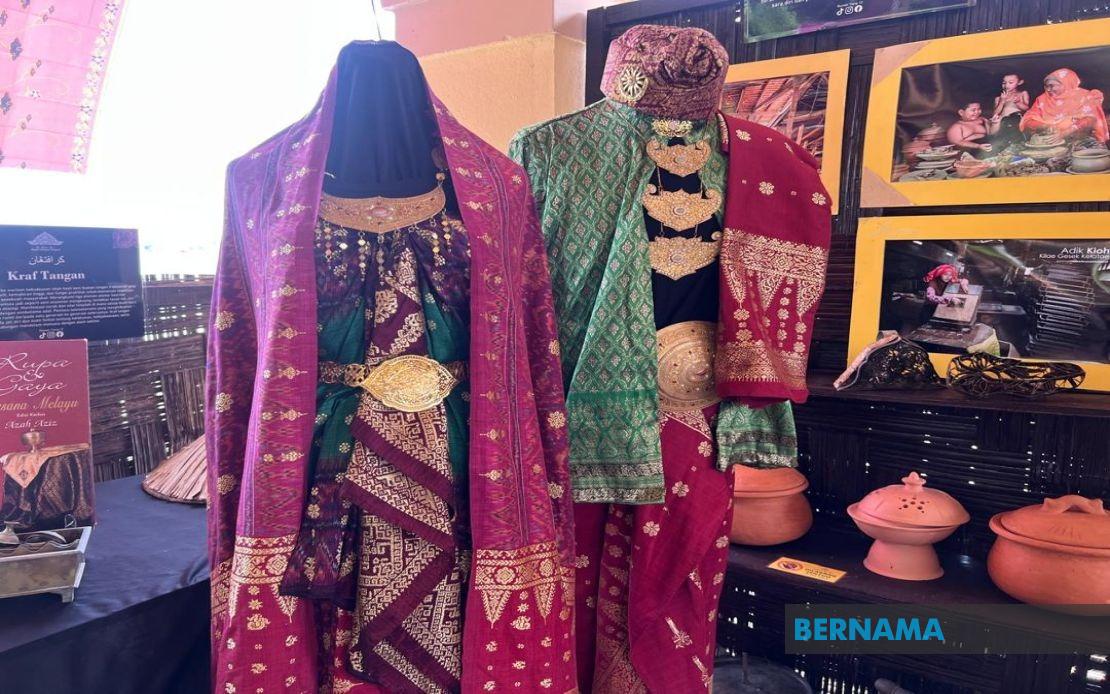
The ancient art of Kain Lima weaving stands at a precarious crossroads in Malaysia, with dwindling numbers of skilled craftspeople threatening to extinguish one of Southeast Asia's most sophisticated textile traditions. At the Kelantan Arts Festival held recently in Tok Bali, custodians of this heritage are sounding alarm bells about the craft's survival, even as institutions like Galeri Rumah Tiang 12 mount desperate efforts to rekindle public interest in what was once considered the pinnacle of Malay textile craftsmanship.
Unlike the better-known songket that adorns Malaysian wardrobes during festive occasions, Kain Lima occupies a rarefied realm of textile art distinguished by its extraordinarily labour-intensive production process and breathtaking visual effects. According to Nik Mohd Murdani Nik Hassan, the caretaker of Galeri Rumah Tiang 12, the defining characteristic of Kain Lima lies in its revolutionary weaving methodology, which marries tied or tie-dyed threads with traditional loom work to create motifs of unparalleled intricacy and a mesmerizing colour-reflection phenomenon impossible to replicate through conventional means. This technical sophistication sets it fundamentally apart from its more accessible cousin, songket, which relies primarily on gold and silver thread embellishments rather than the structural complexity that defines genuine Kain Lima.
The visual and structural distinctions between Kain Lima and other traditional fabrics represent years of accumulated knowledge that specialists can readily identify through examination of pattern architecture, weaving density, and the composition of materials employed. Those genuinely versed in Malaysian textile heritage immediately recognise the hallmark characteristics that separate authentic Kain Lima from imitations or inferior derivatives. The weaving process itself demands absolute precision at every stage, as artisans must meticulously arrange multiple coloured threads in predetermined sequences before commencing the delicate weaving that brings their design to realisation. This methodical approach, repeated thousands of times across a single bolt of fabric, transforms textile production from mere craft into a meditative artistic discipline.
The economic realities surrounding Kain Lima production underscore why fewer individuals pursue this demanding vocation in contemporary Malaysia. A completed piece commands prices ranging from RM3,000 to exceeding RM4,000 in today's market, with variations dependent on factors including age, complexity of motif design, preservation condition, and the fineness of execution evident in the finished work. These premium valuations reflect the extraordinary investment of time and skill required, yet they simultaneously price the textiles beyond the reach of ordinary consumers, restricting demand to wealthy collectors and cultural institutions. Historically, Kain Lima represented the ultimate expression of textile luxury and reserved itself exclusively for royal ceremonies, formal court occasions, and the most elevated ceremonial garments—sarongs, shawls, and robes that announced the wearer's status and connection to the sultanate.
Since joining Galeri Rumah Tiang 12 in 2020, Nik Mohd Murdani has worked to assemble and display collections drawn from private collectors across Kelantan and beyond, creating what may represent one of the last comprehensive repositories of authentic Kain Lima accessible to the general public. This exhibition initiative serves a dual purpose: it functions simultaneously as a museum of living heritage and as an educational platform through which ordinary Malaysians can witness directly the sophistication that distinguishes Kain Lima from the songket textiles they encounter in markets. By presenting these treasures alongside comparative examples of related textiles, the gallery enables visitors to understand viscerally why Kain Lima occupied such a privileged position in pre-modern Malay society and why its preservation matters profoundly to Malaysian cultural identity.
The pedagogical impact of such exhibitions extends beyond passive appreciation into active inspiration for contemporary craft practitioners. Nur Anira Akmal Che Abdul Aziz, a 34-year-old handicraft designer from Pasir Mas, exemplifies how exposure to traditional textile knowledge can catalyse innovation within younger generations of artisans. Her visits to heritage exhibitions like those curated at Galeri Rumah Tiang 12 furnish her with concrete visual references and technical insights that inform her own creative work, allowing her to develop products that synthesise traditional aesthetic principles with contemporary design sensibilities. She recognises that each exposure to properly documented heritage textiles deepens her comprehension of the cultural values embedded within these artefacts, transforming abstract notions of preservation into concrete commitments to maintain and evolve traditions rather than simply replicate them.
The disappearance of Kain Lima weaving reflects broader challenges confronting traditional crafts throughout Malaysia and Southeast Asia, where younger generations increasingly pursue formal education and urban employment rather than apprenticing in labour-intensive textile production. The knowledge transmission process that historically occurred within family networks and community workshop structures has fractured, leaving elderly master weavers without students to inherit their expertise. Unlike mechanised production that can be rapidly scaled and outsourced, Kain Lima's essential character depends upon individual human skill accumulated across years of practice—a non-negotiable requirement that modern economic systems struggle to accommodate or adequately compensate.
Without decisive intervention, Kain Lima risks becoming merely a historical artefact studied by academics rather than a living tradition practised by skilled hands. The challenge facing cultural custodians in Kelantan and throughout Malaysia involves not simply preserving existing examples for museum display, but creating conditions whereby the craft remains economically viable and culturally meaningful for practitioners. This might involve supporting apprenticeship programmes, developing stronger connections between weavers and collectors willing to commission custom work, establishing heritage tourism initiatives that bring visitors to witness production firsthand, or incorporating Kain Lima into contemporary fashion contexts that appeal to younger audiences seeking distinctive Malaysian cultural expression.
The efforts of institutions like Galeri Rumah Tiang 12 and individual champions like Nik Mohd Murdani represent crucial first steps in arresting Kain Lima's decline, yet they cannot substitute for systemic support that recognises textile artisans as valuable cultural workers deserving of fair compensation and social respect. As Malaysia increasingly positions itself as a destination for cultural tourism and as global consumers demonstrate renewed interest in handcrafted textiles with authentic provenance, the moment exists to revalue traditions like Kain Lima weaving not as nostalgic remnants of a pre-industrial past but as sophisticated contemporary cultural practices worthy of investment and celebration.

